🦁 Storm Petrel
🧾 Quick Facts
The Storm Petrel is a fascinating group of seabirds known for their nimble flight and enigmatic presence over the world's oceans. These birds, often collectively referred to as "storm petrels," belong to the family Hydrobatidae. While they may appear similar, there are distinct differences across various species within this group. Here we provide a comprehensive overview of this intriguing avian family.
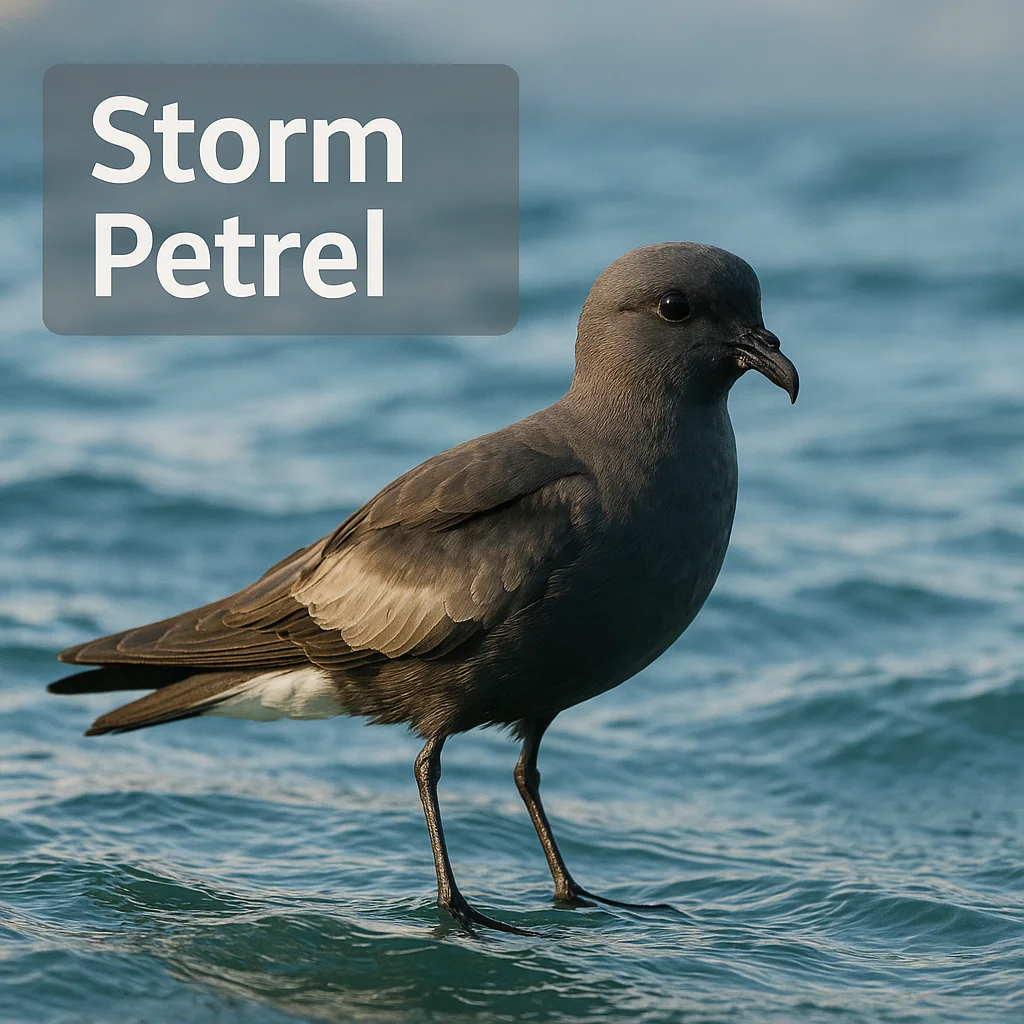
- Common name(s): Storm Petrel, Mother Cary's Chicken
- Scientific name: Family Hydrobatidae (various genera)
- Animal type: Bird
- Typical adult size: 14-26 cm (5.5-10.2 in) in length
- Typical lifespan: 10-30 years, depending on species
- Diet type: Carnivore; primarily feeds on planktonic crustaceans and small fish
- Activity pattern: Mostly nocturnal and often active during stormy weather
- Social structure: Forms large colonies during breeding season
- Speed/movement highlights: Agile fliers capable of hovering above waves
- Intelligence/learning: Skilled navigators with strong homing instincts
- Primary habitats: Open ocean, coastal regions
- Geographic range: Global, with various species found in both Northern and Southern hemispheres
- Predators/threats: Predatory birds, pollution, and climate change
- Conservation status: Varies by region and species; some are of conservation concern
🔍 Identification & Appearance
Storm Petrels are small seabirds characterized by their distinctive fluttering flight pattern over ocean waves. They feature a compact body, long wings, and legs that are relatively short. Most species exhibit dark plumage with some featuring white markings on their rump.
Their appearance can vary significantly depending on the species and age. They possess a slender bill adapted for feeding on small marine organisms. Identification of these birds involves careful observation of their unique flight behavior and subtle plumage differences.
- Small, bat-like silhouette when flying
- Dark plumage; some with white rump markings
- Narrow wings designed for efficient hovering
- Short legs not typically visible in flight
- Slender beak for foraging
- Often mistaken for sheerwaters; note the petrel's smaller size
- Persistent flight behavior over rough seas
- Distinctive hovering just above the water
- Juveniles resemble adults but may have fresher plumage
🧱 Body Structure & Physical Adaptations
Storm Petrels exhibit unique physical adaptations that allow them to thrive in their oceanic habitat. Their lightweight build and streamlined body aid in their buoyant stepping flight over the sea surface. The wings are adapted for prolonged periods of flight, and their sensory faculties are well-developed for detecting prey in the vast oceanic environment.
- Compact, slender build for efficient flight
- Beak adapted for snapping up small prey
- Wings designed for sustained gliding and hovering
- Highly developed sense of smell for locating prey
- Nostrils adapted for expelling excess salt from ocean water
- Tail used for maneuverability in flight
- Strong legs for nesting on rocky islands
- Ability to adjust buoyancy for surface feeding
🌍 Range & Distribution
Storm Petrels are found in oceans across the globe, inhabiting both temperate and tropical regions. Some species are particularly numerous around the North Atlantic, the Pacific Ocean, and the Southern Ocean. These birds are pelagic, spending most of their life offshore and returning to land only for breeding.
- Common in the North Atlantic Ocean
- Present in the Pacific Ocean, particularly in temperate zones
- Frequent Southern Ocean dwellers
- Can be found in both hemispheres
- Breeding colonies on coastal islands
- Migratory patterns vary among species
- Occasional visits to subtropical waters
- Habitual coastal island nesting sites
🏞️ Habitat & Shelter
Storm Petrels are pelagic birds, spending the majority of their lives over the open ocean. Their preferred habitats include vast stretches of sea far from land, although they breed on various coastal islands. Their choice of nesting grounds often involves remote islands with minimal human disturbance, where they dig burrows or nest in crevices.
Their reliance on oceanic habitats means they are susceptible to changes in sea temperature and conditions, which can influence their behavior and survival strategies.
🧭 Behavior & Ecology
Storm Petrels exhibit fascinating behaviors that allow them to navigate and survive in the oceanic environment. They are known for their distinct flight pattern, characterized by a series of flutters and glides, allowing them to hover near the water's surface as they forage.
Communication often involves vocalizations during the breeding season, especially at night. Their ecological role as both prey and predator positions them as an integral part of the marine food web.
- Nocturnal foraging to avoid daytime predators
- Vocal communication increases during breeding
- Hovering flight to skim for food
- Prey for larger seabirds and marine mammals
- Significant role in marine ecosystems as plankton feeders
- Use of olfactory cues over long distances
- Maintain pair bonds through mutual preening
- Limited terrestrial movement outside of breeding
- Participate in mixed-species feeding flocks
- Key bioindicator of ocean health
👥 Social Life & Group Dynamics
Storm Petrels are highly social during the breeding season, forming large colonies on oceanic islands. They are generally monogamous, with pair bonds often lasting multiple seasons. Within colonies, nests are constructed close to one another, highlighting their social nature.
Their group behaviors include synchronized foraging and communal nesting, which is critical for protection and thermoregulation during the breeding cycle.
- Large breeding colonies on isolated islands
- Pair bonding involves long-term partnerships
- Communal nesting for safety and warmth
- Some species exhibit cooperative parenting
- Social interactions peak during breeding season
- Nesting sites often shared with other seabirds
- Colony size can vary widely
- Participants in multispecies aggregations at sea
- Occasional solitary foraging outside breeding season
🍽️ Diet, Prey & Predators
Storm Petrels primarily feed on planktonic crustaceans, small fish, and squid. Their diet varies by availability, which can shift with ocean currents and seasonal productivity. As predators, their feeding strategy involves picking food directly from the ocean surface.
Natural predators include seabirds like skuas and gulls, as well as larger marine mammals. Storm Petrels rely on their agile flight to evade these threats, and their nocturnal habits further reduce predation risk.
- Diet mainly consists of plankton and small fish
- Feeds primarily at night
- Surface skimming to capture prey
- Uses long legs to paddle while feeding
- Threats from gulls and skuas
- Avoids predation by staying offshore by day
- Small prey items captured in rapid sequences
- Opportunistic feeding during migrations
- Bycatch in fishing gear is a risk
🦌 Hunting, Foraging & Movement
Storm Petrels are adept fliers, utilizing their agility and endurance to cover extensive areas of ocean. Their foraging involves a unique hover-and-dip method, allowing them to feed on small organisms near the water surface. They usually forage alone or in small groups during migration.
Their rapid, buoyant flight provides them with both speed and maneuverability, essential for their lifestyle in variable oceanic conditions.
- High endurance flight over large distances
- Hovering forage method near ocean surface
- Flies by beating wings against winds
- Preferences for feeding at dawn and dusk
- Non-stop flying for up to several hundred kilometers
- Utilizes oceanic currents for navigation
- Migratory behavior in specific species
- Surface skimming utilized in prey capture
- Utilize landmarks for directional orientation
🧠 Intelligence & Senses
Storm Petrels exhibit a variety of clever adaptations to survive their oceanic life. They are capable navigators, using both solar cues and the Earth's magnetic field to traverse vast ocean expanses. Their exceptional sense of smell aids them in finding food and orienting themselves in the open sea.
While their cognitive abilities are not as pronounced as in some terrestrial birds, their ability to migrate and locate breeding sites reliably is a testament to their navigational skills.
- Strong homing instinct to return to breeding sites
- Excellent olfactory senses for locating prey
- Navigation relies on multiple sensory cues
- Seasonal memory of migratory routes
- Communication enhanced by vocal cues during social interactions
- Sensory adaptations for low-light conditions
- Limited tool use or problem-solving reported
🪺 Reproduction, Pregnancy & Parenting
Storm Petrels breed on isolated islands, choosing crevices or burrows as nesting sites. They are primarily monogamous, with pair bonds forming over multiple breeding seasons. The breeding season varies by geographic location, but it typically involves courtship displays and vocalizations to reinforce pair bonds.
Parenting duties are often shared, with both males and females involved in incubation and chick-rearing. The parental investment is substantial, given the solitary nature of their oceanic life outside the breeding season.
- Nesting in burrows or rock crevices
- Monogamous with long-term pairing
- Incubation period varies from 40-50 days
- Typically a single egg per breeding cycle
- Dual parental involvement in chick care
- Chick rearing until they reach fledgling stage
- Synchronized breeding due to environmental cues
- Fledglings venture out to sea alone
- Cooperative pair maintenance via vocal and physical contact
♀️♂️ Male vs Female Differences
Male and female Storm Petrels are generally similar in size and appearance, with subtle distinctions often observed only by experienced birdwatchers or during the breeding season. Their behavior during courtship and nesting can reveal more pronounced differences.
- Size differences minimal between sexes
- Subtle variations in plumage during breeding
- Behavioral differences in courtship displays
- Both sexes participate in incubation
- Vocalizations vary slightly between male and female
- Females may choose nesting site selection
- Males often perform more frequent food deliveries
- Overall, gender differences are not readily visible
🧬 Subspecies & Variation
Within the Storm Petrel family, several species exhibit geographical and morphological variations. These differences can include size, coloration, and behavior. Some populations are adapted to specific oceanic conditions, demonstrating island-specific adaptations or differing migratory behaviors.
- Varying subspecies across global oceans
- Coloration shades can differ based on environment
- Island populations with unique adaptations
- Migratory vs non-migratory population distinctions
- Debated subspecies classification due to overlap
⚠️ Threats, Conservation & Human Interaction
Storm Petrels face threats from both natural and human sources, including climate change, pollution, and oceanic competitors. They are sensitive to shifts in sea temperature and prey abundance, linked to global climate changes. Human activities such as oil spills, plastic pollution, and fishing bycatch pose additional risks.
Conservation efforts focus on habitat protection and minimizing human impacts through policy and education. Understanding these birds' ecological role and significance aids in sustaining healthy marine ecosystems.
- Sensitive to changes in sea temperature
- Plastic pollution and pollutants in ecosystems
- Incidental capture in fishing operations
- Oil spills affect both health and behavior
- Conservation varies widely by region and species
- Encouragement of marine area protection policies
- Valued as indicators of ocean health
- Public awareness essential for reducing fishing impacts
✨ Fun Facts & Unique Traits
- Often called "storm birds" because they appear in heavy weather
- Known to follow ships for extended distances
- Historical mythology often associated them with omens
- Many species have nocturnal breeding behavior
- They can hover closely over waves without landing
- Nostril tubes help remove excess salt from intake
- Some species exhibit bioluminescent feeding behaviors
- Tagged individuals have traveled thousands of kilometers
- Understandably elusive due to pelagic lifestyle
📌 Summary
- Storm Petrels are small, agile seabirds found globally
- Identified by dark plumage and fluttering flight
- Reside in open ocean with island breeding sites
- Primarily feed on planktonic crustaceans and fish
- Exist in large colonies, highlighting social nature
- Breeding involves monogamous pair bonds
- Exhibit significant migration and navigational skills
- Adapted to a diverse range of marine environments
- Environmental and human pressures present ongoing challenges