🦁 Red Squirrel
🧾 Quick Facts
The red squirrel, often recognized for its vibrant fur and bushy tail, is a small arboreal rodent found in various regions. Known for its quick movements and playful demeanor, the red squirrel is an essential part of woodland ecosystems.
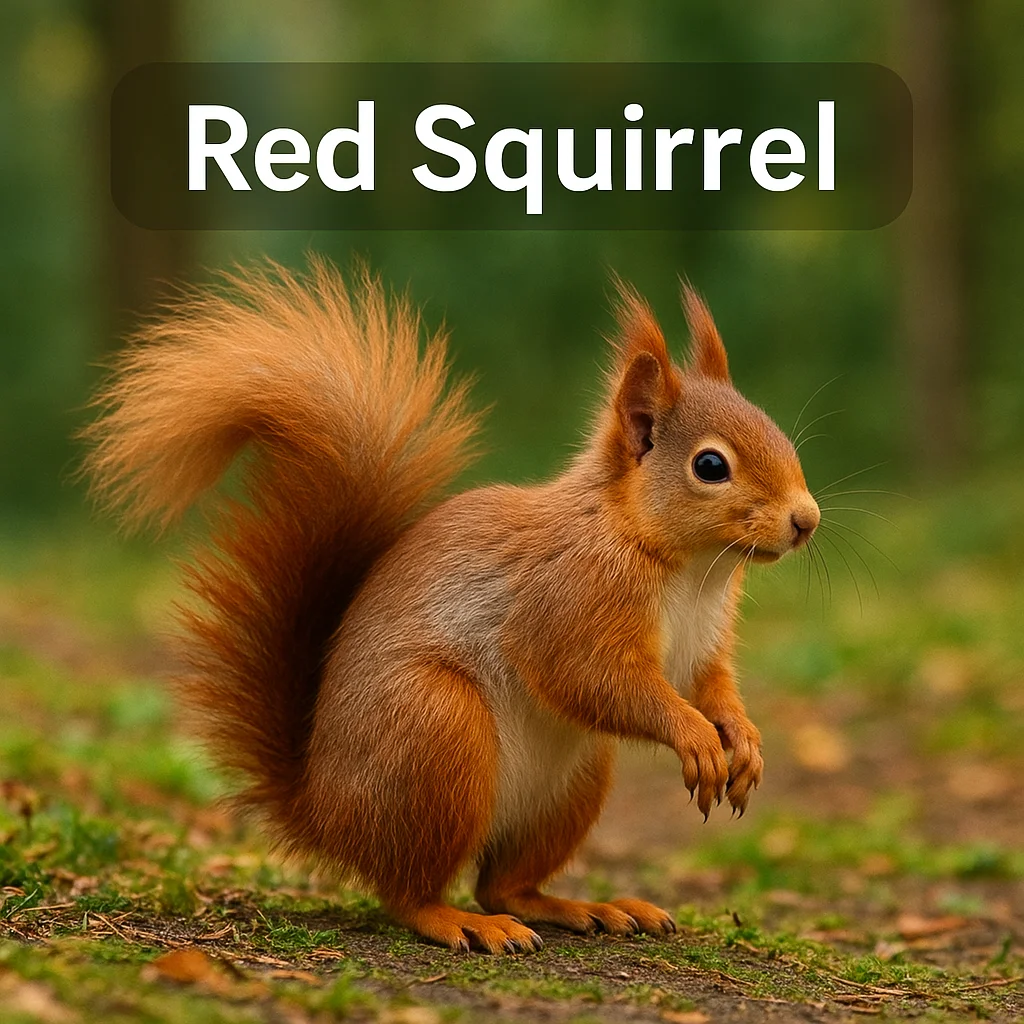
- Common name(s): Red Squirrel
- Scientific name: Varies (Common Eurasian red squirrel: Sciurus vulgaris)
- Animal type: Mammal (Rodent)
- Typical adult size: 18–24 cm in body length; tail 15–20 cm
- Typical lifespan: Up to 3–7 years in the wild
- Diet type: Omnivore; seeds, nuts, fruits, buds, and occasionally insects
- Activity pattern: Diurnal
- Social structure: Mostly solitary
- Speed / movement highlights: Agile climber and jumper
- Intelligence/learning: Known for problem-solving and food storage
- Primary habitats: Coniferous and mixed coniferous/deciduous forests
- Geographic range: Europe, parts of Asia, introduced to some parts of North America
- Predators/threats: Birds of prey, mustelids, domestic cats, habitat loss
- Conservation status: Status varies by region; some populations are declining due to habitat loss and competition with the introduced grey squirrel
🔍 Identification & Appearance
The red squirrel is easily identified by its striking red to reddish-brown fur, a bushy tail, and large ear tufts, especially prominent in winter. Their body shape is sleek and agile, perfect for navigating tree canopies. Fur color can vary with the seasons, becoming lighter or grayer in certain populations.
- Top ID Tips
- Red to reddish-brown fur
- Prominent ear tufts in winter
- Sleek body with a bushy tail
- White underbelly
- Medium-sized, nimble appearance
- No significant color difference between males and females
- Distinctive chattering calls
- Small, three-toed tracks with a thumb-like nub
- Different from the grey squirrel by size and ear tufts
- Often seen climbing trees or foraging on the ground
🧱 Body Structure & Physical Adaptations
Red squirrels are built for life in the trees, with strong hind limbs and sharp claws that aid in climbing. They possess specialized teeth for gnawing through hard shells and cones, and their bushy tail aids in balance and thermoregulation.
- Key Adaptations
- Strong hind limbs for leaping
- Sharp claws for gripping bark
- Chisel-like incisors for gnawing
- Bushy tail for balance and warmth
- Large eyes for better vision in dim light
- Sensitive whiskers for navigation
- Ear tufts may help with insulation
- Lightweight, agile body structure
- Good auditory sense for detecting predators
- Ability to store and retrieve food caches
🌍 Range & Distribution
Red squirrels are primarily found in the forests of Europe and parts of Asia. They thrive in coniferous and mixed forests, particularly those with a rich abundance of mature trees and seed-producing plants.
- Where You Might Find It
- Western and Northern Europe
- Scotland's extensive coniferous forests
- Scandinavian woodlands
- Mountainous areas of central Europe
- Relict populations in northern England and Wales
- Parts of northern Asia
- Some areas in Ireland
- Habitats include both lowland and upland regions
- No major seasonal migrations
🏞️ Habitat & Shelter
Red squirrels prefer coniferous woodlands but can also be found in mixed forests. They make use of tree cavities, old woodpecker holes, or build dreys of twigs, leaves, and grass in branches. Changes in weather, such as winter, can drive them into more protected areas during resting periods.
🧭 Behavior & Ecology
Red squirrels are diurnal and highly active creatures, spending much of their day foraging and caching food. They are known to be territorial, using vocalizations such as chattering and tail flicking to communicate. They play a crucial role in forest ecology by dispersing seeds.
- Behavior Highlights
- Diurnal activity with peaks in morning and late afternoon
- Solitary outside of breeding periods
- Territorial, especially during breeding season
- Communicate using vocalizations and visual signals
- Important role in seed dispersion
- Caching behavior helps with food supply in winter
- Chattering and tail flicking are common signs of aggression
- Use scent marking for territory demarcation
- Agile climbers adept at navigating treetops
- Vigilant against predators like birds and mustelids
👥 Social Life & Group Dynamics
Under normal circumstances, red squirrels are solitary, coming together only during the breeding season. They do not typically form tight social structures like some other mammals, but females may occasionally be seen with their young.
- Social Structure Notes
- Primarily solitary
- Temporary associations during mating
- Territorial conflicts mostly between males
- Males do not assist with rearing young
- Occasional tolerance for overlapping home ranges
- Juveniles remain with mother until independent
- Hierarchical structures are rare
- Social interactions often limited to mating season
- Occasional cooperative feeding in favorable areas
- No significant social bonding observed
🍽️ Diet, Prey & Predators
Red squirrels have a varied diet, feeding on seeds, nuts, berries, and fungi, with occasional insects for protein. They face predation from a range of animals including birds of prey and mammals like foxes and martens. Their caching behavior ensures a food reserve.
- Feeding Notes
- Primarily seed and nut-based diet
- Favors conifer seeds in pine forests
- Consumes fungi, berries, and young shoots
- Caching involves burying or storing in treetops
- Able to gnaw through tough seed coats
- Occasional consumption of bird eggs
- Predators include hawks, owls, and pine martens
- Anti-predator strategies include vigilance and rapid climbing
- Nutritional needs change seasonally
- May raid bird feeders for extra food source
🦌 Hunting, Foraging & Movement
Red squirrels are expert climbers and capable foragers. They use their agility to navigate through forest canopies efficiently. Their main tactic is gathering and storing food throughout their home range to ensure enough resources, especially crucial during lean winter months.
- Movement & Strategy
- Proficient climbers and jumpers
- Use leap and run tactics to evade predators
- Forage both on the ground and in trees
- Known to cache food for winter
- Establishes multiple food caches within territory
- Home range varies seasonally
- Flexible movement allows for varied diet intake
- Restricted to daylight hours for active foraging
- Short-distance runners; rely on speed bursts
- Seasonal movements are minimal and localized
🧠 Intelligence & Senses
Red squirrels possess sharp senses that aid their survival. They have a strong memory for food cache locations and are capable of problem-solving to access hard-to-reach food sources. They rely on keen eyesight and hearing to detect both food and threats in their environment.
- Notable Abilities
- Remarkable memory for spatial locations
- Capable of learning from past experiences
- Uses a wide range of visual cues
- Excellent at detecting aerial predators
- Acute sense of smell for food detection
- Problem-solving skills in accessing caches
- Little use of tools observed
- Adaptability to varied environments
- Sensory perceptions remain strong throughout life
🪺 Reproduction, Pregnancy & Parenting
Reproduction in red squirrels typically occurs twice per year, with a peak in spring and summer. They have a short gestation period, and young are born altricial, requiring extensive care from the mother.
- Reproduction Snapshot
- Breeding occurs in late winter and late summer
- Gestation lasts around 38–45 days
- Litters usually contain 2–4 young
- Young are born blind and hairless
- Mother provides sole care for pups
- Weaning occurs at approximately 8–10 weeks
- Territorial females actively protect nesting sites
- Paternal care is absent
- Nest site selection is crucial for survival
- Mating occurs with multiple partners
♀️♂️ Male vs Female Differences
While red squirrels generally appear similar across sexes, some subtle differences may include slight variations in size and behavior, particularly relating to breeding and territoriality.
- Sex Differences at a Glance
- Males sometimes larger, but differences are slight
- Females more territorial during breeding season
- Breeding behavior distinguishes sexes more than appearance
- Both sexes cache food similarly
- Visual dimorphism is minimal
- Breeding aggression higher in males
- Females choose well-protected nest sites
- No significant color differences
🧬 Subspecies & Variation
The red squirrel exhibits variation in size, color, and behavior across its range. Different subspecies have evolved various adaptations based on their local environments, such as coat color reflecting seasonal or habitat variations.
- Variation Notes
- Subspecies reflect regional environmental conditions
- Coat color changes can reflect habitat differences
- Some subspecies have lighter foot fur
- Tail size can vary with latitude
- Discussion on subspecies classification continues
⚠️ Threats, Conservation & Human Interaction
Red squirrels face challenges from habitat loss and competition with introduced species, most notably the grey squirrel. Conservation efforts are focused on habitat preservation and strategic management of invasive species pressures.
- Responsible Notes
- Maintain and protect forest habitats
- Sustain population by controlling grey squirrel spread
- Support conservation programs
- Reduce dangers from domestic pets
- Promote awareness of red squirrel importance
- Minimize habitat fragmentation through sustainable practices
- Recognize legal protections and refrain from disturbances
- Environmental changes affect survival and distribution
✨ Fun Facts & Unique Traits
- Red squirrels can hang upside down and use their hind legs to open cones.
- They have been seen "mushrooming" - drying fungi in trees as food reserves.
- Their incisors never stop growing and are self-sharpening.
- Red squirrels live in a "drey" - a nest made of twigs and lined with grass.
- They can communicate using a variety of sounds and tail movements.
- Their keen sense of smell aids in locating cached food under winter snow.
- Red squirrels play a significant ecological role as seed dispersers.
- Their population dynamics can be affected by food availability and predator pressure.
- They are known for their playful behavior and acrobatic abilities.
📌 Summary
- Red squirrels are arboreal rodents recognized by their red fur and bushy tails.
- Primarily inhabiting coniferous and mixed forests across Europe and parts of Asia.
- They face competition from invasive species like the grey squirrel.
- Diet consists mainly of seeds, nuts, and fungi.
- Females are territorial, particularly during the breeding season.
- Distinctive for their caching behavior and role in forest ecology.
- Prominent ear tufts and small size separate them from the grey squirrel.
- Conservation depends on habitat management and addressing invasive species.
- Problem-solving abilities are notable, especially in food storage.
- Unique drying of fungi showcases their food preservation skills.
- They help maintain ecological balance by dispersing seeds.