🦁 Pika
🧾 Quick Facts
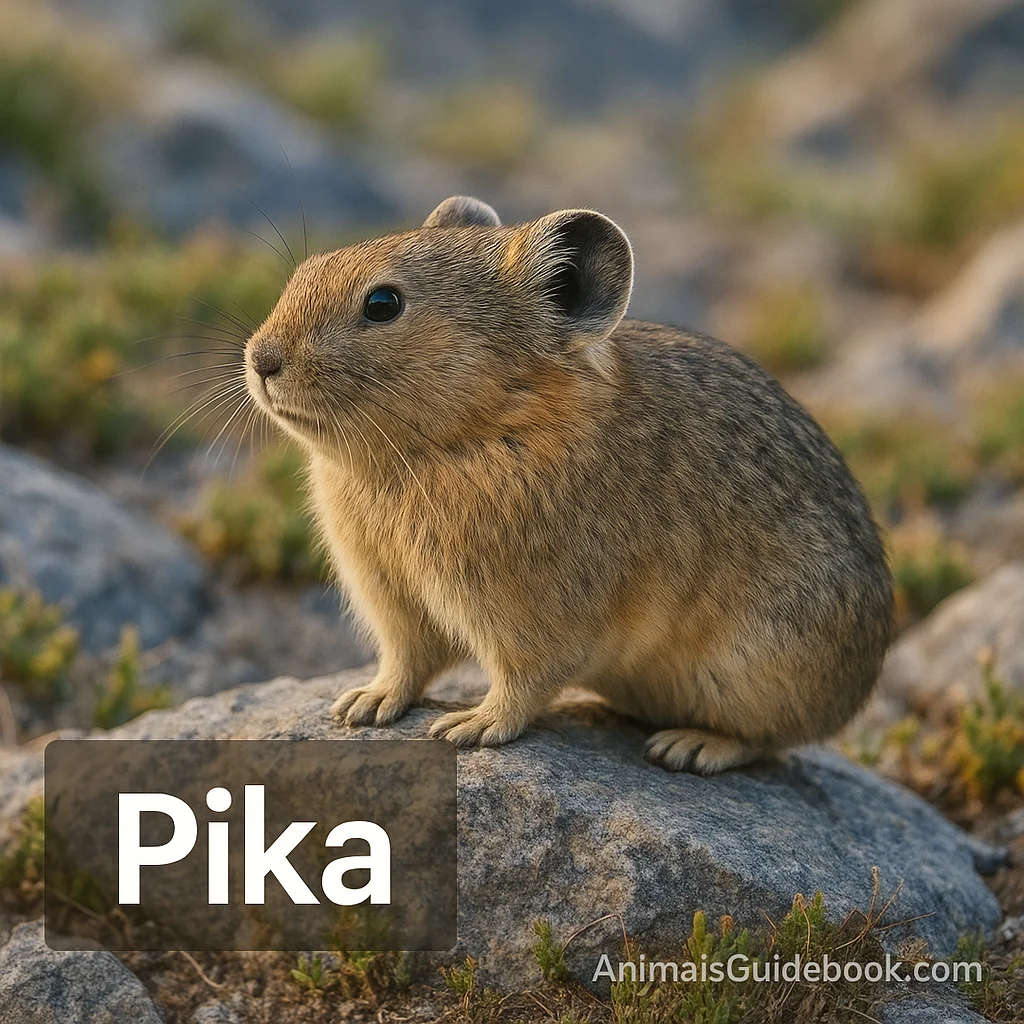
Pikas are small, herbivorous mammals known for their high-pitched calls and round, furry bodies. Typically found in cool mountainous regions, these animals are members of the Ochotonidae family and are known for their hard-working nature, especially in food gathering.
- Common name(s): Pika
- Scientific name: Ochotona spp. (varies)
- Animal type: Mammal
- Typical adult size: 15–23 cm in length, 100–150 grams in weight
- Typical lifespan: 3–7 years in the wild
- Diet type: Herbivore, primarily consuming grasses, sedges, and shrubs
- Activity pattern: Diurnal
- Social structure: Solitary or small colonies
- Speed / movement highlights: Fast, agile runners across rocky terrains
- Intelligence/learning: Adaptable foragers with memory for food storage locations
- Primary habitats: Alpine and subalpine regions
- Geographic range: North America, Asia, and some parts of Europe
- Predators/threats: Birds of prey, foxes, stoats, and human-induced habitat changes
- Conservation status: Varies by region; some species are threatened
🔍 Identification & Appearance
Pikas are distinguishable by their small, round bodies and no visible tail. They have large, round ears set low on their heads, and short limbs suited for rapid movement over rocky substrates. Typically, their fur is a mix of brown, gray, and tan tones, allowing for excellent camouflage against their mountainous habitats.
- Compact, rounded body shape
- No visible tail, unlike many other small mammals
- Large, rounded ears with excellent hearing capability
- Fur colors vary seasonally for camouflage: lighter in winter, darker in summer
- Distinctive high-pitched "eeep" call used for communication
- Often mistaken for voles but are differentiated by their ears and habitat
- Typical tracks include small, round prints in rocky, alpine areas
- Pikas have a distinct "sitting-up" silhouette when they are alert
- Leftover plant piles near their burrows indicate pika presence
- Top ID Tips
- Look for large, rounded ears
- Watch for rapid scurrying between rocks
- Listen for high-pitched calls
- Note their lack of a visible tail
- Observe fur color changes with seasons
- Check for presence in high altitude areas
- Scan for cached food piles near rock crevices
🧱 Body Structure & Physical Adaptations
Pikas have a stocky build optimized for the cold, with round shapes minimizing surface area exposure to icy winds. Their sharp incisors are perfect for cutting through tough alpine vegetation. Stocky limbs and a lack of a visible tail contribute to their streamlined navigation through rocky terrains.
- Key Adaptations
- Round body minimizing heat loss
- Sharp incisors suited for a herbivorous diet
- Short limbs to maintain low profile against predators
- Round ears aiding in acute hearing and thermoregulation
- Thick fur providing insulation against cold climates
- Agility and speed to escape predators on rocky surfaces
- Food caching behavior ensuring winter survival
- Camouflaged fur for seasonal adaptation
🌍 Range & Distribution
Pikas inhabit the mountainous regions of North America, Asia, and parts of Europe. They prefer elevations from 2,500 to 4,000 meters, thriving in cooler temperatures. Most pika species do not migrate, as they rely on their stored food caches for survival during harsh winters.
- Where You Might Find It
- Rocky alpine slopes
- Subalpine meadows
- Montane regions of Asia
- Western North America
- Lapland and Scandinavian mountains
- Behavioral adaptation to non-migratory lifestyle
- Found at higher elevations than many mammals
- Tolerant of cold, high-altitude climates
- Inaccessibility often protects habitats from human encroachment
🏞️ Habitat & Shelter
Pikas predominantly reside in alpine and subalpine environments with rocky substrates. They create shelters amidst rock crevices or in burrows insulated with collected vegetation. Seasonal adaptations involve creating large stores of vegetation-lined dens for safety and warmth.
Understanding habitat preferences aids in highlighting ecosystem roles, helps predict population shifts due to climate change, and strategizes conservation efforts.
🧭 Behavior & Ecology
Pikas are known for their industrious behavior, often spending long summer days gathering various plants to store for the winter. These creatures are territorially vocal, utilizing high-pitched calls to communicate. They play pivotal roles in seed dispersal and act as prey for various alpine predators.
- Behavior Highlights
- Territorial vocalizations as defense and communication
- Active and efficient foraging until snow cover
- Significant seed dispersers within their ecosystems
- Industrious food cachers, ensuring survival
- Alert to predators, with scouts maintaining visual lookouts
- Role as herbivores maintains plant population control
- Natural pest control through plant consumption
👥 Social Life & Group Dynamics
Pikas are primarily solitary but can form small colonies where resources are abundant. Their social interactions include territorial disputes and vocal warnings. Cooperative behaviors such as food storage sharing are rare but observed in some species under threat.
- Social Structure Notes
- Mostly solitary but exhibit seasonal aggregation
- Limited social hierarchy and dominance
- Territorial disputes over burrow and food locations
- No pronounced cooperative childcare observed
- Vocal warnings as protective group behavior
- Interaction primarily through sound and scent marks
🍽️ Diet, Prey & Predators
Pikas' diets consist mainly of a variety of grasses, sedges, and flowers. During summer, they work to create substantial haypiles, which they rely on through the winter months. They face predation from birds of prey, foxes, and stoats but rely on rocky terrain and camouflaged fur for protection.
- Feeding Notes
- Herbivorous with a preference for alpine plants
- Seasonal consumption variance, more woody plants in winter
- Anti-predator strategy includes use of rocky terrain
- Relies on plant storage to endure harsh winters
- Birds of prey represent major natural predators
🦌 Hunting, Foraging & Movement
Pikas are adept at scurrying across rocky outcrops, using rapid, nimble movements to gather food and evade predators. Their routine involves foraging during daylight hours, often returning to their burrows to organize food caches strategically.
- Movement & Strategy
- Swift movers through rocky environments
- Daytime foraging ensures maximum visibility
- Rocks provide refuge and enable quick retreats
- Capable of memorizing cache locations
- Non-migratory, with limited home range exploration
🧠 Intelligence & Senses
Pikas have a robust memory for spatial locations, aiding in effective food storage and retrieval. They exhibit keen senses, essential for detecting predators and communicating with conspecifics. Their sensory abilities are attuned to the high-altitude environment they inhabit.
- Notable Abilities
- Strong spatial memory for food caches
- Acute hearing for predator detection
- Ability to learn and adapt to human-altered landscapes
- Superior vision adapted for distance communication
🪺 Reproduction, Pregnancy & Parenting
Pikas generally breed in spring to early summer. They exhibit monogamous tendencies. Gestation lasts about 30 days, and they typically birth litters of 2-6 offspring, which are altricial at birth. Both female and male care for and provision their young.
- Reproduction Snapshot
- Breeding occurs in spring and summer
- Short gestation of approximately one month
- Typically monogamous pairs
- Litter sizes range from 2-6 young
- Offspring are reared cooperatively
♀️♂️ Male vs Female Differences
Male and female pikas are similar in appearance, making sexual dimorphism hard to distinguish. However, during breeding seasons, behavioral differences can surface, primarily in territorial defense and increased vocal activity by males.
- Sex Differences at a Glance
- Minimal visible size or color differences
- Males more territorial during breeding season
- Females may engage more in cooperative rearing
🧬 Subspecies & Variation
Different pika species exhibit various adaptations based on their geographic location and climate. For instance, those in northern habitats develop denser fur, and in warmer regions, pikas tend to have more extensive ear structures for thermoregulation. Subspecies classification varies and can be contentious among researchers.
- Variation Notes
- Adaptations to cold-climate environments
- Ear size varies with temperature of range
- Distinct pelage patterns in isolated populations
- Studies on subspecies are ongoing, with varying conclusions
⚠️ Threats, Conservation & Human Interaction
Pikas face challenges from habitat loss due to climate change, which impacts their cold-adapted habitats. Conservation efforts focus on monitoring populations and protecting critical alpine zones. Pikas' sensitivity to temperature changes makes them potent indicators of environmental health.
- Responsible Notes
- Protective measures to conserve alpine habitats
- Focus on reducing carbon footprints affects pika survival positively
- Human-induced habitat change is a critical threat
- Climate change poses significant risks
- Useful indicator species for monitoring environmental health
✨ Fun Facts & Unique Traits
- Pikas store food throughout summer, creating "haypiles" to sustain them through winter.
- Their high-pitched calls are not only for communication but also to warn others of predators.
- Despite their appearance, pikas are relatives of rabbits and hares.
- Pika habitats are usually above the tree line, in rocky mountain crevices.
- They have adapted to live at high altitudes where oxygen levels are low.
- The American Pika is often considered an indicator species for climate change's impact.
📌 Summary
- Recognizable by their round bodies and lack of visible tail
- Inhabit alpine and subalpine mountain regions
- Herbivorous diet with seasonal haypile storage behavior
- Predation by birds of prey and ground predators
- Primarily solitary with simple social structures
- Breeding is marked by springtime monogamy
- Certain species exhibit regional subspecies adaptations
- Sensitive to climate change impacts, highlighting conservation needs