🦁 Flying Fox (Fruit Bat)
🧾 Quick Facts
Flying foxes, commonly known as fruit bats, encompass a group of large bat species belonging to the family Pteropodidae. Known for their imposing size and frugivorous diet, these bats are vital for seed dispersal and pollination across tropical and subtropical regions.
- Common name(s): Flying fox, Fruit bat
- Scientific name: Varies by species (e.g., Pteropus)
- Animal type: Mammal
- Typical adult size: Wing span 1–1.5 meters (3–5 feet), weight 0.5–1.5 kilograms (1–3 pounds)
- Typical lifespan: 10–30 years
- Diet type: Herbivore, primarily fruits and nectar
- Activity pattern: Nocturnal
- Social structure: Typically found in large colonies
- Speed / movement highlights: Powerful and graceful flyers with adaptive maneuverability
- Intelligence/learning: Known for their navigational skills and social intelligence
- Primary habitats: Tropical and subtropical forests, mangroves
- Geographic range: Africa, Asia, Australia, and islands in the Indo-Pacific
- Predators/threats: Predators include large birds of prey; human threats include habitat destruction
- Conservation status: Varies by region; some populations are threatened or endangered
🔍 Identification & Appearance
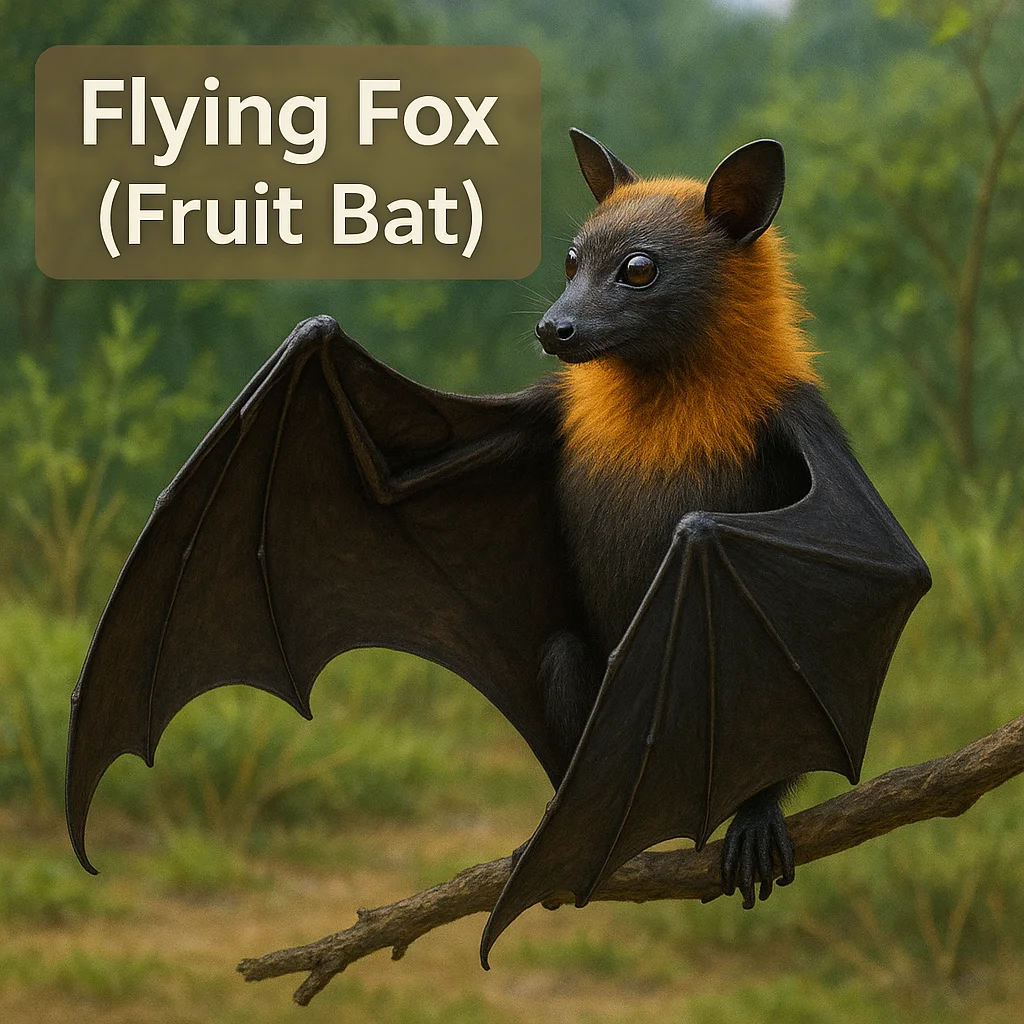
Flying foxes are easily recognizable due to their large size and fox-like facial features. They have elongated snouts, large eyes, and typically soft, dense fur. Their wings are expansive and leathery, with a characteristic finger-like structure supporting the membrane. Seasonal variation in coloration is generally subtle, though some species may exhibit slight changes depending on age or environmental conditions.
- Body shape and silhouette: Large, robust build with wide wings and a distinct head
- Key colors/patterns: Generally brown, black, or gray with fur ranging from golden to reddish
- Distinctive features: Long fingers, large eyes, and a characteristic snout similar to that of a fox
- Tracks, scat, or other field signs: Droppings often found near feeding roosts
- Common look-alikes: Smaller bats, but identifiable by their larger size and unique facial features
- Top ID Tips:
- Look for a large bat with a fox-like face
- Note the expansive wingspan
- Check for color variations typical to the region
- Observe any colony or group behaviors
- Listen for unique vocalizations in roosts
- Look for their presence in fruit-heavy areas
- Identify feeding signs like bitten fruit
🧱 Body Structure & Physical Adaptations
Flying foxes possess a unique anatomy tailored for their fruit-based diet and flight capabilities. Their strong forelimbs and expansive wings allow for adept maneuvering through dense forest canopies. Their teeth are specialized for chewing fruit, with adaptations for gripping and manipulating food. Sensory adaptations include excellent night vision and acute smell, enabling them to locate food with precision.
- Key Adaptations:
- Robust chest and shoulder muscles for strong flight
- Elongated fingers supporting the wing membrane
- Teeth adapted for grinding fruit and removing seeds
- Keen eyesight adapted for low-light conditions
- Acute sense of smell to detect ripe fruit
- Retractable claws for hanging and climbing
- Lightweight skeleton to aid efficient flight
🌍 Range & Distribution
Flying foxes are dispersed across various warm regions worldwide, particularly in tropical and subtropical zones. They inhabit a wide range of forested landscapes, including rainforests, mangroves, and coastal areas. While some species are more widespread, others may be restricted to specific islands or regions.
- Where You Might Find It:
- Southeast Asian rainforests
- Australian coastlines and forests
- Islands in the Indian Ocean
- African tropical zones
- Forested areas of the Indo-Pacific
- Lowland regions rich in flowering plants
- Mixed forests with a variety of fruiting trees
- Mangrove forests
- Urban areas with gardens and fruit trees
🏞️ Habitat & Shelter
Flying foxes prefer lush, fruit-abundant environments such as tropical forests, mangroves, and occasionally urban areas with significant vegetation. They typically roost in tall trees during the day, often forming large colonies. Their sheltering habits may adapt according to weather, with denser cover sought during wetter months.
🧭 Behavior & Ecology
Flying foxes engage in a variety of social behaviors, often forming large colonies for roosting and social interaction. Nocturnal by nature, they spend nights foraging for food, utilizing complex vocalizations for communication. These bats play an essential ecological role as pollinators and seed dispersers, contributing to forest regeneration and plant diversity.
- Behavior Highlights:
- Roosting in large colonies during the day
- Foraging at night using memory and scent
- Complex vocal communication in colonies
- Essential role in seed dispersal and pollination
- Mutualistic relationships with fruiting plants
- May switch roosting sites based on resource availability
- Occasional territorial displays to maintain roost space
- Cooperative grooming and social bonding in groups
👥 Social Life & Group Dynamics
Flying foxes are inherently social animals, forming colonies that can range from dozens to thousands of individuals. These groups provide safety in numbers, enhance information sharing, and strengthen social bonds. Leadership or dominance hierarchies may exist but are generally subtle and based on experience or seniority rather than aggression. In addition to roosting, daytime activities include social grooming and play behaviors among younger bats.
- Social Structure Notes:
- Colonies can be quite large and dynamic
- Preference for communal roosting in trees
- Grooming and mutual care common within groups
- Social knowledge passed through generations
- Occasional displacement conflicts resolved with displays
- Juveniles engage in playful interactions
- Females may bond during nursing periods
- Cooperative roost defense against predators
🍽️ Diet, Prey & Predators
Flying foxes primarily consume fruits and nectar, showcasing adaptive traits for this diet, such as a discriminating sense of smell and a versatile tongue suited for consuming liquid and soft foods. Staple fruits include bananas, mangos, and figs, with dietary variation depending on local availability. Predators include large birds of prey and snakes, necessitating vigilance and swift flight responses in open areas.
- Feeding Notes:
- Consumes a broad variety of tropical fruits
- Nectar and pollen supplement diet
- Feeding often occurs in fruit-rich trees
- Capable of traveling long distances for food
- Shares feeding sites with other fruit-eating animals
- Drags fruits to secluded spots for consumption
- Vigilant of avian predators during feeding
- Utilizes keen sense of smell to locate food
🦌 Hunting, Foraging & Movement
Flying foxes are adept fliers, using their powerful wings and acute sensory adaptations to navigate and forage efficiently across vast areas. Foraging activities typically occur during nocturnal periods, involving trips to fruit trees and nectar sources. Navigation combines memory, visual cues, and scent trails, allowing them to locate food sources and avoid predation efficiently.
- Movement & Strategy:
- Skilled and enduring fliers
- Utilize visual landmarks and olfactory cues for orientation
- Primarily forage at night
- Long-distance travel capabilities for food
- Agile flyers capable of intricate maneuvers
- Frequent return trips to known food sources
- Avoid predation by maintaining high vigilance
🧠 Intelligence & Senses
Flying foxes exhibit notable cognitive abilities, particularly in social settings and ecological tasks. They demonstrate problem-solving skills, especially in foraging scenarios requiring spatial memory and scent-tracking. Their senses are finely tuned, with enhanced night vision aiding in nighttime activities, while acute olfactory senses are crucial for diet-specific tasks.
- Notable Abilities:
- Exceptional navigational skills
- High social intelligence among colony members
- Acute sense of smell for detecting food
- Memory retention related to food sources
- Visual acuity in low light
- Communicative ability within colonies
- Limited research suggests adaptability in new environments
🪺 Reproduction, Pregnancy & Parenting
Breeding patterns among flying foxes vary by species and location, with many forming monogamous or polygamous pairs during mating seasons. Mating behavior often includes vocal displays and grooming. Gestation typically lasts several months, producing one offspring per cycle, with females primarily responsible for nursing and care. Juveniles are often carried by mothers during early life stages for protection and feeding.
- Reproduction Snapshot:
- Breed once per year depending on region
- Gestation period ranges between 3–6 months
- Typically gives birth to a single offspring
- Females provide primary parental care
- Juveniles dependent on mothers for transportation
- Nurse young from several months to a year
- Colony environment facilitates communal learning
- Mating calls and displays common
♀️♂️ Male vs Female Differences
Differences between male and female flying foxes are generally minimal, often exhibiting subtle variations in size and coloration. Males may be slightly larger and engage more in displays, particularly during mating periods. Females are more engaged in caregiving roles, focusing on nurturing offspring and maintaining family bonds within the colony.
- Sex Differences at a Glance:
- Males slightly larger on average
- Males may show more vibrant coloration in some species
- Females assume primary caregiving roles
- Mating displays more prominent in males
- Both sexes participate in colony defense
- Diet and foraging patterns similar across genders
- Subtle behavioral distinctions in parental involvement
🧬 Subspecies & Variation
Flying foxes exhibit significant species diversity, with variations in size, coloration, and range attributed to distinct subspecies. Known for their adaptability, some species display local adaptations like island dwarfism or region-specific color morphs. Classification can be debated, highlighting the importance of ongoing research in understanding these variations.
- Variation Notes:
- Numerous species and subspecies identified
- Diverse colorations tied to regional adaptations
- Differing habitat preferences across subspecies
- Island populations sometimes smaller (dwarfism)
- Genetic studies continue to refine classification
⚠️ Threats, Conservation & Human Interaction
Flying foxes face multiple threats, including habitat loss, climate change, and hunting. As key participants in ecosystem health, their conservation is critical. Efforts to protect forest habitats and reduce human-wildlife conflict can aid their survival. Ethical considerations in managing colonies and rehabilitating injured bats should prioritize minimal harm and ecological integrity.
- Responsible Notes:
- Prominent threat from habitat destruction
- Climate change affects food availability
- Hunted in some regions for food
- Efforts needed to preserve roosting sites
- Community education can reduce conflict
- Protected areas support population recovery
- Rehabilitation initiatives vital for injured bats
✨ Fun Facts & Unique Traits
- Flying foxes can travel over 50 kilometers in a single night for food
- They rely on strong social bonds, forming lifelong friendships with colony members
- The largest species, like the Indian flying fox, boasts impressive wingspans
- Despite their size, they are gentle and non-aggressive to humans
- Flying foxes are essential for the pollination of many tropical plants
- Some species can suck nectar, replacing the need for insects in some regions
- Flying foxes possess a unique call, aiding in complex social interactions
- They have been observed using tools, indicating high intelligence
📌 Summary
- Flying foxes are large, sociable fruit bats critical for ecosystems
- Mainly inhabit tropical forests and adapt to urban environments
- Nocturnal feeders relying on fruits and nectar
- Vital seed dispersers: aid in forest regeneration
- Social colonies: provide protection and social learning
- Reproduction involves extended parental care
- Exhibit impressive flying capabilities and navigation skills
- Facing threats from habitat loss and climate changes, conservation is key