🦁 Parrotfish
🧾 Quick Facts
Parrotfish are fascinating marine creatures known as key contributors to the health and maintenance of coral reefs. This diverse group of fish, under the Scaridae family, captivates with their vibrant colors and unique adaptations.
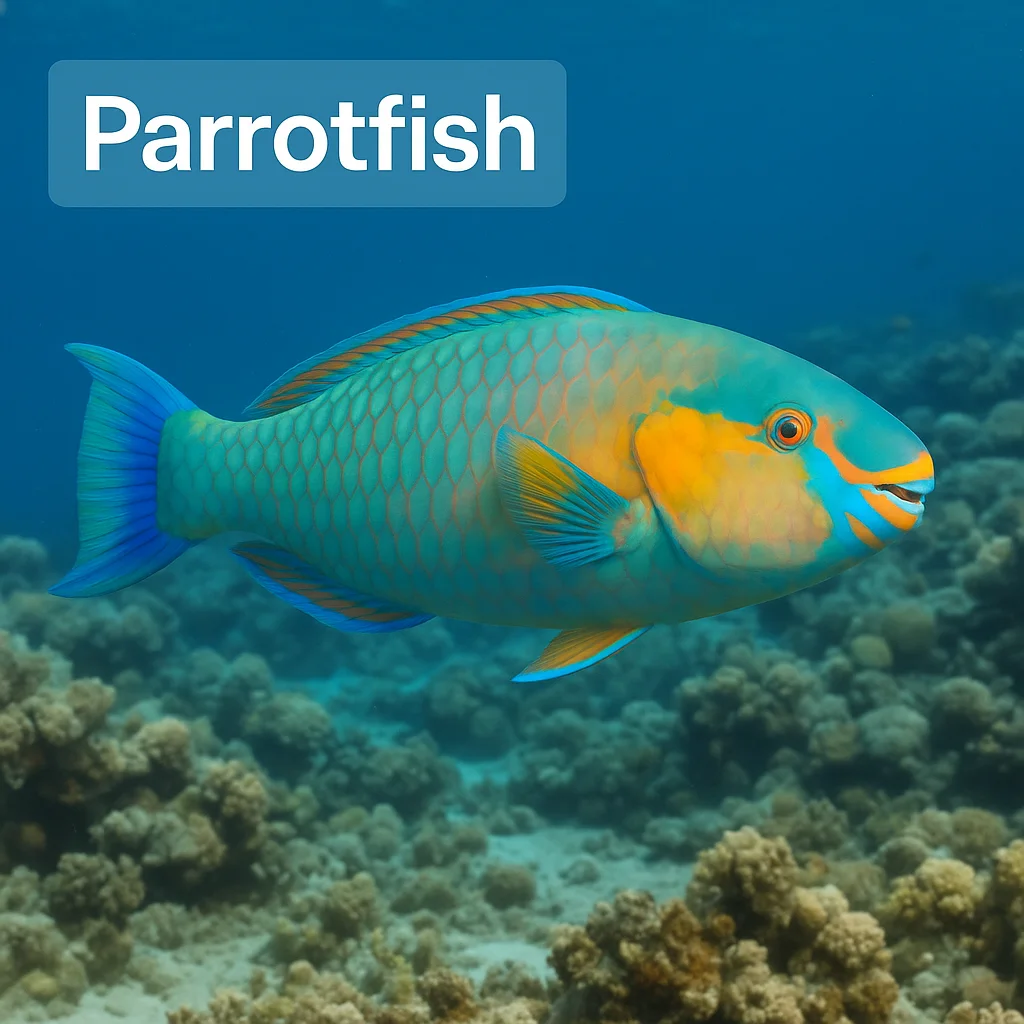
- Common name(s): Parrotfish
- Scientific name: Scaridae family (includes genera Scarus, Cetoscarus, Hipposcarus, and others)
- Animal type: Fish
- Typical adult size: 30–120 cm (12–47 inches) in length
- Typical lifespan: 5–20 years in the wild
- Diet type: Herbivore; primarily algae scraped from coral surfaces
- Activity pattern: Diurnal
- Social structure: Variable; from solitary individuals to small groups
- Speed / movement highlights: Can swim at moderate speeds with agility and precision
- Intelligence/learning: Known for complex social behavior and role flexibility in breeding systems
- Primary habitats: Coral reefs
- Geographic range: Tropical and subtropical oceans worldwide
- Predators/threats: Larger fish, sharks, human activity such as overfishing and habitat destruction
- Conservation status: Varies by species; some are threatened due to habitat loss and overfishing
🔍 Identification & Appearance
Parrotfish are easily recognized by their bright, bold coloration, which can vary significantly among species and even between genders of the same species. Their name is derived from their distinct parrot-like beak, formed by fused teeth.
- Body shape: Oval or elongated with a robust build
- Key colors/patterns: Brilliant blues, greens, reds, yellows; coloration often changes as they mature
- Distinctive features: Beak-like jaws for scraping algae, long dorsal fins
- Field signs: Coral debris and sand, a result of their feeding activity
- Common look-alikes: Wrasses; distinguished by less parrot-like beaks and different body shapes
- Top ID Tips:
- Bilateral symmetry and vivid coloration
- Beak-like fused teeth
- Noticeable, continuous dorsal fin
- Color variations indicating age and breeding stage
- Small, cycloid scales
- Pectoral fins frequently used for precise maneuvering
🧱 Body Structure & Physical Adaptations
Parrotfish boast specialized adaptations that align with their role in the ecosystem. Their fusiform body aids in agile swimming, while their fused teeth form a powerful beak for their herbivorous diet.
- Build: Stocky with powerful tails and pectoral fins
- Jaw adaptations: Fused dental plates for efficient algae scraping
- Fin adaptations: Pectoral fins for precise steering and balance
- Sensory strengths: Acute vision, especially in detecting colors and movement
- Key Adaptations:
- Beak-like jaws for feeding
- Bright coloration for communication and camouflage
- Reef-specific alignment for rapid turns and maneuverability
- Scales that offer protection and reduce drag
- Strong swimming ability aided by powerful tails
🌍 Range & Distribution
Parrotfish are primarily found in tropical and subtropical oceanic regions, inhabiting coral reefs where their dietary preferences can be satisfied. Their distribution is extensive but varies among species.
- Regions: Reefs in the Indian, Pacific, and Atlantic Oceans
- Countries: Common in coastal areas of Australia, Indonesia, the Caribbean, and Red Sea regions
- Elevation range: Generally found from the surface to depths of 30 meters
- Seasonality: Mostly resident with no significant migratory behavior
- Where You Might Find It:
- The Great Barrier Reef, Australia
- The Caribbean Sea near coral reefs
- Indian Ocean islands such as Maldives
- Hawaiian coral reef systems
- Red Sea coral environments
🏞️ Habitat & Shelter
Parrotfish are predominantly associated with coral reef environments, where they perform substantial ecological work. They form territories within these reefs that offer shelter and food, allowing them to thrive in these biologically rich settings.
- Preferred habitats: Coral reefs with abundant algal growth
- Shelter: Reefs provide crevices and caves for rest and protection
- Seasonal behavior: Activity patterns remain consistent year-round due to stable reef environments
- Ecological role: By controlling algae levels, parrotfish maintain reef health and growth
🧭 Behavior & Ecology
Parrotfish exhibit vibrant and dynamic behaviors. They play a significant role in coral reef maintenance by grazing on algae, which prevents algal overgrowth, promoting coral health. Their social interactions are rich and varied.
- Daily routine: Usually involve feeding and social interactions during the daytime
- Communication: Involves body language and color changes
- Interactions: Coral grazing, symbiotic relationships with various marine species
- Ecological role: Act as bioeroders, turning rock into sand, important for reef ecosystems
- Behavior Highlights:
- Scraping algae from corals
- Complex social structures that include harems
- Role swaps in breeding and hierarchy
- Use of night shelters in reef crevices
- Creation of sandy substrates essential for certain marine life
👥 Social Life & Group Dynamics
Parrotfish demonstrate an intriguing array of social systems that range from solitary existence to highly structured social hierarchies. These systems often involve harems, with a dominant male and multiple females.
- Solitary vs social tendencies: Both solitary and social; group structures change seasonally and with life stages
- Group types: Harems typically consist of one male and multiple females
- Cooperation: Mutualistic interactions with other reef species
- Dominance hierarchies: Dominant males control harems, females can transform into males as needed
- Social Structure Notes:
- Harem dynamics, with dominant males
- Prototogynous hermaphroditism allows females to become males
- Group size varies with environment and availability of resources
- Territorial behavior for feeding and breeding spaces
- Shared night shelters
🍽️ Diet, Prey & Predators
Primarily herbivorous, parrotfish feed extensively on algae and dead coral surfaces. Their specialized feeding helps control algae growth on reefs, promoting coral health. While they have natural predators, their behavior and habitats provide protection.
- Diet: Algae, seagrass, and coral polyps
- Predators: Larger fish species and sharks; vulnerable to human fishing
- Feeding behavior: Beaks allow them to effectively scrape food off hard substrates
- Defense strategies: Use crevices for night shelter; tough scales offer protection
- Feeding Notes:
- Diurnal feeding patterns
- Use strong beaks for scraping algae
- Produce significant quantities of sand through digestion
- Avoid areas with high predator presence
- Occasional cleaning mutualisms with small fish
🦌 Hunting, Foraging & Movement
Parrotfish are adept foragers within coral reef ecosystems. Their foraging is crucial for maintaining the balance of reef environments by keeping algae in check, which encourages coral growth.
- Locomotion: Strong swimmers utilizing pectoral fins for precision and tails for power
- Foraging time: Primarily during the daytime
- Navigation: Excellent spatial awareness within complex reef structures
- Movement & Strategy:
- Consistent daily activity during daylight
- Rapid bursts of speed to evade predators
- Efficiently graze large areas of reef
- Utilize coral nooks for refuge
- Not migratory; home-based within reefs
🧠 Intelligence & Senses
Parrotfish exhibit behavioral intelligence that includes the ability to adjust social roles as necessary. They utilize keen senses to navigate and survive in their environment, particularly fine-tuned vision for spotting algae patches and predators.
- Problem-solving: Adaptability in social roles and hierarchies
- Sensory capabilities: Highly developed color vision and spatial awareness
- Behavioral flexibility: Demonstrated through sex change and social role swaps
- Notable Abilities:
- Sex change in response to social dynamics
- High dependence on vision for foraging
- Social adaptability indicating learning ability
- Use color changes for communication
- Maintaining complex social structures
🪺 Reproduction, Pregnancy & Parenting
Parrotfish have a remarkable breeding adaptation known as protandry, where individuals may change sex during their lifetime. This system ensures optimal reproductive success in changing social contexts.
- Breeding season: Typically year-round in tropical regions
- Mating system: Protogynous hermaphrodites; females can become males if needed
- Spawning: Mass spawning events ensure survival of young despite high predation
- Parenting roles: Limited; eggs are left to develop in the water column
- Reproduction Snapshot:
- Few parenting behaviors post-spawning
- Transforming into males increases harem control
- Eggs spawned in open waters
- High fecundity through numerous small eggs
- Varies by species and environmental conditions
♀️♂️ Male vs Female Differences
Gender differences in parrotfish are marked by changes that occur over their lifespan. Initially female, some can transition to male, especially in the absence of a dominant male, showcasing their unique sexual adaptability.
- Size/weight differences: Males often larger and exhibit vibrant colors
- Coloration: Males generally brighter to attract mates
- Behavioral roles: Males lead social groups; females may compete to assume male roles
- Subtle changes: Males develop larger bodies with more pronounced features
- Sex Differences at a Glance:
- Variable color intensity between genders
- Males often exhibit more dominant social roles
- Females can transform into males
- Behavior change with sex transition
- Dominant males larger than females
🧬 Subspecies & Variation
Parrotfish include a diverse range of species within their family, showcasing variation in size, coloration, and even in feeding habits across different regions.
- Subspecies: Multiple species under the genera Scarus, Cetoscarus, etc.
- Local adaptations: Colors and sizes may vary regionally based on habitat
- Classification debates: Ongoing research as genetic studies evolve
- Variation Notes:
- Diverse genus encompassing Scarus, Cetoscarus
- Color patterns vary with region and species
- Size differences influenced by local ecology
- Feeding adaptations specific to reef type
- Absence of a universal size or color among species
⚠️ Threats, Conservation & Human Interaction
Parrotfish face significant threats from human activities, including overfishing and coral reef degradation. Conservation efforts are essential to preserve their ecological role in reef health.
- Natural challenges: Predation by larger fish and habitat-specific diseases
- Human pressures: Overfishing, pollution, and reef destruction
- Coexistence tips: Protecting coral reefs ensures the survival of parrotfish and the balance of marine ecosystems
- Responsible Notes:
- Avoiding overfishing is critical for species health
- Marine protected areas benefit parrotfish populations
- Conservation important for coral health and regeneration
- Tourist activities should minimize reef impact
- Community education in coastal regions
✨ Fun Facts & Unique Traits
- Parrotfish are capable of creating beaches by producing sand from coral digestion.
- They are among the few fish capable of producing a significant amount of noise through jaw movements.
- Parrotfish sleep in protective mucus cocoons that may help mask their scent from predators.
- Their name derives from beak-like teeth similar to a parrot's beak.
- Color changes in parrotfish can indicate mood, breeding status, or rank within social hierarchies.
- Some parrotfish species can change sex from female to male as part of their life cycle.
- They contribute to coral health by keeping algae at manageable levels.
- Parrotfish are often credited with maintaining the structural complexity of tropical reefs, crucial for biodiversity.
📌 Summary
- Parrotfish are vibrant reef fish known for their algae-scraping habits.
- Typically inhabit warm tropical and subtropical reef environments.
- Easily identifiable by their bold coloration and beak-like jaws.
- Play a critical ecological role in maintaining coral reef health.
- Exhibit a range of social structures, from solitary to harems.
- Primarily herbivorous, with a diet focused on coral-associated algae.
- Face threats from overfishing and environmental degradation.
- Capable of sex changes to optimize reproduction within their groups.
- Known for producing sand and contributing to beach formation.
- Conservation efforts are crucial to preserving their role and habitats.