🦁 Grouper
🧾 Quick Facts
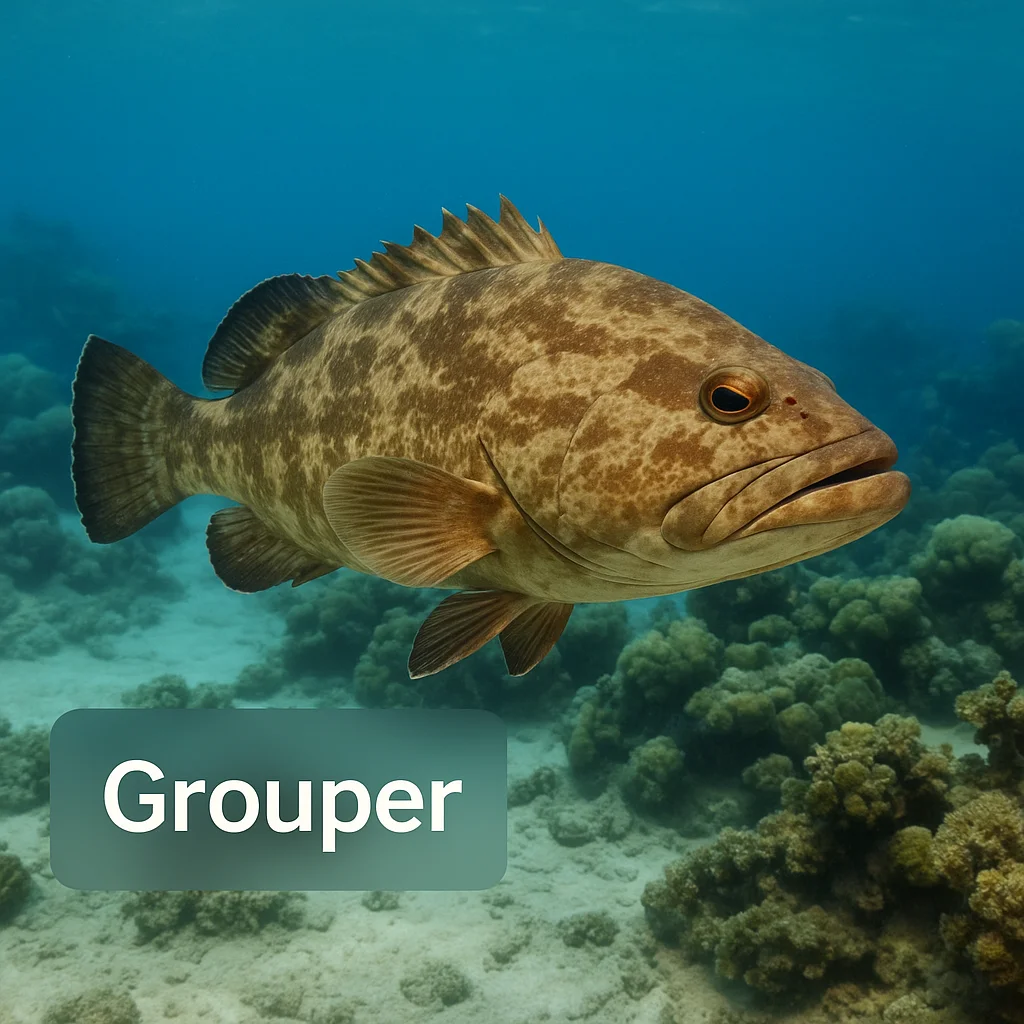
Groupers are large, muscular fish known for their impressive size and fascinating biological characteristics. As a diverse group primarily found in warm marine environments, groupers are an intriguing subject for both scientists and enthusiasts.
- Common name(s): Grouper
- Scientific name: Varies (includes genera such as Epinephelus, Mycteroperca)
- Animal type: Fish
- Typical adult size: Length 80–270 cm (31–106 inches); Weight up to 400 kg (880 lbs)
- Typical lifespan: 20–50 years in the wild
- Diet type: Carnivore; primarily fish and invertebrates
- Activity pattern: Often diurnal
- Social structure: Solitary or in loose groups during breeding
- Speed / movement highlights: Slow swimmers, capable of short bursts of speed
- Intelligence/learning: Moderate; capable of hunting strategies
- Primary habitats: Coral reefs and rocky areas
- Geographic range: Tropical and subtropical regions worldwide
- Predators/threats: Sharks, larger fish, human fishing
- Conservation status: Varies by species; some are vulnerable
🔍 Identification & Appearance
Groupers are easily recognized by their robust bodies, large mouths, and wide range of colors and patterns. The body shape is typically oval and compressed, making them suitable for life around reefs. Colors range from muted earth tones to bright oranges, blues, and greens, often with unique spots or banding.
- Body shape: Stocky, with broad, flat heads and wide mouths
- Key colors: Variable; some species display vibrant colors and patterns
- Distinctive features: Large mouths adapted for engulfing prey
- Common look-alikes: Snappers; distinguishable by body shape and mouth size
- Top ID Tips:
- Look for a large, muscular frame
- Check for a wide, rounded mouth
- Note color patterns: spots, bands, or solid colors
- Observe behavior: often rests near reefs
- Check size: typically quite large
- Examine fin shape: rounded and substantial
- Notice movement: slow but powerful
🧱 Body Structure & Physical Adaptations
Groupers have evolved physical features that assist them in hunting and living in reef environments. Their large mouths can protrude outward, creating a vacuum to suck in prey. Built for power rather than speed, they can exert significant force to pull prey from hiding.
- Build: Stocky, with a large head and tapered body
- Teeth: Small but numerous; effective for gripping prey
- Fins: Powerful pectoral and dorsal fins for balance and movement
- Sensory strengths: Keen vision and lateral line system for detecting movement
- Key Adaptations:
- Powerful jaws and suction feeding
- Diverse coloration for camouflage
- Strong fins for maneuvering reefs
- Robust build for reef life
- Efficacy in low-light environments
- Responsive to water pressure changes
🌍 Range & Distribution
Groupers inhabit tropical and subtropical marine waters, often around coral reefs, rocky outcrops, and sandy substrates. They are more prevalent in the Atlantic, Pacific, and Indian Oceans, with some species occupying specific locales.
- Found in tropical regions worldwide
- Common around coral reefs
- Present in warm, shallow waters
- Some species found around rocky coastlines
- Common in the Caribbean and Southeast Asia
- Not found in colder oceanic regions
- Mainly resides at depths of 20–100 meters
- Rarely migrate long distances
🏞️ Habitat & Shelter
Groupers prefer complex habitats such as coral reefs and rocky environments, which offer numerous hiding spots and abundant prey. These settings provide excellent opportunities for ambush hunting and protection from larger predators.
Understanding their habitat helps clarify their role as both predator and prey in reef ecosystems. Seasonal changes can affect their activity levels, with some groupers becoming more reclusive during cooler months.
🧭 Behavior & Ecology
Groupers are primarily ambush predators. They use patience and stealth, often spending long periods resting motionless near reef structures before darting out to capture prey. Communication among groupers is minimal, relying on visual cues and body language.
As a key predator within their ecosystem, groupers help maintain the balance of marine life, particularly controlling smaller fish populations and contributing to reef health by their predatory activities.
- Behavior Highlights:
- Often solitary, except during spawning
- Use ambush strategies to capture prey
- Exhibit site fidelity, returning to specific locations
- Display temporary social behavior during breeding
- Minimal vocalizations; rely on visual signals
- Top predators in reef ecosystems
- Help control fish population imbalances
- Capable of long-term habitation of specific areas
👥 Social Life & Group Dynamics
Generally solitary, groupers may aggregate for spawning activities during certain times of the year. They are not known for complex social structures, though temporally align into groups during breeding seasons. Aggressive displays might occur when territories are threatened.
- Social Structure Notes:
- Primarily solitary lifestyle
- Temporary groupings for mating
- Aggressive when provoking territorial disputes
- Minimal hierarchy observed
- May form loose aggregations during breeding
- Limited social bonds outside breeding periods
- Discrete when interacting within species
- Sometimes gather near abundant food sources
🍽️ Diet, Prey & Predators
Groupers are carnivorous and typically feed on other fish, crustaceans, and mollusks. Their hunting strategy involves stealth and quick bursts of speed to swallow prey whole. Predators of young groupers include larger fish and sharks, while human fishing poses a significant threat to adult groupers.
- Feeding Notes:
- Carnivorous diet focused on fish and invertebrates
- Employ ambush techniques
- Can consume large prey relative to size
- Utilize suction feeding method
- Avoid relying on complex hunting strategies
- Prey upon fish hidden within coral crevices
- Sharks and large predators pose a threat
- Human overfishing affects populations
🦌 Hunting, Foraging & Movement
Groupers are predominantly sedentary but utilize effective hunting techniques to procure food. Their burst speed, although brief, is sufficient for capturing prey by surprise. They prefer hunting at dawn or dusk and make minimal movements otherwise.
- Movement & Strategy:
- Predominantly ambush predators
- Short bursts of high speed for capturing prey
- Commonly hunt at dusk
- Rely on camouflage and environment
- Minimal movement; energy conservation
- Skilled in navigating reef structures
- Tend not to migrate unless necessary
🧠 Intelligence & Senses
Though not renowned for intelligence, groupers exhibit sufficient problem-solving capabilities related to their hunting tactics. Their excellent vision aids in detecting prey, and their lateral line system helps sense movements in the water.
- Notable Abilities:
- Effective ambush hunting
- Keen visual tracking
- Utilize environment for camouflage
- Able to adjust strategies based on conditions
- Course trajectory to best fit predator avoidance
- Limited problem-solving outside of feeding
- Sensory adaptation for low-light hunting
🪺 Reproduction, Pregnancy & Parenting
Grouper breeding patterns typically involve seasonal spawning, where females release eggs into the water column. Fertilization occurs externally, and groupers do not show parental involvement post-spawning. Larger aggregations during spawning help increase genetic diversity.
- Reproduction Snapshot:
- Seasonal spawning activity
- External fertilization of eggs
- Lack of parental care post-spawning
- Occasional formation of spawning aggregations
- Promiscuous mating system
- High egg count to increase survival odds
- Growth rate varies among species
- Juveniles often remain in nursery habitats
♀️♂️ Male vs Female Differences
While sexual dimorphism isn't overly pronounced in groupers, males can sometimes grow larger than females. In some species, coloration may vary slightly between genders.
- Sex Differences at a Glance:
- Males often larger than females
- Occasional color variations between genders
- Mature males may exhibit more vibrant patterns
- Behavioral roles are not distinctly different
- Breeding aggregations reveal some dominance
- Territorial displays more common in males
🧬 Subspecies & Variation
With many subspecies across the genera, groupers display notable variation. Differences often exist in size, coloration, and habitat preference. The classification of groupers is complex, and researchers continue to study their genetic diversity.
- Variation Notes:
- Size varies significantly across species
- Coloration adapted to specific environments
- Some species exhibit unique feeding adaptations
- Debate on taxonomic classification persists
- Variety reflects diverse habitats occupied
⚠️ Threats, Conservation & Human Interaction
Groupers face pressures from overfishing, habitat destruction, and climate change. Conservation efforts focus on habitat protection and sustainable fishing practices. As popular targets for fisheries, careful management is crucial to ensure their sustainability in the wild.
- Responsible Notes:
- Overfishing significantly impacts populations
- Vulnerable to coral reef degradation
- Climate change affects habitat availability
- Enforcement of fishing regulations is essential
- Protected marine areas aid in conservation
- Raise awareness of grouper conservation needs
- Promote sustainable seafood consumption
✨ Fun Facts & Unique Traits
- Groupers can alter coloration to blend with surroundings.
- Some species change gender as they mature, a phenomenon known as protogyny.
- Individuals can grow extremely large, contributing to their role as key reef predators.
- Known for their powerful jaws and unique feeding techniques.
- Groupers can live several decades, showcasing impressive longevity.
- They rely on a unique swim bladder for buoyancy control.
- Can produce deep, resonant sounds by grinding their teeth for communication.
📌 Summary
- Groupers are large, muscular fish renowned for their diverse coloration and reef habitat.
- They inhabit tropical and subtropical waters globally, favoring reef environments.
- Carnivorous, feeding on fish and invertebrates with unique suction feeding techniques.
- Predators include sharks and humans, which threaten population numbers.
- Social life mainly solitary, except during breeding aggregations.
- Reproduction involves external fertilization; no parental care post-spawning.
- Adaptations include robust bodies, powerful jaws, and effective camouflage.
- Substantial variations exist across species, reflecting habitat and ecological roles.