🦁 Clownfish
🧾 Quick Facts
Clownfish are instantly recognizable coral reef residents known for their vibrant colors and symbiotic relationship with sea anemones. Here's what makes them special:
- Common name(s): Clownfish, Anemonefish
- Scientific name: Amphiprioninae (various species)
- Animal type: Fish
- Typical adult size: 4 to 5 inches (10 to 13 cm)
- Typical lifespan: 6 to 10 years (in an aquarium)
- Diet type: Omnivore; algae, zooplankton, invertebrates
- Activity pattern: Diurnal
- Social structure: Group; dominant male and female with juvenile subordinates
- Speed / movement highlights: Moderately fast swimmers
- Intelligence/learning: Known for complex social behaviors and communication
- Primary habitats: Coral reefs
- Geographic range: Indian and Pacific Oceans, including the Great Barrier Reef
- Predators/threats: Larger fish, habitat loss
- Conservation status: Generally stable, varies by region
🔍 Identification & Appearance
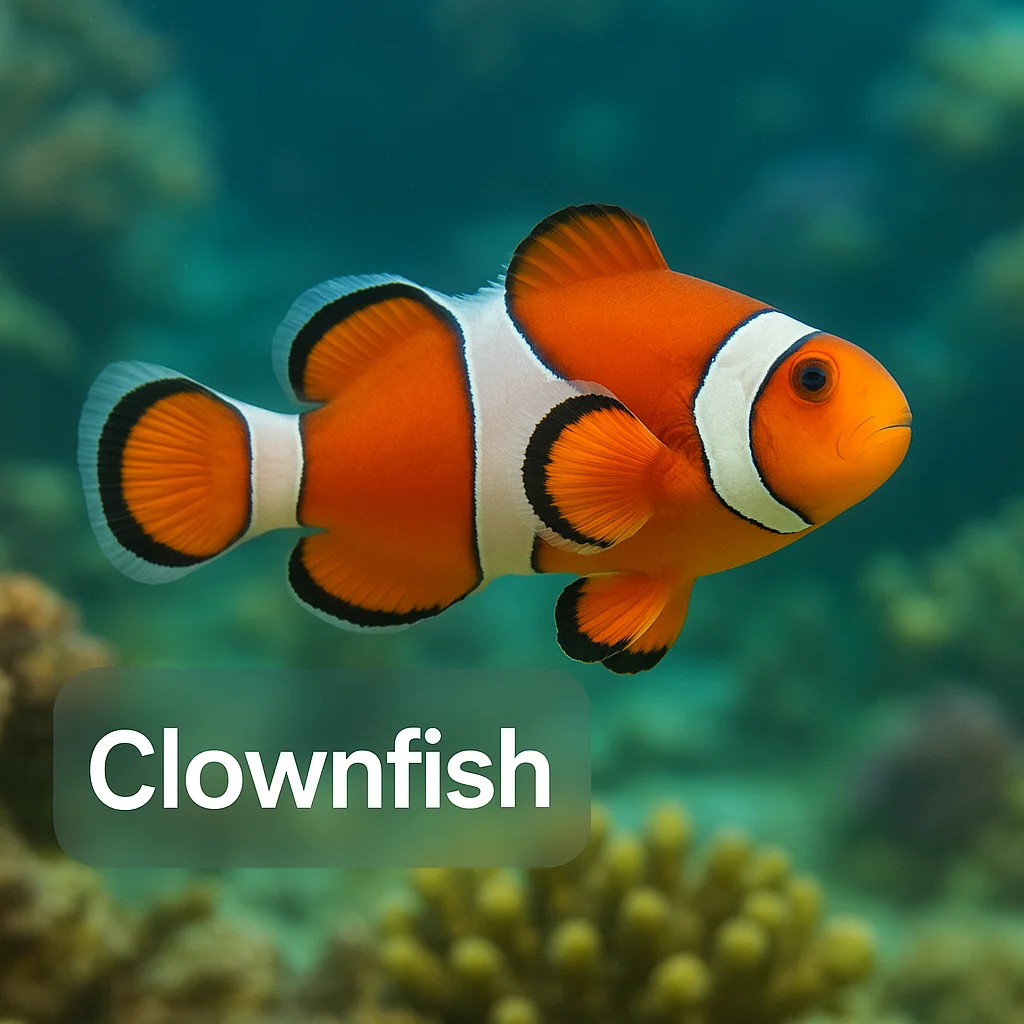
Clownfish have a striking appearance that makes them easy to identify. Their body is typically oval-shaped and laterally compressed.
- Body shape: Oval and compressed
- Key colors: Bright orange, with white bands outlined in black
- Distinctive features: Three white bands on head, body, and tail
- Common look-alikes: Damselfish, but clownfish have a more vibrant coloration and pattern
- Field signs: Often seen swimming near sea anemones
- Top ID Tips:
- Look for bright orange color with white bands
- Pairing with sea anemones in reefs
- Compact, laterally compressed body
- Distinctive three-band pattern
- Reside in shallow reef areas
- Active during daylight hours
🧱 Body Structure & Physical Adaptations
Clownfish exhibit several physical adaptations that support their survival in reef habitats.
- Build and proportions: Compact and strong body, suitable for navigating reefs
- Jaw adaptations: Small, compact teeth for scraping algae and capturing small prey
- Fins: Continuous dorsal fin for stability and maneuverability
- Sensory strengths: Excellent vision for detecting predators and prey
- Key Adaptations:
- Mucus layer protects from anemone stings
- Bright colors signal a mutualistic relationship with anemones
- Strong sense of vision and smell
- Agile, capable of rapid movements
- Specialized fin structure for maneuvering among corals
🌍 Range & Distribution
Clownfish are primarily found in the warm waters of the Indian and Pacific Oceans. They often inhabit coral reefs, where conditions support their partnership with anemones.
- Where You Might Find It:
- Great Barrier Reef, Australia
- Philippine coral reefs
- Indonesian waters
- Maldives reef systems
- Coastal areas of Southeast Asia
- Off the coast of East Africa
🏞️ Habitat & Shelter
Clownfish are most commonly found in coral reef environments. They preferentially seek out sea anemones, which provide them with a protective habitat against predators.
- Key Habitat Features:
- Live in symbiosis with sea anemones
- Prefers shallow lagoon reefs
- Shelter among coral structures during high predator activity
- Utilize anemone tentacles for protection
- Limit exposure to open water to prevent predation
🧭 Behavior & Ecology
Clownfish display fascinating behavioral patterns, reflecting their complex social structures and ecological roles.
- Daily routine: Active during the day, often near their anemone partner
- Communication: Use body signals and soft popping sounds
- Interactions with other species: Mutualistic relationship with sea anemones, where they protect each other
- Role in the ecosystem: Predatory control of algae and small invertebrates
- Behavior Highlights:
- Territorial; protect their anemone home
- Engage in cleaning symbiosis
- Hierarchical social structure within groups
- Cooperate to maintain anemone territory
- Juveniles exhibit submissive behavior
👥 Social Life & Group Dynamics
Clownfish exhibit intricate social dynamics, living in groups that consist of a single dominant breeding pair and multiple subordinate juveniles.
- Solitary vs social: Highly social, forming structured hierarchies
- Group types: Colony with defined roles and territory
- Dominance hierarchies: Dominant female leads the group
- Cooperation: Unified defense of their anemone
- Social Structure Notes:
- Groups work together for anemone defense
- Females are larger and often in charge
- Male takes over female role if absent
- Stable social hierarchy observed
🍽️ Diet, Prey & Predators
Clownfish are omnivorous, feeding on algae, plankton, and various small invertebrates. Their diet may include the zooplankton they find around their anemone partners.
- Diet: Primarily algae, small invertebrates, and zooplankton
- Anti-predator defenses: Use anemone tentacles and rapid retreat into the anemone
- Feeding Notes:
- Active feeders during daylight
- Scrapes algae off coral reefs
- Cleans and consumes parasites on anemones
- Depends on plankton available in the reef
🦌 Hunting, Foraging & Movement
Clownfish are adept swimmers, maneuvering quickly among corals and anemone tentacles. They have well-adapted fins for agile and precise movements.
- Locomotion style: Swimmers; agile and quick
- Speed: Fast enough to navigate complex reefs
- Foraging tactics: Algae scraping and zooplankton hunting
- Movement & Strategy:
- Quick darting movements for predator evasion
- Hide-and-seek tactics in anemone to confuse predators
🧠 Intelligence & Senses
Clownfish have heightened senses suited for their environment, including strong vision and olfactory capabilities that aid in navigation and recognizing changes in their surroundings.
- Senses: Excellent eyesight, strong smell
- Problem-solving: Reacts to changes in environment quickly
- Notable Abilities:
- Recognizes individual anemone partners
- Adapts feeding habits to seasonally available resources
🪺 Reproduction, Pregnancy & Parenting
Clownfish are known for fascinating reproductive behaviors. They are protandrous hermaphrodites, meaning they can change sex if necessary.
- Breeding season: Year-round in tropical conditions
- Mating system: Monogamous pairs within colonies
- Incubation period: 6 to 10 days
- Clutch size: 100 to 1000 eggs
- Parenting roles: Males guard and tend to the eggs
- Reproduction Snapshot:
- Eggs are laid on flat surfaces near anemones
- Males aerate and protect eggs from predators
- Hatch in 6 to 10 days; larvae are planktonic
♀️♂️ Male vs Female Differences
Clownfish exhibit some sexual dimorphism, and fascinatingly, they can switch sexes as part of their social structure and reproductive strategy.
- Size differences: Females are larger than males
- Behavioral role differences: Females lead colony, males tend eggs
- Sex change potential: Males can transform into females if needed
- Sex Differences at a Glance:
- Role reversals maintain hierarchy
- Female leadership in colonies
🧬 Subspecies & Variation
There are approximately 30 recognized species of clownfish, which vary largely based on coloration, size, and distribution across tropical reefs.
- Species variation: Subtly different band patterns and coloration
- Habitat influence: Local adaptations to specific reef environments
- Variation Notes:
- Distinct color forms between species
- Diversity linked to habitat variety
⚠️ Threats, Conservation & Human Interaction
Though clownfish are not currently endangered, they face indirect threats due to reef degradation and climate change impacts. Captive breeding in aquariums also presents ethical considerations.
- Natural challenges: Predation, habitat loss from reef damage
- Human-related pressures: Overfishing, pollution
- Conservation efforts: Sustainable reef management and breeding programs
- Responsible Notes:
- Support sustainable aquarium practices
- Participate in reef conservation efforts
✨ Fun Facts & Unique Traits
- Clownfish are immune to anemone stings, thanks to a protective mucus layer.
- They play a vital role in cleaning their anemone hosts, removing debris and parasites.
- Clownfish communicate using a range of sounds, including pops and clicks.
- They are among the few marine fish bred successfully in captivity.
- Juvenile clownfish can travel miles in ocean currents before settling.
📌 Summary
- Clownfish are small, brightly colored fish known for their symbiosis with anemones.
- Found in Indian and Pacific Ocean coral reefs.
- They feed on algae, plankton, and small invertebrates; serve as both predator and prey.
- Clownfish maintain complex social hierarchies within groups.
- Reproduce year-round and exhibit unique sex change abilities.
- Boast adaptations like protective mucus against anemone venom.
- Face threats from habitat loss and climate changes but remain popular in aquaculture.
- Known for their immunity to anemone stings, colorful patterns, and ecological role in reef systems.