🦁 Blue Tang
🧾 Quick Facts
The Blue Tang, a vibrant and captivating fish often associated with coral reefs, is well-known for its brilliant coloration and significant role in marine ecosystems. This guide explores the Blue Tang's various aspects, from physical traits to its ecological importance.
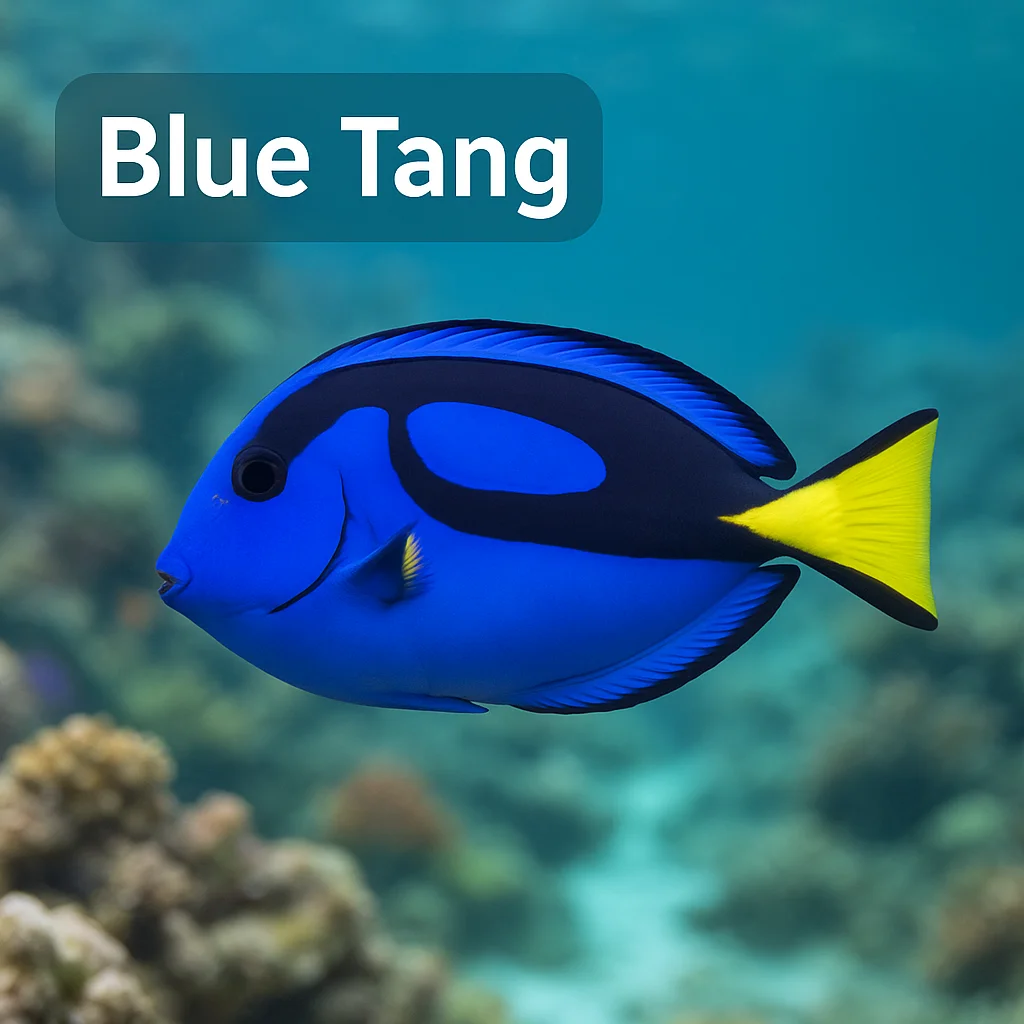
- Common name(s): Blue Tang, Palette Surgeonfish
- Scientific name: Paracanthurus hepatus
- Animal type: Fish
- Typical adult size: 20 to 30 centimeters (8 to 12 inches)
- Typical lifespan: 8 to 20 years
- Diet type: Herbivore; primarily algae
- Activity pattern: Diurnal
- Social structure: Group; commonly seen in schools
- Speed / movement highlights: Fast swimmers, agile movers amongst coral
- Intelligence/learning: Moderate; capable of learning and navigating complex reef structures
- Primary habitats: Coral reefs
- Geographic range: Western Pacific Ocean, from East Africa to Hawaii, Japan, Samoa
- Predators/threats: Larger fish species, overfishing, reef damage
- Conservation status: Concern level varies by region; common in many parts
🔍 Identification & Appearance
Blue Tangs are easily recognizable by their distinct, vibrant coloring and unique body shape, making them popular among aquatic enthusiasts and divers. Their appearance features certain specific traits:
- Oval, laterally compressed body shape
- Bright blue coloration with a yellow tail
- Dark, palette-like pattern on the side
- No major seasonal or age-related coloration changes, but juveniles may appear lighter
- No distinct tracks or field signs in natural habitats
- Common look-alikes include other tangs and surgeonfish, distinguishable by their colors and patterns
- Top ID Tips
- Look for the oval body shape and compressed sides
- The bright blue body is a standout feature
- Check for the yellow tail, a distinguishing trait
- The palette-like dark pattern is unique
- Juveniles are lighter in color but still have the yellow tail
- Occurs exclusively in coral reef environments
🧱 Body Structure & Physical Adaptations
The physical build of the Blue Tang is perfectly suited to its environment, aiding both in survival and ecological role:
- Slender, compressed body aiding in swift movements
- Small mouth with specialized teeth for grazing algae
- Single dorsal fin, aiding balance in reef currents
- Sensory adaptations include excellent vision for spotting predators and algae
- Tough, slimy skin for defense against parasites
- Sharp spines for defense against predators
- Key Adaptations
- Adapted for quick, agile swimming in reef structures
- Specialized teeth for scraping algae off rocks and coral
- Vibrant coloration for identification and slight camouflage among corals
- Sharp tail spines for predator defense
- Skilled in detecting threats using keen eyesight
- Resilient scales to withstand ecological pressures
🌍 Range & Distribution
Blue Tang fish inhabit a range of warm, tropical waters, typically within coral reef ecosystems:
- Widely found in the Indo-Pacific region
- Inhabit territories from East Africa to Samoa, including the Great Barrier Reef
- Populations established throughout Micronesia and Polynesia
- Generally non-migratory, with a sedentary lifestyle on reefs
- Occur at depths ranging from 2 to 40 meters
- Where You Might Find It
- Great Barrier Reef, Australia
- Coral reefs off the coast of Japan
- The Maldives and surrounding areas
- Hawaiian archipelago
- Coral Triangle area in Southeast Asia
- Islands of Micronesia
- Reefs along Samoa
🏞️ Habitat & Shelter
Blue Tangs are synonymous with reef environments, thriving amid coral structures and complex habitats that offer both food and protection.
- Prefer shallow, warm waters with abundant coral formations
- Occupy zones rich in algae, critical to their diet
- Seek shelter within the labyrinth of coral when faced with threats
- Seasonal shifts can influence algae abundance, thus affecting feeding behavior
- The health of coral reefs is directly tied to their survival, necessitating a balance of reef conservation efforts
🧭 Behavior & Ecology
The behavior of Blue Tang fish exhibits a strong connection to their ecosystem, playing a part in maintaining the balance within coral reef habitats.
- Active during daylight hours, primarily engaged in grazing
- Shelter in coral crevices during night or danger
- Communication occurs through color changes and body signals
- Interact with cleaner fish species, removing parasites
- Key herbivores on reefs, preventing algae overgrowth, promoting coral health
- Schooling behavior for defense and social interaction
- Behavior Highlights
- Daytime grazers, continuously on the move
- Communicate through color and body signals
- Rest within coral shelters
- Integral to algae control on reefs, aiding coral sustainability
- Symbiotic interactions with cleaner fish
- Social schools offer protection and mutual benefits
👥 Social Life & Group Dynamics
Blue Tangs exhibit dynamic social lives, often seen participating in mutual groups that enhance their survival chances.
- Typically social, forming schools of varying sizes
- Group formations offer safety against predators
- Rarely display aggressive behavior within groups
- Schools enhance feeding efficiency and protection
- Coordination among group members helps in navigation through reefs
- Social Structure Notes
- Schools can range from a few dozen to over a hundred
- Members are highly cooperative, minimizing conflicts
- Formations aid in ecosystem maintenance and algae grazing
- Minimal individual conflict due to resource abundance
- Engage in mutual protection within groups
🍽️ Diet, Prey & Predators
The Blue Tang's diet primarily consists of various algae types, which they graze off coral structures and rocks, playing a vital ecological role.
- Primarily consume filamentous algae and marine plants
- Seasonal diet changes based on algae availability
- Natural predators include groupers, lionfish, and jellyfish
- Anti-predator adaptations include sharp tail spines
- No significant scavenging behavior, mainly herbivorous role
- Feeding Notes
- Grazing patterns help control algae growth
- Natural ecosystem engineers, promoting coral growth
- Large groups enhance grazing efficiency
- Predation defense includes group formation and spines
- Diet supports vivid coloration and quick movement
🦌 Hunting, Foraging & Movement
Blue Tangs are adept foragers, employing distinct methods to sustain their dietary needs and thrive in dynamic reef environments.
- Expert swimmers, navigating complex reef systems
- Continuous, gentle foraging on algae-covered surfaces
- Fast and agile to escape predators and explore territories
- Home range within reef structures; no established territories
- Algae availability dictates foraging routes and group dynamics
- Movement & Strategy
- Algae foraging is a constant daytime activity
- High swimming agility for evasion
- Schooling behavior improves movement efficiency
- Utilize entire reef environment for resources
- Adaptability in locating algae-rich areas
🧠 Intelligence & Senses
Blue Tangs possess notable sensory capabilities and learning potential, crucial for survival amidst reef complexities.
- Highly developed vision for detecting predators and food
- Limited problem-solving documented, mainly basic foraging
- Sensory input critical for navigating reef topography
- Capacity to recognize conspecifics within schools
- Research on cognitive behaviors remains limited
- Notable Abilities
- Excellent eyesight
- Navigate complex reef environments efficiently
- Basic cognitive and recognition abilities
- Group social intelligence aids in communication
- Minimal use of tools or advanced problem-solving documented
🪺 Reproduction, Pregnancy & Parenting
The reproduction of Blue Tangs involves fascinating processes that contribute to the dense populations across their habitats.
- Breeding occurs in tropical conditions throughout the year
- Spawning involves a monogamous pair or larger groups
- Eggs are released into the water, fertilized externally
- Increased spawn frequency correlates with water temperatures
- Young are planktonic before settling in a reef nursery
- Reproduction Snapshot
- Eggs released into open waters
- Tropical, year-round spawning
- Minimal parental involvement post-spawning
- Larval stage critical for population sustainability
- Large scale spawning events increase success
♀️♂️ Male vs Female Differences
Differences between male and female Blue Tangs are subtle, with behavior rather than appearance often providing clues.
- Minimal size or color differentiation between sexes
- Similar roles in social and reproductive behavior
- Some variability in dominance within social schools
- Behavioral nuances during spawning
- Overall subtle gender-related differences
- Sex Differences at a Glance
- Behavioral differences during reproduction
- No significant visual dimorphism
- Equality in defensive role within schools
- Balanced sizes, avoiding dominance conflicts
- Gender identification requires close observation
🧬 Subspecies & Variation
Though variations exist among Blue Tangs, they are mostly consistent across their range with some adaptations to local conditions.
- No formally identified subspecies, genetic studies ongoing
- Coloration and markings consistent across range
- Locally adapted to specific reef conditions
- Potential variation in growth rates due to water conditions
- Subject to ecological pressures resulting in minor trait differences
- Variation Notes
- Genetic studies to identify potential subspecies
- Coloration uniformity sustains across habitats
- Minor local adaptations noted
- Growth rate variations influence adult sizes
- Exploration into ecological role pressures
⚠️ Threats, Conservation & Human Interaction
The Blue Tang faces both natural and anthropogenic challenges, with ongoing conservation efforts aimed at sustaining reef environments and their inhabitants.
- Threatened by habitat destruction and coral bleaching
- Overfishing can impact specific populations
- Climate change affects reef health, influencing Tang populations
- Exhibited in aquariums, requiring ethical considerations regarding capture
- Efforts in marine conservation are key to their future survival
- Responsible Notes
- Avoid unsustainable fishing practices
- Support conservation initiatives that protect coral reefs
- Be informed about ethical considerations of aquarium trade
- Acknowledge their role in marine ecosystem health
- Recognize the need for habitat preservation
✨ Fun Facts & Unique Traits
- Iconically known as the "Dory" fish from popular media
- Key players in maintaining the balance of coral ecosystems
- Utilize tail spines for defense rather than offense
- Algae grazers that prevent coral smothering
- Known for their vibrant blue, which can appear iridescent underwater
- Have a robust immune system advantageous in diverse reef environments
- Participate in cleaning symbiosis with certain shrimp species
- Social behaviors shift depending on environmental conditions
📌 Summary
- Identification: Blue oval body, yellow tail, dark palette pattern
- Habitat: Coral reefs in the Indo-Pacific region
- Distribution: Across warm waters from East Africa to Samoa
- Diet: Highly specialized in algae grazing
- Predators: Larger fish and marine predators
- Social Life: Social schools displaying cooperative behaviors
- Reproduction: Year-round spawning with significant larval stage
- Key Adaptations: Excellent swimmers, sharp spines for defense
- Distinctive Traits: Iridescent blue coloring, ecosystem engineer role