🦁 Gyrfalcon
🧾 Quick Facts
The Gyrfalcon (Falco rusticolus) is the largest of the falcon species, known for its impressive hunting prowess and adaptability to harsh Arctic environments. This majestic bird is characterized by its strong and direct flight patterns, as well as its varied plumage coloration.
- Common name(s): Gyrfalcon
- Scientific name: Falco rusticolus
- Animal type: Bird
- Typical adult size: 48 to 65 cm in length; wingspan of 110 to 160 cm
- Typical lifespan: 15 to 20 years in the wild; up to 25 years in captivity
- Diet type: Carnivore; feeds on small to medium-sized mammals and birds
- Activity pattern: Diurnal
- Social structure: Primarily solitary, pairs during breeding season
- Speed / movement highlights: Can reach speeds of over 80 km/h in flight
- Intelligence/learning: Highly skilled hunter, capable of strategic hunting techniques
- Primary habitats: Tundra, Arctic coasts, subarctic regions
- Geographic range: Circumpolar, Arctic, and subarctic regions
- Predators/threats: Larger raptors, humans, habitat loss
- Conservation status: Least Concern, but varies by region
🔍 Identification & Appearance
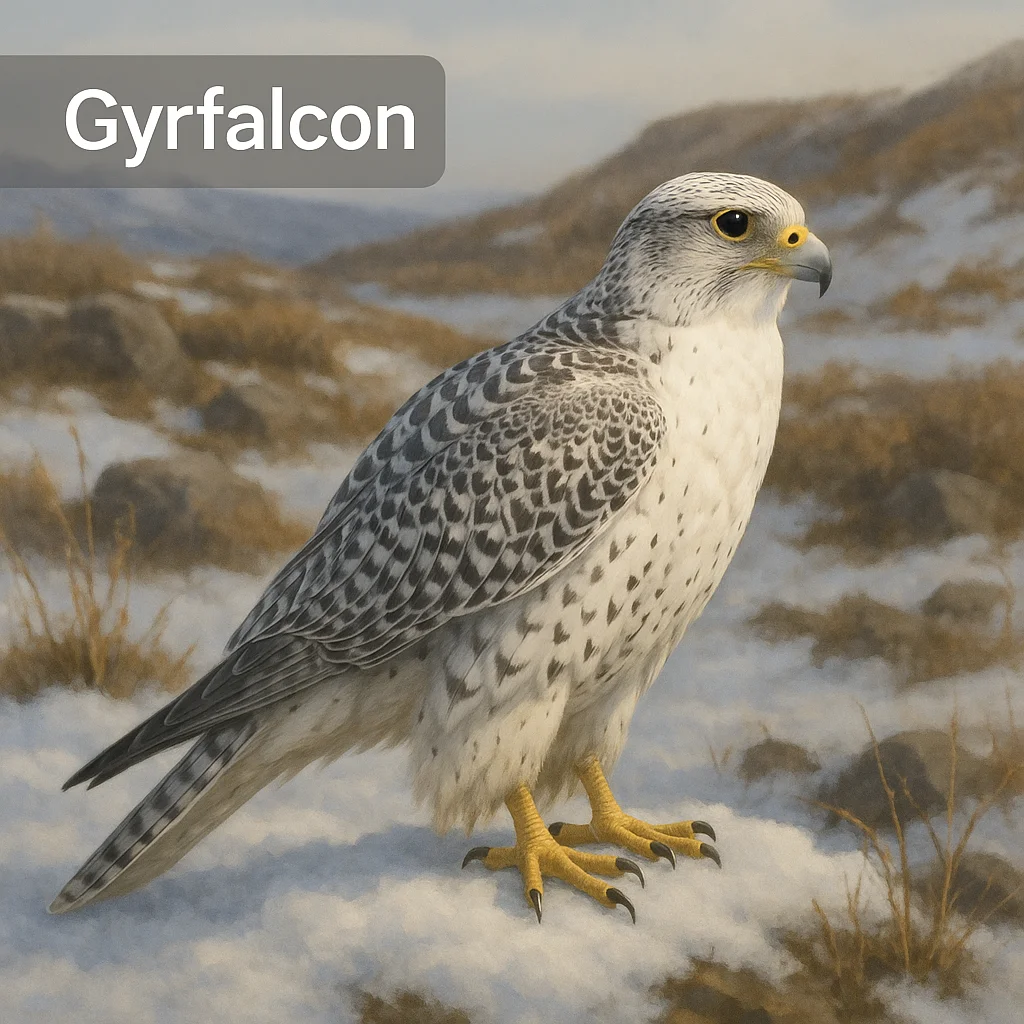
The Gyrfalcon can be recognized by its robust body, long wings, and broad tail. Its plumage varies from dark grey to pure white, with many intermediate phases. Juveniles typically exhibit darker patterns. The bird's powerful, hooked beak and sharp talons are distinctive of the falcon family.
- Top ID Tips:
- Large, powerful falcon with broad, long wings
- Varied plumage: dark grey, brown, or white
- Yellow beak and feet
- Sturdy build with a slightly rounded tail
- Sharp, curved talons
- Vocalizations include a harsh "kak-kak-kak"
- White phase birds can resemble snowy owls
- Dark phase might be confused with peregrine falcons
- Distinctive face markings vary with plumage phase
🧱 Body Structure & Physical Adaptations
The Gyrfalcon has a muscular body built for power and endurance. Its wings are long and pointed, optimized for speed and agility. The beak is short and hooked for tearing prey, while its talons are large and razor-sharp for grasping. Its sharp vision is adapted for spotting prey from a distance.
- Key Adaptations:
- Stocky build for strength
- Pointed wings for speedy flights
- Curved beak for tearing meat
- Large talons designed for gripping prey
- Keen eyesight for hunting
- Camouflaged plumage for various environments
🌍 Range & Distribution
The Gyrfalcon inhabits circumpolar regions, typically found in the Arctic and subarctic areas across North America, Europe, and Asia. Though mostly resident, some southern migrations occur during winter, especially when food is scarce.
- Where You Might Find It:
- Arctic tundra
- Northern coastlines
- Alaska
- Northern Canada
- Greenland
- Northern Scandinavia
- Icelandic highlands
- Siberian Arctic regions
- Occasional migration to northern USA and Europe
🏞️ Habitat & Shelter
Gyrfalcons prefer open spaces like tundra and coastlines where they can hunt effectively. They often nest on cliffs, providing protection and a wide field of view. Weather influences their behavior, with individuals more likely to migrate south during harsh winters.
🧭 Behavior & Ecology
Gyrfalcons are primarily hunters, spending considerable time in flight searching for prey. They have been observed performing aerial displays during the breeding season. Communication includes vocal calls, which can signify territory or act as a mating display.
- Behavior Highlights:
- Aerial hunting displays
- Territorial vocalizations
- Superb agility in flight
- Breeding displays that include hovering
- Use of high vantage points for hunting
- Adaptable hunting strategies
- Occasional cooperative hunting with mates
👥 Social Life & Group Dynamics
Gyrfalcons are generally solitary outside the breeding season. During breeding, they form monogamous pairs that collaborate in raising their young. These birds are highly territorial, with pairs defending their nesting territories vigorously from intruders.
- Social Structure Notes:
- Solitary outside breeding times
- Forms pairs during mating season
- Defends territories fiercely
- Nest sites can be reused annually
- Both parents involved in chick care
- Strong pair bonding observed
🍽️ Diet, Prey & Predators
The Gyrfalcon's diet primarily includes birds like ptarmigans and waterfowl, but it will also hunt small mammals such as lemmings. They are agile hunters, utilizing high-speed pursuit flight to capture their prey. Natural predators include larger birds of prey, while human-induced threats include habitat destruction.
- Feeding Notes:
- Mainly preys on birds
- Mammals like lemmings are secondary diet items
- Pursuit hunting strategy
- Occasionally consumes carrion
- Adaptable diet based on availability
🦌 Hunting, Foraging & Movement
Gyrfalcons are dynamic hunters that primarily use high-speed flight to chase down prey. They often utilize surprise and ambush tactics, leveraging high vantage points to locate unsuspecting prey. Their flight includes rapid bursts of speed and soaring capabilities.
- Movement & Strategy:
- Powerful, sustained flier
- Utilizes tactics of surprise
- Skilled in high-speed pursuit
- Hunts mainly during daylight
- Finds prey from high perches
- Occasional migratory movements
🧠 Intelligence & Senses
Gyrfalcons possess excellent eyesight, crucial for spotting prey from afar. They exhibit tactical intelligence during hunts, often following innovative hunting techniques. While detailed studies on their cognitive abilities are limited, they are noted for their problem-solving and hunting skill.
- Notable Abilities:
- Exceptional eyesight
- Strategic hunting behaviors
- Adaptation to hunting in extreme climates
- Vocal communication signals
- Territorial intelligence observed
🪺 Reproduction, Pregnancy & Parenting
The breeding season for Gyrfalcons typically occurs in early spring. They are monogamous, with both parents contributing to chick-rearing. Nests are often located on cliff ledges or high trees. Typical clutch size is 2 to 4 eggs, with hatching staggered over a few days.
- Reproduction Snapshot:
- Breeding in early spring
- Monogamous pair bonds
- Clutch size ranges from 2 to 4 eggs
- Incubation period of approximately 34 days
- Both parents feed the chicks
- Juveniles are altricial at birth
♀️♂️ Male vs Female Differences
In Gyrfalcons, females are generally larger than males, which is common in birds of prey. This size difference may assist in role distribution during hunting and nesting. However, plumage differences between the sexes are generally subtle or nonexistent.
- Sex Differences at a Glance:
- Females noticeably larger than males
- Similar plumage patterns in both sexes
- Shared parenting duties
- Both sexes have powerful talons and beaks
🧬 Subspecies & Variation
The Gyrfalcon does not have widely recognized subspecies, but regional color variations exist without clear genetic distinctions. These are typically environmental adaptations, with darker colors more common in wooded regions and lighter plumage in snowy northern zones.
- Variation Notes:
- Wide color variation: dark, grey, white
- Color variance related to habitat
- Adaptable to diverse environmental conditions
- No formally recognized subspecies
⚠️ Threats, Conservation & Human Interaction
While currently listed as Least Concern, Gyrfalcons are sensitive to changes in Arctic climates and habitats. Human activities, such as habitat destruction and climate change, pose significant challenges. Conservation efforts focus on habitat preservation and monitoring population trends.
- Responsible Notes:
- Impacted by climate change
- Habitat alteration and prey availability
- Human encroachment on nesting sites
- Sustainable coexistence requires habitat protection
✨ Fun Facts & Unique Traits
- The Gyrfalcon is the world's largest falcon.
- Its varied plumage aids in camouflage across different environments.
- Known for its powerful and rapid pursuit flights.
- Historically, it was a prized bird in falconry, especially among royalty.
- Scientific research has noted their impressive strength compared to other falcons.
📌 Summary
- Largest of the falcon species, identifiable by its robust body and diverse plumage.
- Occupies Arctic and subarctic regions, prefers open habitats like tundra.
- Carnivorous diet, primarily feeding on birds and small mammals.
- Faces threats from climate change and habitat loss.
- Generally solitary, with complex, strategic hunting techniques.
- Exhibit seasonal breeding, often using cliffside nests.
- Females are larger, but both sexes share similar plumage.
- Unique in its adaptability to extreme environmental conditions.