🐾 Bear vs wolf—who wins in the wild: Grizzly bear and gray wolf
Primary subject: Grizzly bear — Ursus arctos horribilis
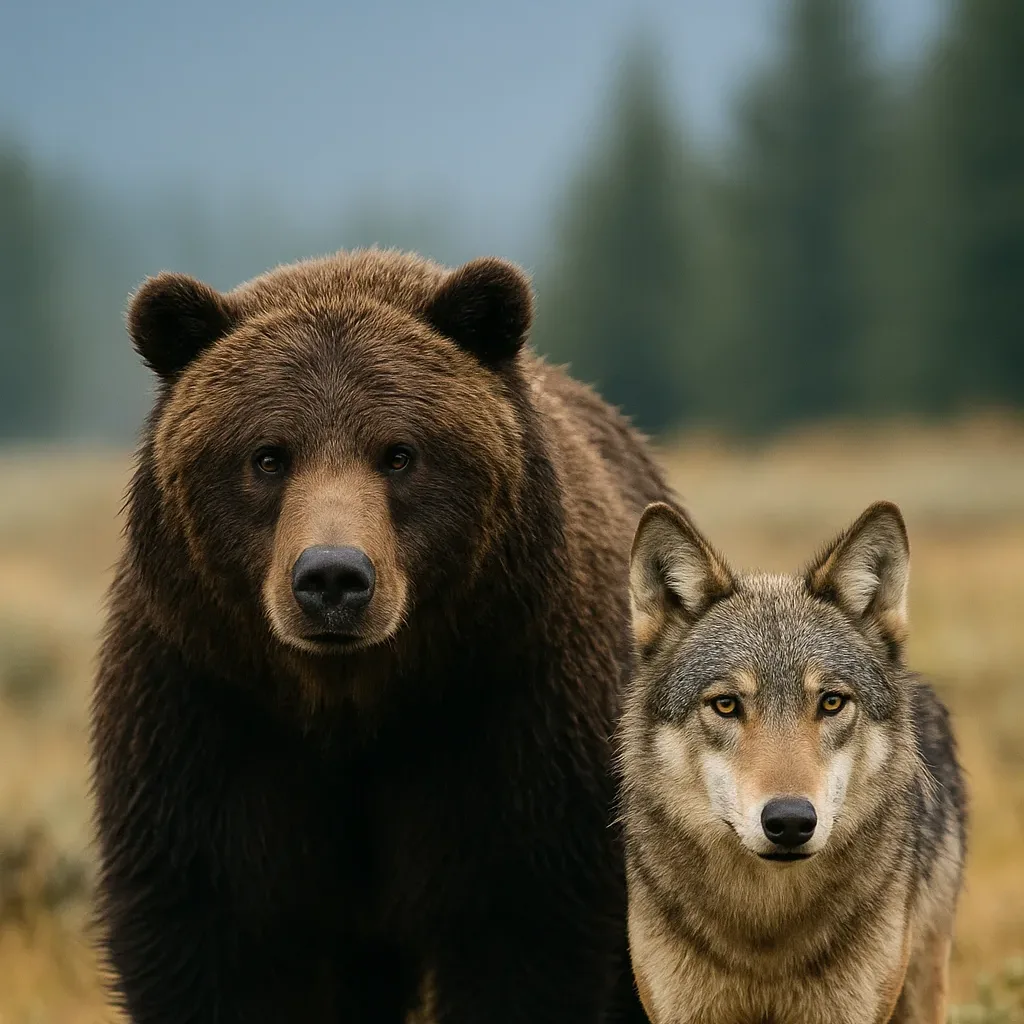
In a confrontation between a grizzly bear and a gray wolf, the grizzly bear typically prevails due to its massive size and sheer power. Grizzly bears can outweigh gray wolves by several hundred pounds, which gives them a significant advantage in physical confrontations.
🔎 Key Takeaways
- The grizzly bear often wins in a direct encounter with the gray wolf.
- The primary reason is the grizzly's larger size and strength.
- Grizzly bears can weigh between 400 and 790 pounds, while gray wolves usually weigh about 80–175 pounds.
- A grizzly bear's bite force is approximately 1,200 psi, much stronger than that of a gray wolf.
🧬 Why It Happens
Grizzly bears possess significant physical advantages over gray wolves. Their formidable body mass and muscular strength give them the upper hand in close encounters. With some grizzlies weighing nearly five times more than the heaviest wolves, they can overpower the smaller canines easily.
The grizzly bear's impressive bite, estimated at around 1,200 psi, allows it to exert enough force to tackle large prey and overpower competitors. Gray wolves, with a bite force considerably lower, rely more on pack coordination than sheer power.
Moreover, grizzly bears are solitary and highly protective of their resources, which often leads them to defend their territory and food sources aggressively, further diminishing the chances for a single wolf to win in battle.
🌍 Where You Might See It
These encounters typically occur in overlapping territories such as forests, tundra, and mountain regions of North America. Conflicts sometimes arise near food sources like carrion or fish streams, where both species are present and competing for similar dietary resources.
⚠️ Practical Caution
- Maintain a safe distance from both grizzly bears and gray wolves if encountered in the wild.
- Do not provoke or approach the animals; remain calm and slowly back away.
- Make noise to announce your presence, reducing chances of surprise encounters.
- Follow established trails and adhere to local wildlife guidelines while hiking in bear and wolf territories.
- Secure food and waste properly to avoid attracting wildlife to campsites.
In general, keeping a respectful distance and observing wildlife from afar is the safest practice. Always follow local guidance to ensure both your safety and that of the animals.
For more information on wildlife interactions and other animal insights, please visit AnimalsGuidebook.com.