🐾 More terrifying in real life than in photos: Cassowary
Primary subject: Cassowary — Casuarius spp.
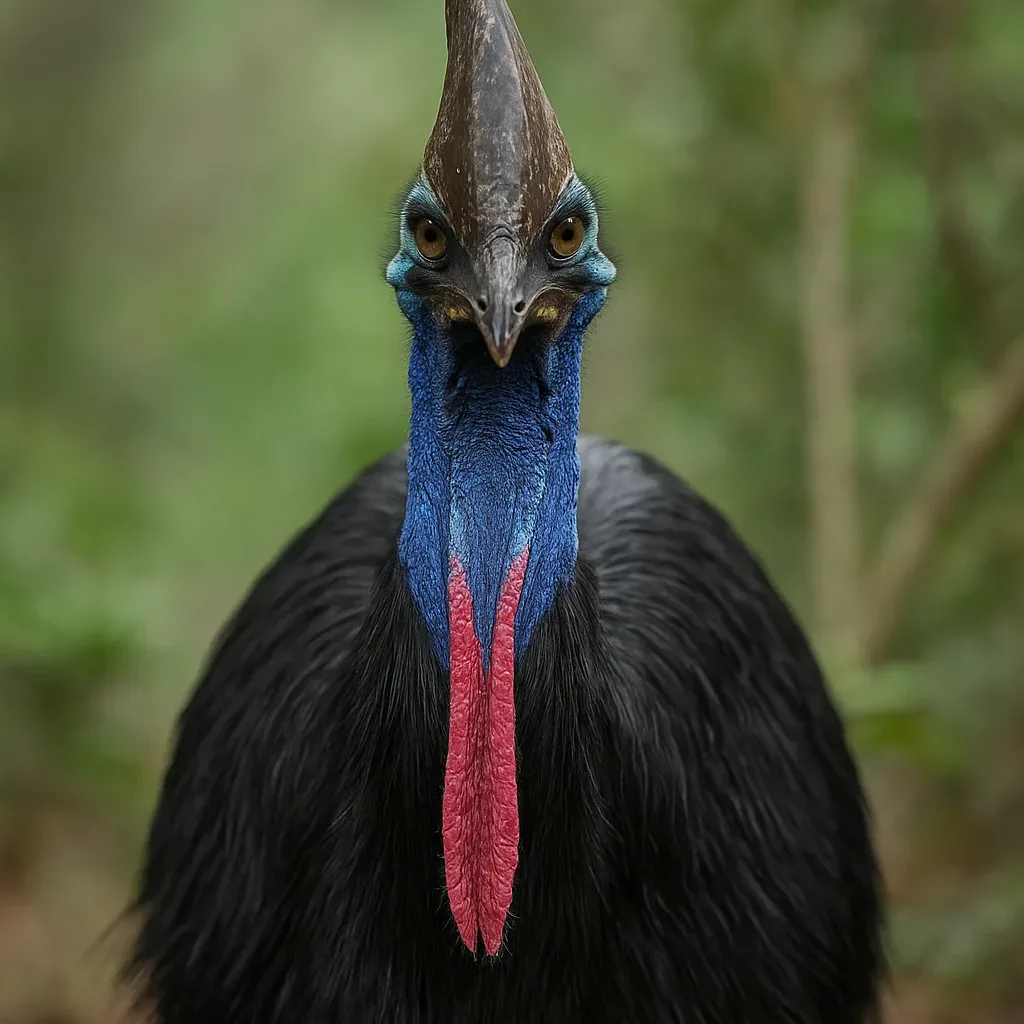
The cassowary, often portrayed in photos as just another exotic bird, is strikingly more daunting in person. This large, flightless bird possesses a combination of speed, strength, and an intimidating frame, making encounters potentially dangerous. Its formidable stature, sharp claws, and defensive nature are often underestimated in pictures but command respect when encountered face-to-face.
🔎 Key Takeaways
- Cassowaries are more intimidating in reality than images suggest due to their size and defense mechanisms.
- Their strength and defensive behavior make them formidable when threatened.
- Cassowaries can weigh up to about 76 kilograms (167 pounds) and stand up to 1.8 meters (6 feet) tall.
- They can run at speeds up to 50 kilometers per hour (31 miles per hour), faster than the average human sprint.
🧬 Why It Happens
The cassowary's imposing presence stems primarily from its significant size and speed. Standing as tall as some humans, this bird is not just large but also equipped with powerful legs. These allow the cassowary to maneuver swiftly and defend itself effectively with swift kicks.
A key feature that elevates the cassowary's intimidating nature is its dagger-like claws, which can be up to 12 centimeters (about 5 inches) long. These claws are their primary defense and make any close encounter risky for threats, human or otherwise.
The bird's natural response to threats is defensive rather than aggressive, yet their agility and strength make any perceived assault a formidable experience. Understanding the cassowary's behavior and habitat is crucial to respecting its space and avoiding any potential conflict.
🌍 Where You Might See It
Cassowaries are typically found in the tropical rainforests of New Guinea, nearby islands, and northeastern Australia. They thrive in dense jungle habitats where their capabilities for rapid movement and concealment serve them well. Encounters most often occur when humans unintentionally enter their territories, particularly during breeding seasons.
⚠️ Practical Caution
- Maintain a safe distance if you see a cassowary in the wild.
- Avoid making loud noises or sudden movements that could alarm the cassowary.
- Do not approach or attempt to feed wild cassowaries.
- Secure all food and waste when in cassowary habitats to avoid attracting them.
- In case of an approach, remain calm and back away slowly without turning your back on the bird.
- If traveling in cassowary territory, adhere to any local cautions or guidance provided.
Maintaining respect and understanding for the cassowary's space and behavior is essential. Always follow local guidance to ensure both your safety and the conservation of these magnificent birds.
For more fascinating reads about diverse wildlife species, visit us at AnimalsGuidebook.com.