🐾 The strongest teeth in the animal kingdom: Great white shark
Primary subject: Great white shark — Carcharodon carcharias
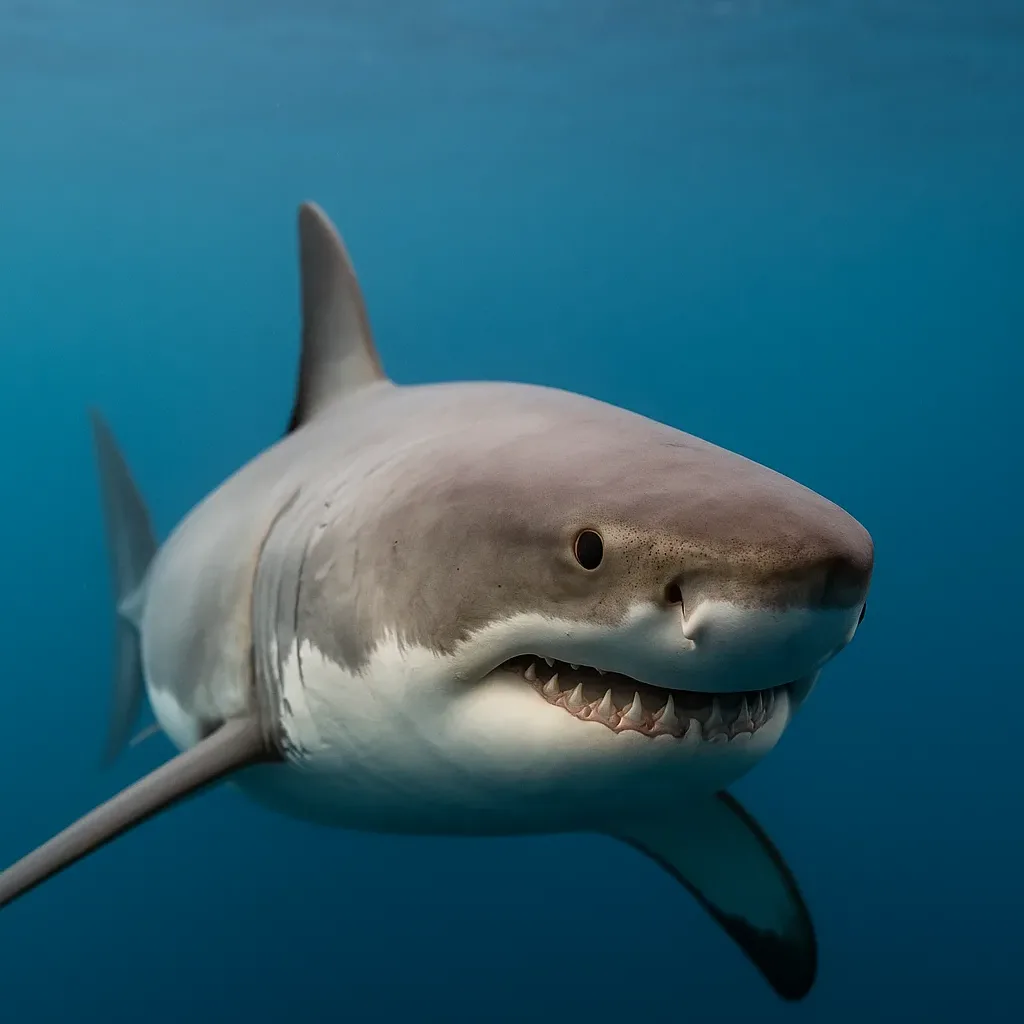
The great white shark possesses some of the strongest teeth in the animal kingdom due to their unique design and resilient structure. These formidable predators have serrated teeth that are perfectly adapted for catching and dissecting prey swiftly and efficiently.
🔎 Key Takeaways
- The great white shark has the strongest teeth in the animal kingdom.
- Their teeth are serrated and constantly replaced, making them ideal for piercing and cutting.
- Each tooth can exert a bite force of roughly 4,000 psi, several times that of a human.
- A great white typically has around 300 teeth arranged in multiple rows, ensuring they always have fresh teeth ready.
🧬 Why It Happens
The great white shark's teeth are triangular and serrated, much like a steak knife, which allows them to cut through flesh with ease. This serration means they can grip and tear at prey more effectively than smooth teeth could.
Moreover, great white sharks constantly grow new teeth to replace old ones; a process which happens throughout their lives and ensures they remain effective hunters. With about 5 rows in their mouths, they can quickly replace broken or lost teeth, maintaining their fearsome bite.
A high bite force, coupled with their resilient tooth structure, allows them to prey on a variety of marine animals, including seals and fish. This bite force is reported around 4,000 psi, which provides the power needed to puncture hard shells and thick blubber.
🌍 Where You Might See It
Great white sharks are commonly found in coastal surface waters of all major oceans. They are notably present in areas where large marine mammals are found, such as the coasts of South Africa, Australia, California, and the northeastern United States. These sharks frequently patrol areas near seal colonies and can often be spotted near the surface when hunting.
⚠️ Practical Caution
- Maintain a safe distance if you spot a great white shark in the wild.
- Stay calm and avoid sudden movements to prevent triggering predatory instincts.
- In general, avoid swimming at dusk or dawn when sharks are more active.
- Never provoke or attempt to attract sharks for closer contact.
- Follow local guidelines and warnings issued by authorities about shark activity.
Maintaining distance and calm behavior is vital when encountering great white sharks. Always follow local guidance to ensure safety while enjoying marine environments.
Curious about more fascinating creatures and their behaviors? Visit AnimalsGuidebook.com to learn more.