🐾 The predator that tricks its prey: Anglerfish
Primary subject: Anglerfish — Lophiiformes
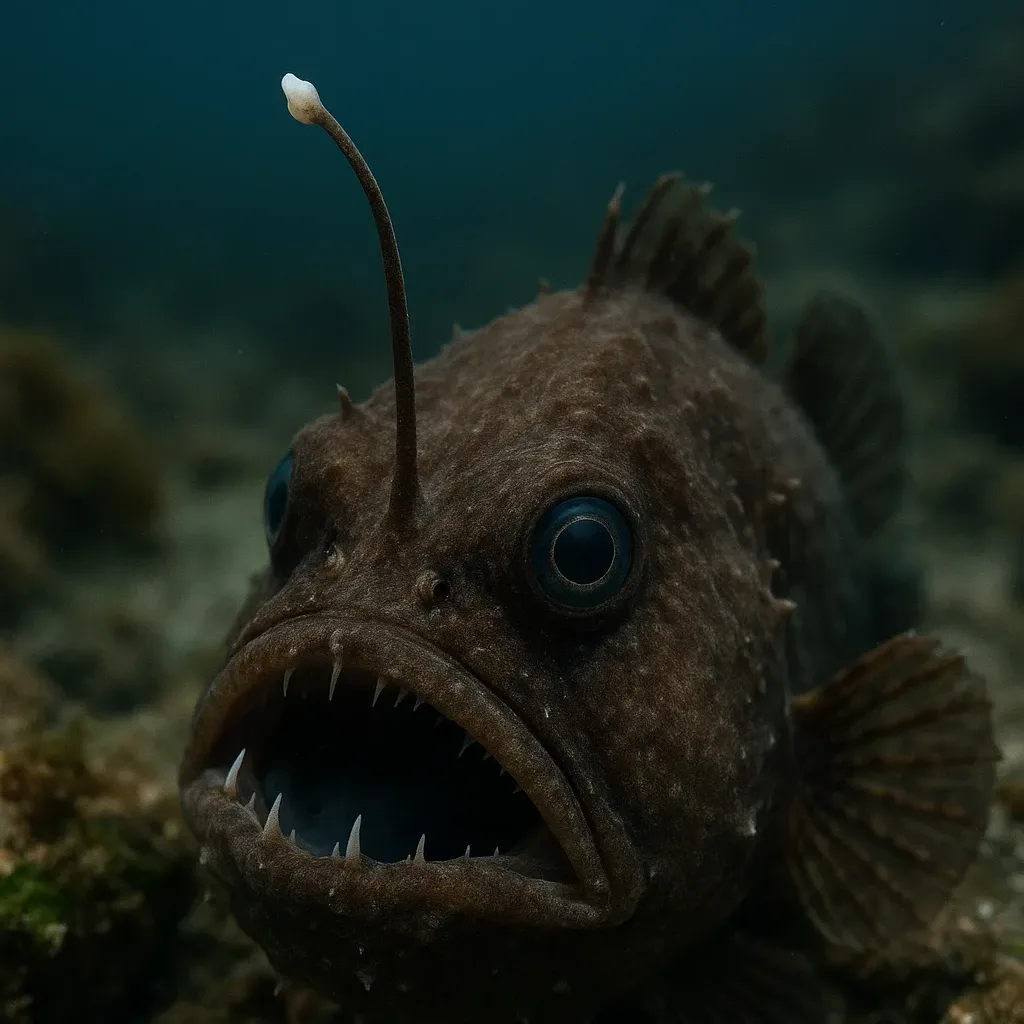
The anglerfish is a deep-sea predator that uses a clever trick to capture its prey. It employs a natural lure that mimics the appearance of prey animals to deceive unsuspecting victims. This adaptation allows the anglerfish to successfully feed in the dark depths of the ocean where food is scarce.
🔎 Key Takeaways
- The anglerfish uses a unique lure to trick and catch its prey.
- This natural adaptation is essential for survival in deep-sea environments.
- Some anglerfish are reported to live at depths of about 2,000 meters (roughly 6,500 feet).
- The lure can glow using bioluminescence, fascinating scientists and resembling small prey.
🧬 Why It Happens
Anglerfish have evolved a bioluminescent appendage called the esca, which dangles from their head and acts as a lure. This light-producing organ contains bacteria that emit a bright glow, misleading prey into thinking it's a suitable meal. The anglerfish capitalizes on this misperception to ambush its prey.
The structure of the anglerfish’s jaw and stomach is highly flexible, allowing it to consume prey up to twice its own size. This adaptation is critical for surviving in deep-sea environments, where meal opportunities are few and far between. These unique features have positioned the anglerfish as an efficient predator despite the sparse resources available at extreme ocean depths.
Furthermore, in some species, anglerfish exhibit extreme sexual dimorphism, with females being significantly larger than males. This size difference allows females to host tiny male counterparts who attach to them for the duration of their lives, ensuring reproductive success in a habitat where finding a mate is challenging.
🌍 Where You Might See It
Anglerfish are typically found in the abyssal and bathyal zones of the world's oceans, primarily at depths reaching up to 2,000 meters. These regions are cold, dark, and high-pressure environments where food resources are limited, driving the anglerfish's evolutionary adaptations to successfully hunt in this extreme habitat.
⚠️ Practical Caution
- In general, observe marine life from a safe distance to avoid disruptions.
- To prevent accidental capture, adhere to local fishing guidelines if conducting deep-sea activities.
- When diving or exploring, use non-intrusive equipment to minimize the impact on deep-sea ecosystems.
- Avoid using bright lights that could disturb the natural behaviors of deep-sea species.
- Be mindful of conservation practices when engaging in any marine exploration.
Staying informed about local marine life regulations and practicing respect for marine habitats generally ensure safe and responsible interactions with these extraordinary creatures.
Discover more about incredible animals and their adaptations by visiting our homepage at AnimalsGuidebook.com.