🐾 If you see this animal, switch to survival mode: Cobra
Primary subject: Cobra — Naja spp.
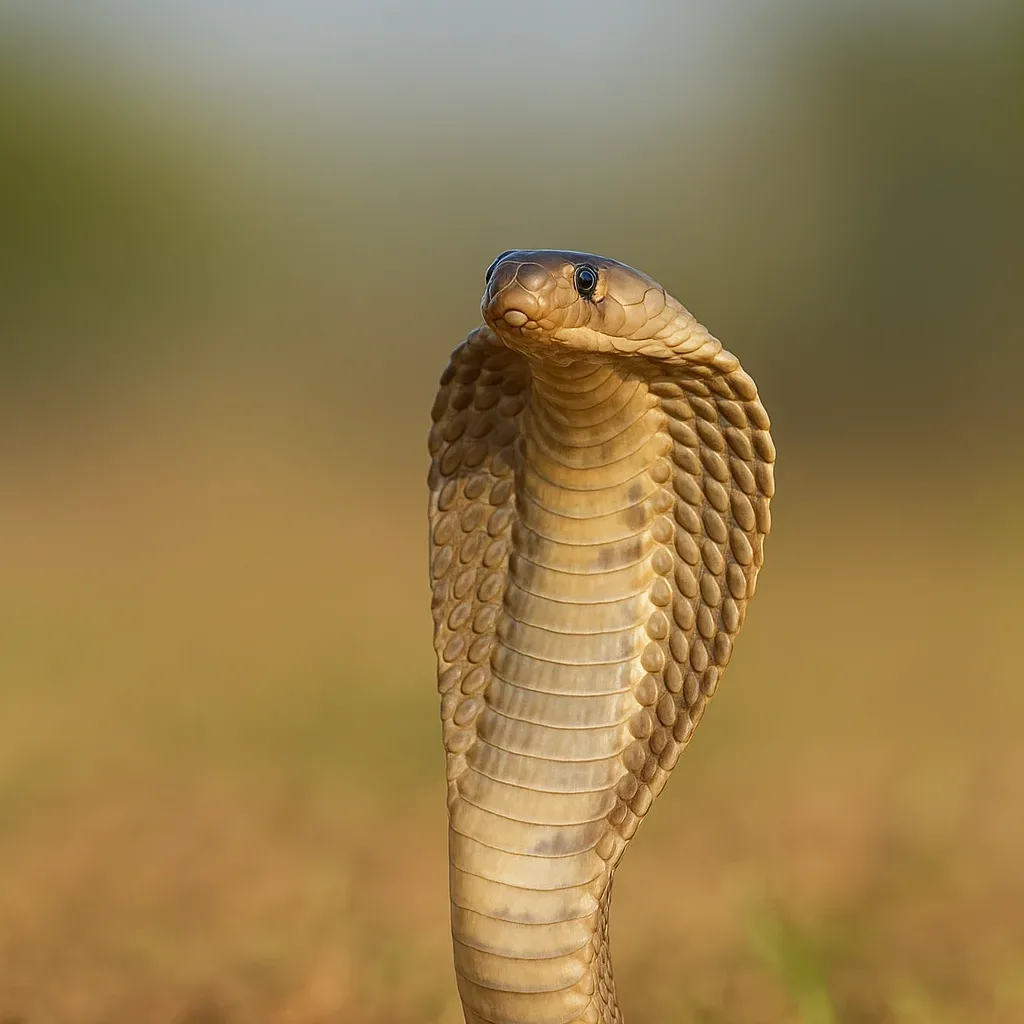
Encounters with cobras in the wild can instantly trigger survival mode due to their highly venomous nature. Cobras, characterized by their hooded appearance and potent venom, pose risks that require immediate attention. Recognizing their presence and potential threat is essential for personal safety.
🔎 Key Takeaways
- Cobras are highly venomous snakes that demand cautious and alert actions.
- They are known for their distinctive defensive posture and potent venom.
- A cobra’s venom yield can be around 20 to 400 mg per bite, which is enough to incapacitate prey or defend against threats.
- Some species of cobras can reach lengths of up to 3 meters, making them visually prominent.
🧬 Why It Happens
Cobras are equipped with potent neurotoxic venom, capable of affecting the nervous system and causing paralysis. The primary function of this venom is to subdue prey rapidly. In defensive scenarios, this venom also serves as a significant deterrent against predators and threats.
Their iconic hood, expanded by elongated ribs, is used as a defensive display to appear larger and more intimidating. This visual deterrent is often supported by a threat display, including hissing and rearing upwards, which signals the cobra’s readiness to strike if provoked.
With an estimated 270 species of cobra worldwide, they vary significantly in size and color, but all share similar behavioral traits designed for survival in their respective environments. Their adaptation to diverse habitats showcases their evolutionary resilience and ability to deter threats effectively.
🌍 Where You Might See It
Cobras are typically found across Africa, Southeast Asia, and parts of India, thriving in varied habitats including forests, grasslands, and even urban areas. Their presence is often triggered in places abundant with prey, such as rodents, making them common in agricultural fields and rural communities.
⚠️ Practical Caution
- Stay calm and back away slowly if you encounter a cobra.
- Avoid making sudden movements that could be perceived as a threat.
- Do not attempt to handle or provoke the snake in any way.
- Keep a safe distance and, if possible, observe from afar.
- In general, be aware of your surroundings in known cobra habitats.
- Seek local guidance or professional help if a cobra is consistently seen in populated areas.
Remember to maintain distance and promote calm behavior. Following local guidelines is essential for ensuring safety in environments where cobras are found.
For more in-depth exploration of wildlife and safety tips, visit our homepage at AnimalsGuidebook.com.