🐾 The largest land animal alive today: African elephant
Primary subject: African elephant — Loxodonta africana
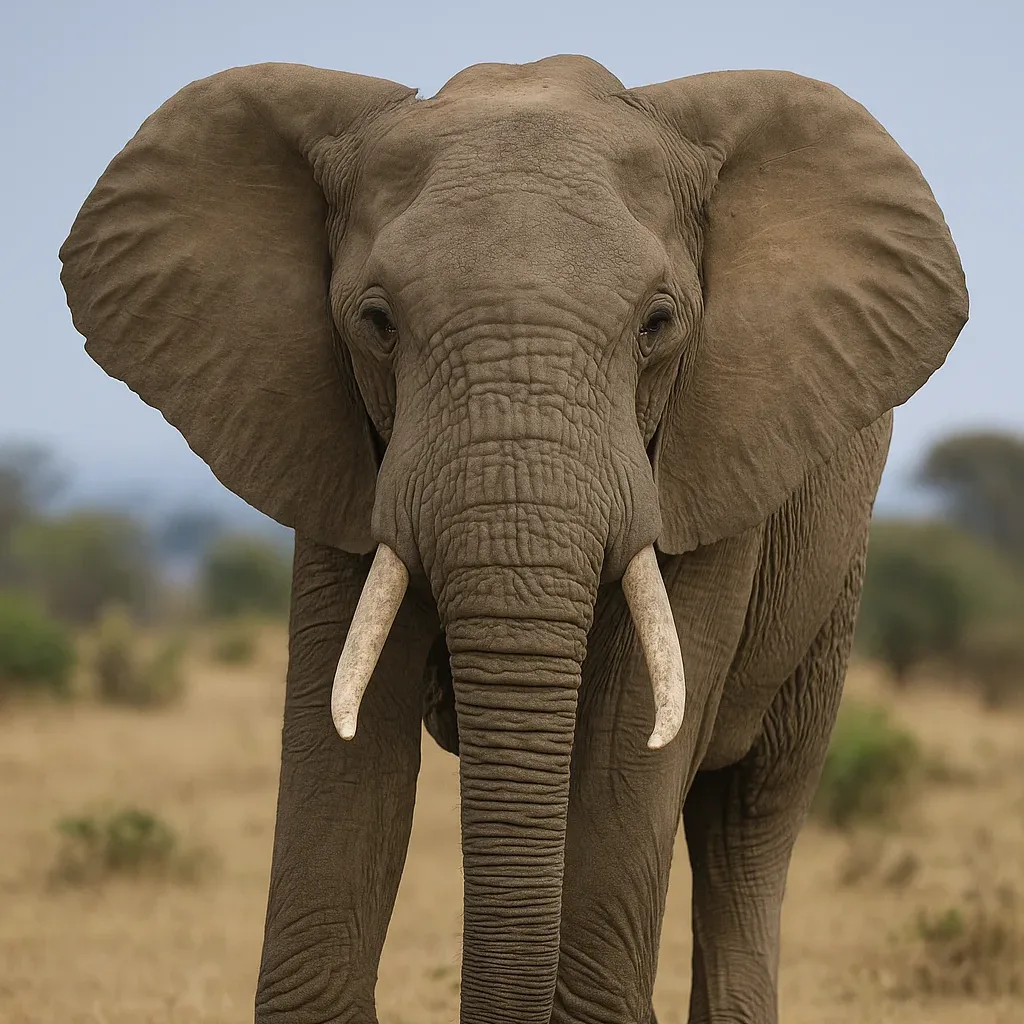
The largest land animal alive today is the African elephant, known for its immense size and distinguishing features such as its large ears and trunk. Weighing up to 6,000 kilograms (about 13,227 pounds) and standing up to 3-4 meters tall at the shoulder, the African elephant's size is an adaptation that helps it survive in various environments by deterring predators and allowing it to reach high food sources.
🔎 Key Takeaways
- The African elephant is the largest land animal currently in existence.
- Its massive size assists in predator deterrence and accessing higher food sources.
- A typical adult African elephant can weigh around 4,500 to 6,800 kilograms.
- One adult African elephant is roughly equivalent in weight to about 2-3 average-sized cars.
🧬 Why It Happens
The African elephant’s large size serves multiple ecological functions. Primarily, it acts as a deterrent to potential predators, ensuring its survival in the wild. Its body mass also allows it to break down trees and clear paths in the dense forest, which in turn shapes its habitat and creates a mixed landscape beneficial for other species.
The trunk of the African elephant, comprising approximately 150,000 muscle units, is crucial for feeding and hydrating in varying conditions. It enables them to reach vegetation high in trees, giving them access to food sources that are beyond the reach of other herbivores, and helps them draw water from deep sources for survival.
Additionally, the African elephant's large ears are not merely an iconic feature; they serve as an essential tool for regulating body temperature. By flapping their ears, elephants are able to cool their blood, which is vital for maintaining homeostasis in the hot savannah climate where they primarily reside.
🌍 Where You Might See It
Typically inhabiting savannas, grasslands, and forests across sub-Saharan Africa, African elephants are most commonly seen in national parks and protected reserves. They require large swaths of land for their daily activities, which include feeding, mating, and social interactions in their complex social structures.
⚠️ Practical Caution
- Maintain a safe distance from elephants, ideally observing them from a distance or within an established vehicle tour.
- Stay calm and avoid sudden movements if you encounter an elephant in the wild.
- Never attempt to provoke or feed wild elephants.
- Follow the guidelines of local wildlife authorities and respect conservation measures.
- Avoid blocking their path or encroaching on their space while on a safari or walking tour.
- Often, elephants will display warning behaviors; slowly back away to a safe distance if this occurs.
- In general, during wildlife tours, always ensure your safety and that of others by adhering to expert advice.
Remember, maintaining a respectful distance and calm demeanor is essential when observing these magnificent creatures. Always follow local guidance and regulations to ensure both your safety and the conservation of the species.
Discover more fascinating facts about wildlife at our homepage: AnimalsGuidebook.com