🐾 The trick it uses to immobilize prey: Constrictor snake
Primary subject: Constrictor snake — Family Boidae
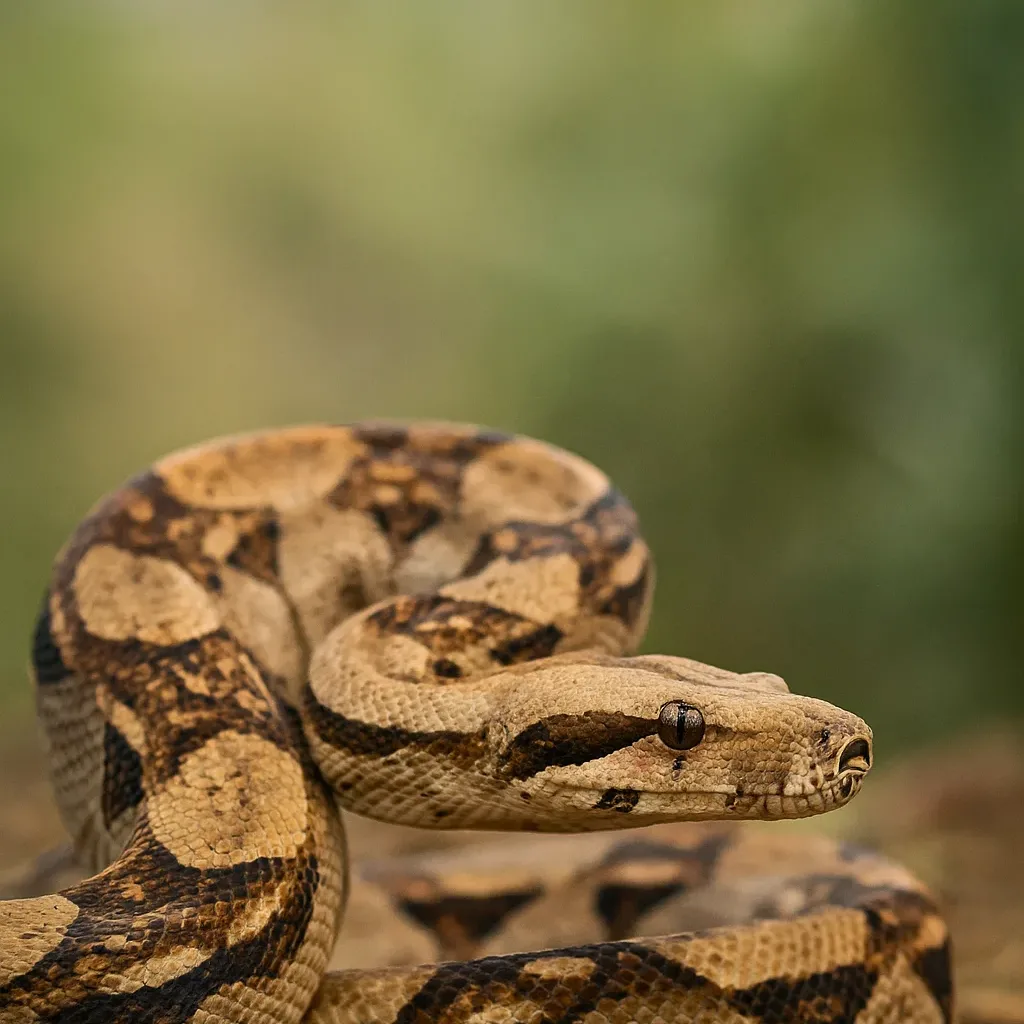
Constrictor snakes, such as boa constrictors and pythons, utilize an effective technique to immobilize their prey: constriction. This method involves coiling their muscular bodies around the prey and applying pressure until the prey can no longer breathe. The core reason for this technique is the snake's reliance on asphyxiation to subdue their catch before consumption.
🔎 Key Takeaways
- Constrictor snakes immobilize prey through coiling and applying pressure.
- The technique works primarily by causing suffocation in the prey.
- Boa constrictors can exert pressures of about 12 psi, significantly greater than blood pressure needed to stop the heart.
- The largest constrictor snakes, like the green anaconda, can grow over 20 feet long, roughly the length of a small car.
🧬 Why It Happens
The constriction mechanism is vital for constrictor snakes as they do not possess venom to incapacitate their prey. Instead, their robust and muscular bodies perform the task by tightening around the prey's chest, preventing expansion and halting respiration.
Constriction is highly efficient, allowing snakes to disable various prey sizes and types. Each time the prey exhales, the snake tightens further, culminating in the prey's suffocation. This strategy is crucial for capturing prey in environments where ambush is a preferred hunting method.
Furthermore, pressures exerted by constrictor snakes can sometimes deform bones, although their primary target remains suffocation. The pressure they apply can be more than enough to induce cardiac arrest before respiratory failure, ensuring quick subjugation.
🌍 Where You Might See It
You are likely to encounter constrictor snakes in tropical and subtropical regions, often in environments rich with hiding opportunities, such as dense forests and grasslands or near water bodies. Their ambush technique is typically triggered by the presence of potential prey nearby, detected through heat or movement.
⚠️ Practical Caution
- In general, keep a respectful distance if you see a constrictor snake in the wild.
- Stay calm and back away slowly to minimize perceiving yourself as a threat.
- Avoid approaching or attempting to handle wild snakes.
- Consult local wildlife guidance when in snake-prone areas.
- If residing in areas with native constrictor populations, secure pets and small animals indoors or in enclosures.
- Learn to identify local snake species, so you can react appropriately according to expert advice.
Ensuring safety involves maintaining a safe distance and respecting local wildlife norms and expertise.
Discover more fascinating wildlife insights by visiting AnimalsGuidebook.com.