🦁 Indian Peafowl
🧾 Quick Facts
The Indian Peafowl, also known as the blue peafowl, is a dazzling bird native to the Indian subcontinent. Known for its vibrant plumage and elaborate courtship displays, it fascinates bird enthusiasts and ecologists alike.
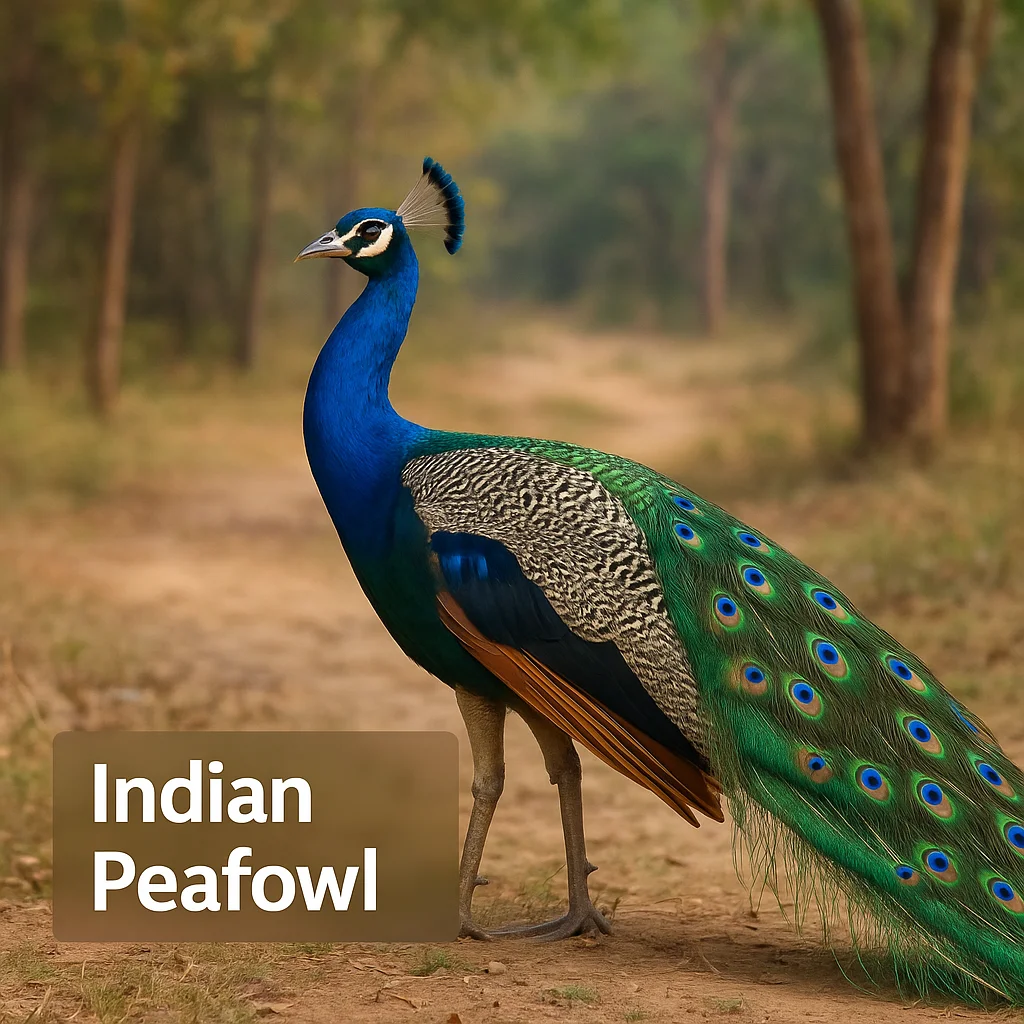
- Common name(s): Indian Peafowl, Blue Peafowl
- Scientific name: Pavo cristatus
- Animal type: Bird
- Typical adult size: 90-230 cm (including tail); weighing 2.7-6 kg
- Typical lifespan: 10-25 years in the wild, up to 30 years in captivity
- Diet type: Omnivore; feeds on seeds, insects, fruits, and small mammals
- Activity pattern: Diurnal
- Social structure: Generally solitary or in small groups; congregates in larger groups during the breeding season
- Speed / movement highlights: Can run at speeds of up to 16 km/h, limited flight capabilities
- Intelligence/learning: Known for their quick learning abilities, excellent problem-solving skills
- Primary habitats: Forests, grasslands, and cultivated areas
- Geographic range: Indian subcontinent, predominantly in India, Sri Lanka, and Nepal
- Predators/threats: Natural predators include tigers, leopards, and mongoose; human threats include habitat destruction and hunting
- Conservation status: Least Concern, though varies by region
🔍 Identification & Appearance
The Indian Peafowl is most recognizable by the male's iridescent blue and green plumage and striking train. The female, or peahen, is more subdued in coloration but shares the elegant form.
- Body shape and silhouette: Medium-sized bird, elongated body with a long neck and tail
- Key colors/patterns: Males sport vivid blue and green colors; females have brown, green, and grey tones
- Distinctive features: The male's train with eye-catching ocelli, fan-like crest on both sexes
- Tracks, scat, or other field signs: Tracks resemble three-pronged bird feet; droppings are small and pellet-like
- Common look-alikes: Similar to the African peafowl but distinct in coloration and region
- Build and proportions: Slender with a balanced weight for its frame
- Beak adaptations: Short, curved beak suitable for foraging a diverse diet
- Claws and wings: Strong legs and claws for ground foraging, long feathers that assist in gliding
- Sensory strengths: Sharp vision; capable of detecting predators from afar
- Key Adaptations: Long train for mating displays, sharp vision, dexterous beak for varied diet, ability to glide short distances, strong legs for swift running, camouflaged females for nesting safety, enlarged eyespots for predator deterrence, vocal adaptability for communication, strong memory skills for territory recognition
- Continents/regions: Asia
- Typical countries/biomes: Prevalent in India, with populations in Sri Lanka, Nepal, and Pakistan
- Elevation range or latitude/climate range: Found from sea level up to 2,000 meters in the Himalayan foothills
- Seasonal movements: Generally sedentary, with local movements in response to food availability and breeding needs
- Where You Might Find It: Protected reserves in India, tropical and subtropical forests, deciduous woodlands, cultivated farmlands, lowland grasslands, rural suburban gardens
- Preferred habitats: Prefers forest edges, clearings, cultivated lands
- Microhabitats and shelter: Uses trees for roosting, shrubs for nesting
- How weather/season changes behavior: Seeks shade and water sources during hot and dry periods, more visible during breeding season
- Habitat knowledge: Understanding habitat offers insights into peafowl behavior and its ecological role as a seed disperser
- Daily routine: Alternates between foraging and resting, uses communal roosts for safety
- Communication: Vocal with loud calls; visual displays during courtship
- Interactions with other species: Competes with other ground-dwelling birds, benefits from symbiotic relationships with herbivores
- Role in the ecosystem: Seed disperser, prey for larger predators, participates in nutrient cycling
- Behavior Highlights: Impressive courtship display, sharp alert calls, roosting in groups for safety, cooperative foraging behaviors, seasonal courtship gatherings, uses shaded areas in midday heat, territorial disputes among males, listens for predator alarms from other species, engages in dust bathing, utilizes waterholes for bathing
- Solitary vs social tendencies: Solitary most of the year; forms groups during breeding
- Group types: Forms small flocks typically led by dominant males
- Cooperation: Rarely observed except in seasonal gatherings
- Dominance hierarchies: Males exhibit complex displays to establish dominance
- Social Structure Notes: Mating displays dominate group dynamics, females often form loose groups for safety, dominant males monopolize larger areas, older males typically more successful in securing mates, hierarchy visible in feeding order, juveniles remain close to mothers post-hatching, conflicts often resolved through displays rather than fighting, social aggregations increase during rainy seasons, some evidence of female choice based on male display size
- Diet across seasons: Primarily seeds and grains; insects and small creatures supplement the diet
- Preferred plants/parts: Favors tender shoots and fresh greens
- Main predators: Targets include large felines and birds of prey, mongoose, and snakes
- Scavenging behavior: Occasionally scavenges on carrion or discarded food
- Feeding Notes: Relies on well-camouflaged ground foraging, utilizes keen eyesight to locate insects, omnivore diet adapts to available resources, eats small reptiles and amphibians when available, relies on communal feeding spots, adjusts foraging distances seasonally, juveniles learn diet through imitation, dust baths often follow feeding, avoids certain toxic plants with instincts
- Locomotion style: Primarily ground-foraging supported by short flights
- Speed and endurance: Quick on their feet with sustained running ability
- Foraging times: Primarily morning and late afternoon to avoid midday heat
- Navigation and spatial behavior: Uses visual landmarks and social cues; non-migratory but moves for seasonal food
- Movement & Strategy: Relies on short bursts of speed for predator evasion, exploits varied food sources within established territories, utilizes tree cover during flights, joins mixed-species foraging flocks, climbs to higher ground for courtship displays, rotates feeding grounds to minimize resource depletion, uses water bodies for long-distance movements, participates in synchronized feeding calls
- Problem-solving and learning: Capable of rapid adjustment to new environments and challenges
- Senses: Acute vision, well-suited for spotting predators and select nutritious food
- Notable Abilities: Complex array of vocalizations, including alarm calls, environmental memory assists in territory navigation, social learning evident among juveniles, females assess male displays for mate selection, uses auditory cues for predator detection, adaptability in captivity, recognition of human presence as threat
- Breeding season: Peak between January to March in most regions
- Mating system: Polygamous, with males courting multiple females
- Incubation period: Around 28-30 days
- Clutch size: Typically 3-6 eggs; young are precocial
- Parenting roles: Females solely responsible for incubation and chick rearing
- Reproduction Snapshot: Extended courtship displays by males, incubation provided entirely by females, chicks follow mothers closely for safety, brood sizes fluctuate with food availability, juvenile male peafowl take years to develop full train, sexual maturity reached by 2-3 years, peahens build nests on the ground, breeding influenced by rainfall and temperature changes, interactions with multiple males common for females during peak season
- Size/weight differences: Males larger, more colorful; females smaller and camouflaged
- Behavioral role differences: Males court with displays; females focus on nesting and raising young
- Sex Differences at a Glance: Males sport longer crests, females exhibit more subdued coloration, only males possess long trains, females select nesting sites, males show domineering behavior during mating season, females prefer shaded, secluded areas, train length in males linked with health and fitness, males less territorial outside breeding season, seasonal molting impacts male appearance dramatically
- Known subspecies: No formally recognized subspecies, though regional variances exist
- Local adaptations: Highland populations may exhibit denser plumage
- Variation Notes: Slight color variations noted between populations, adaptations to colder climates seen in higher altitudes, rural population differences in territoriality, possible influence of domestication in semi-wild populations, folklore around imported variant species, genetic studies suggest minor differentiation
- Natural challenges: Predation by larger carnivores, competition for resources
- Human-related pressures: Habitat destruction, illegal trapping, pollution
- Conservation status: Protected under various regional laws; ongoing population studies
- Responsible Notes: Educate on non-interference, advocate for habitat restoration, recognize the impact of poaching on wild populations, promote ecotourism benefits, support captive breeding programs ethically, awareness initiatives for locals on ecological role, encourage sustainable agriculture that supports biodiversity, highlight cultural significance enhancing conservation support
- The males' train is not actually tail feathers but elongated upper tail coverts.
- The peacock's train features "eyes" to attract mates and can be more than 60% of its total body length.
- During a courtship display, males use low-frequency sounds inaudible to the human ear.
- The peafowl's trains have inspired art and design across various cultures for centuries.
- Peafowl droppings are believed to have medicinal properties in traditional Indian medicine.
- Peafowl roost in tall trees to avoid ground predators at night.
- In captivity, peafowl can quickly adapt and learn to interact with humans positively.
- The peafowl has been the national bird of India since 1963.
- Peafowl are capable swimmers, though they rarely choose to swim.
- Despite their size, peafowl can fly short distances to escape threats.
- Magnificent plumage makes Indian Peafowl instantly recognizable.
- Thrives in a range of habitats, especially near wooded areas and grasslands.
- Preserves their presence within the Indian subcontinent.
- Omnivorous diet; seeds and insects are key staples.
- Main threats include predation by large mammals and human activities.
- Displays complex social behavior during breeding seasons.
- Mating involves elaborate displays, with single-parent care by females.
- Presents key adaptations; lush trains for display, sharp senses for survival.
- Large males distinguished by size and elegant train, aiding courtship.
- Exploring peafowl through natural and cultural lenses reveals their ecological significance and hints at diverse conservation strategies.
🧱 Body Structure & Physical Adaptations
Indian Peafowl are well-adapted to life in the wild with features that aid both in evasion from predators and courtship rituals.
🌍 Range & Distribution
The Indian Peafowl primarily resides within the Indian subcontinent, where its range includes diverse environments from dry grasslands to dense forests.
🏞️ Habitat & Shelter
Indian Peafowl are adaptable to a wide range of habitats but prefer areas with a mixture of open ground and scattered trees. This combination provides optimal conditions for foraging and protection.
🧭 Behavior & Ecology
Indian Peafowl are diurnal, spending early mornings and late afternoons foraging. Social interactions primarily occur around mating seasons.
👥 Social Life & Group Dynamics
While Indian Peafowl are often seen solitary or in pairs, they demonstrate notable social behaviors during breeding seasons and roosting periods.
🍽️ Diet, Prey & Predators
The Indian Peafowl's omnivorous diet shifts with seasonal availability, helping them thrive in varied environments.
🦌 Hunting, Foraging & Movement
With a mix of terrestrial agility and limited flight abilities, Indian Peafowl efficiently navigate their environment for sustenance and safety.
🧠 Intelligence & Senses
Indian Peafowl demonstrate notable perceptual abilities and adaptive behaviors, contributing to their survival in diverse environments.
🪺 Reproduction, Pregnancy & Parenting
Mating season is marked by tremendous display as males compete for females, who single-handedly raise the offspring.
♀️♂️ Male vs Female Differences
Indian Peafowl exhibit marked sexual dimorphism, with males displaying extraordinary length and color of the tail feathers; females are duller but essential for reproductive success.
🧬 Subspecies & Variation
The Indian Peafowl is primarily homogeneous, though some geographical variation occurs in color intensity and size.
⚠️ Threats, Conservation & Human Interaction
While the Indian Peafowl is adaptable, it faces habitat encroachment and hunting. Conservation efforts focus on preserving habitats and reducing human conflict.