🦁 Hippopotamus
🧾 Quick Facts
The hippopotamus, often referred to simply as "hippo," is a large and fascinating mammal that inhabits the rivers and lakes of sub-Saharan Africa. Known for its immense size and territorial behavior, the hippo plays a crucial role in its ecosystem.
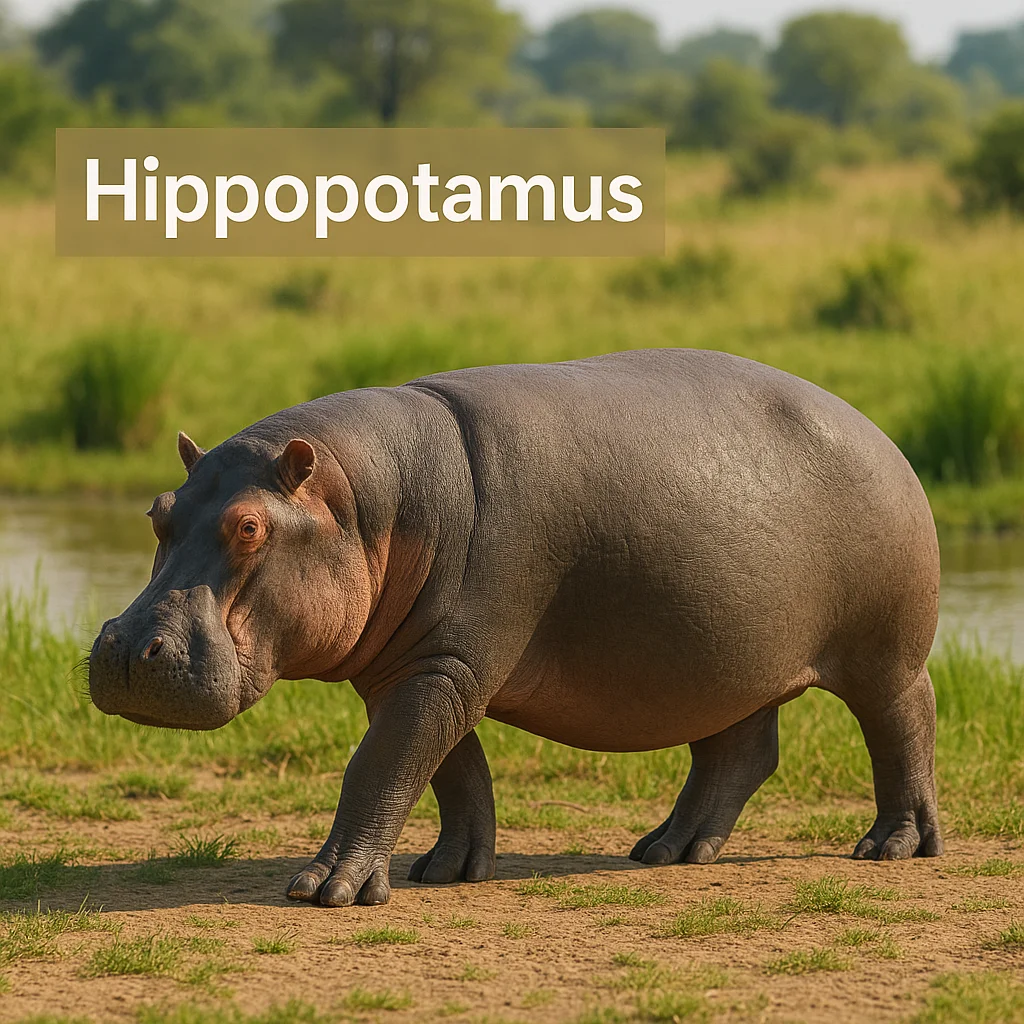
- Common names: Hippopotamus, Hippo, River Horse
- Scientific name: Hippopotamus amphibius
- Animal type: Mammal
- Typical adult size: 3.3 to 5 meters (10.8 to 16.5 feet) in length, up to 1.5 meters (5 feet) tall at the shoulder
- Typical lifespan: 40 to 50 years in the wild
- Diet type: Herbivore, primarily grazing on grasses
- Activity pattern: Nocturnal
- Social structure: Group living; herds can consist of about 10 to 30 individuals
- Speed/movement highlights: Can run up to 30 km/h (19 mph) on land over short distances
- Intelligence/learning: Capable of complex social interactions and hierarchy management
- Primary habitats: Rivers, lakes, and wetlands
- Geographic range: Sub-Saharan Africa
- Predators/threats: Lion, crocodile, human-induced habitat loss
- Conservation status: Vulnerable due to habitat loss and hunting pressures
🔍 Identification & Appearance
Hippopotamuses are easily recognized by their barrel-shaped bodies and massive size. These animals have a large mouth with impressive canine teeth that they often display as a form of intimidation.
- Body shape: Rounded and bulky with short legs
- Key colors: Generally grayish brown with a pinkish undertone
- Distinctive features: Large mouth, prominent teeth, small ears, and eyes located high on the head
- Tracks and signs: Large, round footprints with webbed toes
- Common look-alikes: None; they are quite distinctive
- Top ID Tips:
- Look for their large, gray bodies in or near water bodies
- Watch for territorial display of wide-open jaws
- Note the small, rounded ears and eyes high on the head
- Identify their unique vocalizations, including grunts and snorts
- Look for hippo paths—trails leading from water sources to grazing areas
🧱 Body Structure & Physical Adaptations
Hippopotamuses are well adapted to both terrestrial and aquatic environments. Their body structure allows for ease in movement across both types of habitats.
- Build: Extremely sturdy with a barrel-shaped torso
- Teeth: Large incisors and canines for defense and intimidation
- Feet: Webbed toes for swimming, with sturdy pads for land
- Sensory strengths: Good hearing and sense of smell; limited vision underwater
- Key Adaptations:
- Large, muscular bodies for power in water and on land
- Eyes and nostrils positioned on top of the head for surface surveillance
- Thick skin that aids flotation and protects against abrasions
- Capable of closing nostrils and ears underwater
- Pejoratively designed jaw strength for defense
🌍 Range & Distribution
Hippopotamuses are predominantly found in the river systems and wetlands of Africa. Their distribution depends heavily on the availability of water bodies that can support their semi-aquatic lifestyle.
- Africa: Mostly sub-Saharan regions
- Common countries: Zambia, Tanzania, Uganda
- Biomes: Rivers, lakes, and swamps
- Resident species with no significant migrations
- Where You Might Find It:
- In and around the Nile River
- The Okavango Delta
- Swamps of the Congo Basin
- Lake Victoria and adjacent water sources
- Along the Zambezi River
🏞️ Habitat & Shelter
Hippopotamuses thrive in areas with abundant freshwater. They rely on these habitats for both feeding and protection.
- Preferred habitats: Rivers, lakes, and marshlands
- Shelter: Spend most of the day submerged in water to cool off
- Seasonal behavior: During the dry season, hippos focus on deeper water sources
- Habitat Matters:
- Reliability on water limits latitude range
- Water bodies provide protection against predators
- Environmental changes affect their population dynamics
- Helps maintain ecosystem balance through grazing
🧭 Behavior & Ecology
The social and solitary behaviors of the hippopotamus are a fascinating aspect of their ecology. Their actions ensure the health and stability of their ecosystem.
- Aggressive communication through visual displays and vocal grunts
- Territorial marking with dung
- Social hierarchy within groups aids in conflict management
- Significant contributions to nutrient cycling through their grazing habits
- Behavior Highlights:
- Nighttime feeding routines
- Mud wallowing to stay cool and deter insects
- Establishment of distinct, linear paths between water and feeding grounds
- Frequent yet brief territorial battles between males
- Gravitational interplay between aquatic and terrestrial life
- Distinct vocal cords suited for amphibian living
👥 Social Life & Group Dynamics
Despite their solitary reputation, hippos are often found in herds primarily made up of females and their young.
- Herds can consist of 10 to 30 individuals
- Solitary males often defend territories against rivals
- Dominance hierarchies reduce internal conflicts within groups
- Social Structure Notes:
- Hierarchical male-dominated groups
- Females usually stay within the group they were born into
- Young hippos, who leave the group at maturity
- Dominance established through physical contests
- Limited cooperation, outside of critical territorial behaviors
🍽️ Diet, Prey & Predators
The diet of the hippopotamus consists almost entirely of grazing land plants though they spend most of their time in water.
- Diet: Herbivore focusing on short grasses
- Preferred plants: Terrestrial grass species
- Predators: Lions and crocodiles, human influences due to hunting and habitat decrement
- Feeding Notes:
- Graze at night, minimizing exposure during daylight
- Consume around 40 kg (88 lbs) of grass per night
- Never stray far from a water source
- Unlikely to enter competition for food with other herbivores
- Minimal predation threats, reliant on size and defensive posture
🦌 Hunting, Foraging & Movement
Hippopotamuses are primarily nocturnal grazers. They travel from water to land to feed before returning to water in the morning.
- Locomotion style: Capable swimmers adept on land over short distances
- Typical hunting/foraging times: Predominantly night
- Navigation: Generally maintain small, stable territories with little wander
- Movement & Strategy:
- Utilization of linear paths
- Limited territorial movement outside known ranges
- Short bursts of agility while charged
- Land paths erode most when between water and grazing areas
🧠 Intelligence & Senses
While not renowned for intelligence, hippos do exhibit several notable traits regarding ecological intelligence and social structure.
- Problem-solving in terms of territory disputes
- Social intelligence within group hierarchies
- Reliance on auditory and olfactory sense in limited visibility
- Notable Abilities:
- Sound communication for dominance without reliance on conflict
- Efficient in social hierarchy understanding
- Acute sense of hearing above and below water
- Use of dung for territorial communication
- Strong olfaction aids in social familiarity
🪺 Reproduction, Pregnancy & Parenting
Reproduction among hippos involves distinct courtship behavior that varies by season.
- Breeding season: Year-round with peaks during the wet season
- Mating system: Polygynous
- Gestation period: Around 8 months
- Litter size: Usually give birth to a single calf
- Parenting role: Mothers provide most childcare; males not involved post-mating
- Reproduction Snapshot:
- Mating occurs primarily in water
- Female hippos rear young independently in isolation initially
- Calves can walk and swim shortly after birth
- Parturition occurs in shallow water or on land, with initial bonding in water
♀️♂️ Male vs Female Differences
In hippopotamuses, sexual dimorphism is moderate, with the primary differences revolving around size and behavior.
- Size differences: Males are generally larger
- Behavioral role differences: Males engage in more territorial disputes
- Sex Differences at a Glance:
- Males exhibit more aggressive behaviors
- Females remain with offspring longer
- Males maintain larger territories
- Females often found in more stable, smaller groups
- Peak size and weight differences are clear
🧬 Subspecies & Variation
While local adaptations exist, the classification of hippopotamuses as different subspecies often varies significantly among scientific communities.
- Variation and local adaptations driven by environmental challenges
- Distinctive adaptations in skin thickness and behavior based on rainfall
- Variation Notes:
- Subspecies classification: Generally considered debatable
- Environmental adaptation varies habitat stability
⚠️ Threats, Conservation & Human Interaction
Hippos face multiple challenges from both natural predators and human activities.
- Habitat loss due to agriculture
- Hunting for ivory and bushmeat
- Human and hippo water resource conflicts
- Conservation status impacted largely by human interaction
- Responsible Notes:
- Avoid interaction; conservation better achieved with habitat preservation
- Responsible ecotourism can aid awareness and support
- Observing conservational guidelines maintains protections
✨ Fun Facts & Unique Traits
- Hippos secrete a natural sunscreen known as "blood sweat," which is reddish
- Their massive jaws can open wide enough to hold an entire human, yet they primarily eat grass
- Despite appearing sluggish on land, hippos can outrun humans in short bursts
- Hippos spend up to 16 hours a day submerged in water
- Their closest living relatives are whales, not other herbivorous mainland animals
- Hippos have a leathery skin that loses moisture quickly, leading to their preference for spending time in water
📌 Summary
- Hippopotamuses are recognizable by their large, stout bodies and characteristic jaws
- They inhabit rivers and lakes across sub-Saharan Africa
- Favoring grassy sell-lands for grazing, hippos are primarily nocturnal feeders
- Significant impacts on their environment through grazing and water behaviors
- High-level aggressiveness ensures limited predators beyond humans
- Reproduce year-round with peak births in wetter seasons
- Physical adaptations allow for aquatic and terrestrial lifestyles
- Subspecies classification remains debated due to adaptation diversity
- Their populations face significant pressures from human-induced changes