🦁 Rhinoceros Beetle
🧾 Quick Facts
The Rhinoceros Beetle is a remarkable group of beetles known for their prominent horn-like structures. These beetles are often admired for their strength and fascinating characteristics.
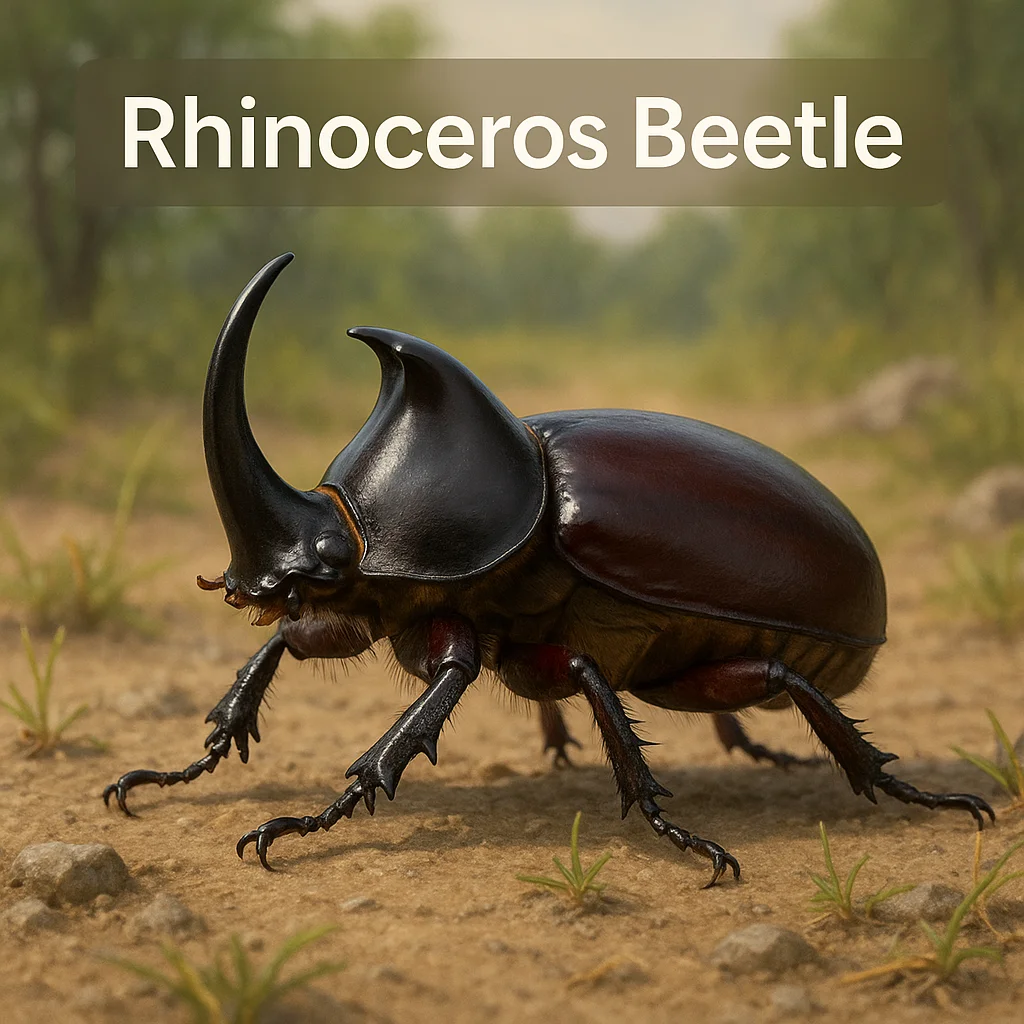
- Common name(s): Rhinoceros Beetle, Horn Beetle
- Scientific name: Varies (family: Scarabaeidae, subfamily: Dynastinae)
- Animal type: Invertebrate
- Typical adult size: 1.5 to 6 inches (4 to 15 cm) in length
- Typical lifespan: 2 to 3 years
- Diet type: Herbivore; primarily feeds on decaying vegetation, fruit, and tree sap
- Activity pattern: Nocturnal
- Social structure: Solitary
- Speed / movement highlights: Known for powerful movement rather than speed
- Intelligence/learning: Limited; relies on instinctual behavior
- Primary habitats: Tropical and subtropical forests
- Geographic range: Found worldwide, particularly in Central and South America, Southeast Asia, and Africa
- Predators/threats: Birds, mammals, and reptiles; habitat loss due to deforestation
- Conservation status: Varies by region
🔍 Identification & Appearance
Rhinoceros Beetles are notable for their formidable size and striking horns, which vary significantly between species and sexes.
- Body shape and silhouette: Sturdy, rounded body with a shiny exoskeleton
- Key colors/patterns: Colors range from black to brown or green; some species have iridescent hues
- Distinctive features: Horns on males are a defining characteristic, with some resembling the horns of a rhino
- Tracks, scat, or other field signs: Little to no significant tracks in the wild; primarily signs of feeding on sap or fruit
- Common look-alikes: Can resemble other large beetles; horns are the key distinguishing factor
- Top ID Tips:
- Look for a large, oval-shaped body
- Check for distinctive horn-like projections on the head
- Observe the shiny, often iridescent exoskeleton
- Distinguish males by larger horns as compared to females
- Note the beetle's large and strong legs
- Observe feeding areas like tree sap sites for presence
- Compare size and horn shape with local beetle guides
🧱 Body Structure & Physical Adaptations
The Rhinoceros Beetle is built for power, using its horns and robust body to its advantage.
- Build and proportions: Stocky with a thick exoskeleton, aiding in protection
- Teeth/beak/jaw adaptations: Mandibles are strong and designed for gripping food
- Wings: Covered by thick elytra; used for flight when necessary
- Sensory strengths: Strong sense of smell; limited vision
- Key Adaptations:
- Horns used in male combat for mating rights
- Thick exoskeleton provides defense against predators
- Mandibles assist in breaking down plant material
- Strong legs used for burrowing into substrate
- Elytra protect fragile flying wings beneath
- Sensitive antennae for detecting scents and pheromones
🌍 Range & Distribution
Rhinoceros Beetles inhabit a range of tropical and subtropical regions across the world.
- Continents/regions: Central and South America, Southeast Asia, Africa
- Typical countries/biomes: Rainforests, woodlands, and agricultural areas
- Elevation range: Usually found in lowland to mountainous forested regions
- Seasonal movements or migration: Mostly resident with local dispersal
- Where You Might Find It:
- Lowland tropical forests
- Subtropical regions with dense vegetation
- Agricultural regions with fruit trees
- Near rotting logs and decaying plant matter
- Rainforest understories
🏞️ Habitat & Shelter
Rhinoceros Beetles thrive in environments that offer abundant vegetation and moisture.
- Preferred habitats: Tropical and subtropical forests, humid environments
- Microhabitats and shelter: Under logs, within leaf litter, and on trees
- Weather/season changes: More active in wet seasons when food is plentiful
- Habitat knowledge: Essential for understanding their breeding and feeding behaviors
🧭 Behavior & Ecology
Rhinoceros Beetles exhibit intriguing behavior, particularly in how they interact during mating and feeding.
- Daily routine: Nocturnal activity, hiding during the day
- Communication: Use of pheromones to attract mates
- Interactions with other species: Competes with others for food
- Role in the ecosystem: Decomposers, aiding in nutrient cycling
- Behavior Highlights:
- Fierce combat between males for mating rights
- Pheromone-based mate attraction system
- Feeding on decaying wood and plant matter
- Important for recycling nutrients in ecosystems
- Niche in helping break down organic materials
👥 Social Life & Group Dynamics
Rhinoceros Beetles are primarily solitary outside of breeding periods.
- Solitary vs social tendencies: Largely solitary except during mating
- Group types: No structured groups; temporary aggregations when food is abundant
- Cooperation: Minimal; interactions are mainly competitive
- Dominance hierarchies: Competition among males for females
- Social Structure Notes:
- Solitary except during mating attempts
- Mating often involves male combat
- No fixed territories; home ranges may overlap
- Temporary aggregations at feeding sites
🍽️ Diet, Prey & Predators
The Rhinoceros Beetle relies on a herbivorous diet, typically involving decaying plant materials.
- What it eats: Sap, fruit, and rotting plant material
- Seasonal/dietary variations: More fruit consumption during its availability
- Natural predators: Birds, rodents, and reptiles
- Anti-predator defenses: Strong exoskeleton and horns for defense
- Feeding Notes:
- Consumes fallen, overripe fruits
- Feeds on tree sap accessed through gnawed bark
- Decaying foliage as a primary food source
- Minimal predation due to robust defenses
🦌 Hunting, Foraging & Movement
Rhinoceros Beetles are adapted for foraging on woody substrates rather than active hunting.
- Locomotion style: Crawling, climbing on vegetation
- Speed and endurance: Slow, steady movement
- Typical foraging times: Nighttime foraging to avoid predators
- Navigation: Limited; primarily relies on scent trails
- Movement & Strategy:
- Climbing to reach sap and fruits higher up
- Burrowing beneath foliage for shelter
- Slow movement aids in unnoticed advance
🧠 Intelligence & Senses
While Rhinoceros Beetles have limited intelligence, they exhibit strong physical features that aid survival.
- Problem-solving: Minimal evidence; acts mostly on instinct
- Senses: Excellent olfactory capabilities
- Uncertainties: Cognitive processes largely unknown
- Notable Abilities:
- Strong sense of smell for detecting food
- Powerful jaw muscles for breaking down tough plant material
- Able to lift objects many times its body weight
- Efficient at navigating forest litter
🪺 Reproduction, Pregnancy & Parenting
Reproductive behaviors of Rhinoceros Beetles often involve competitive displays by the males.
- Breeding seasonality: Often linked to seasonal rainfall
- Mating system: Usually polygynous
- Gestation/incubation period: Varies with species; generally observed as a few weeks
- Litter/clutch size: Typically 20–50 eggs
- Parent roles: Female generally responsible for egg-laying
- Reproduction Snapshot:
- Egg-to adult metamorphosis occurs in stages
- Males use horns to compete for females
- Eggs laid in soil or within decaying wood
♀️♂️ Male vs Female Differences
Males and females can be distinguished by the presence of horns and subtle differences in size.
- Size/weight differences: Males often larger due to horn structures
- Coloration: Generally similar; body structure denotes gender
- Behavioral differences: Males engage in combat; females more involved in feeding and laying eggs
- Sex Differences at a Glance:
- Males possess prominent head horns
- Females may appear slightly stockier
🧬 Subspecies & Variation
Rhinoceros Beetles include numerous species and even greater local variations.
- Known subspecies: Several, different horn arrangements and body size
- Local adaptations: Horn size variation and coloration shifts
- Variation Notes:
- Variety in horn length across regions
- Color changes depending on habitat
- Unique horn shapes in different species
⚠️ Threats, Conservation & Human Interaction
Rhinoceros Beetles face conservation challenges due to habitat loss.
- Natural challenges: Predation by birds, habitat alterations
- Human-related pressures: Deforestation significantly impacts populations
- Responsible Notes:
- Conservation efforts focus on habitat preservation
✨ Fun Facts & Unique Traits
- Rhinoceros Beetles can lift objects over 850 times their own weight.
- Some species are even used in traditional medicine practices.
- The horn structures are not used for feeding, only for mating battles and defense.
- They are one of the strongest insects relative to body size on the planet.
- Despite their fierce appearance, they are harmless to humans.
📌 Summary
- Identified by distinct horns and shiny exoskeleton.
- Inhabit humid forests and regions rich in vegetation.
- Nocturnal with a preference for feeding on decaying plant material.
- Preservation relies significantly on maintaining natural habitat.
- Contribute to nutrient cycling as decomposers in their ecosystem.
- Solitary except during mating; males compete for females by using their horns.