🦁 Largemouth Bass
🧾 Quick Facts
The Largemouth Bass (Micropterus salmoides) is a sought-after freshwater fish species native to North America known for its impressively large mouth and robust predatory nature. A favorite of anglers, this species plays a significant ecological role in its habitat.
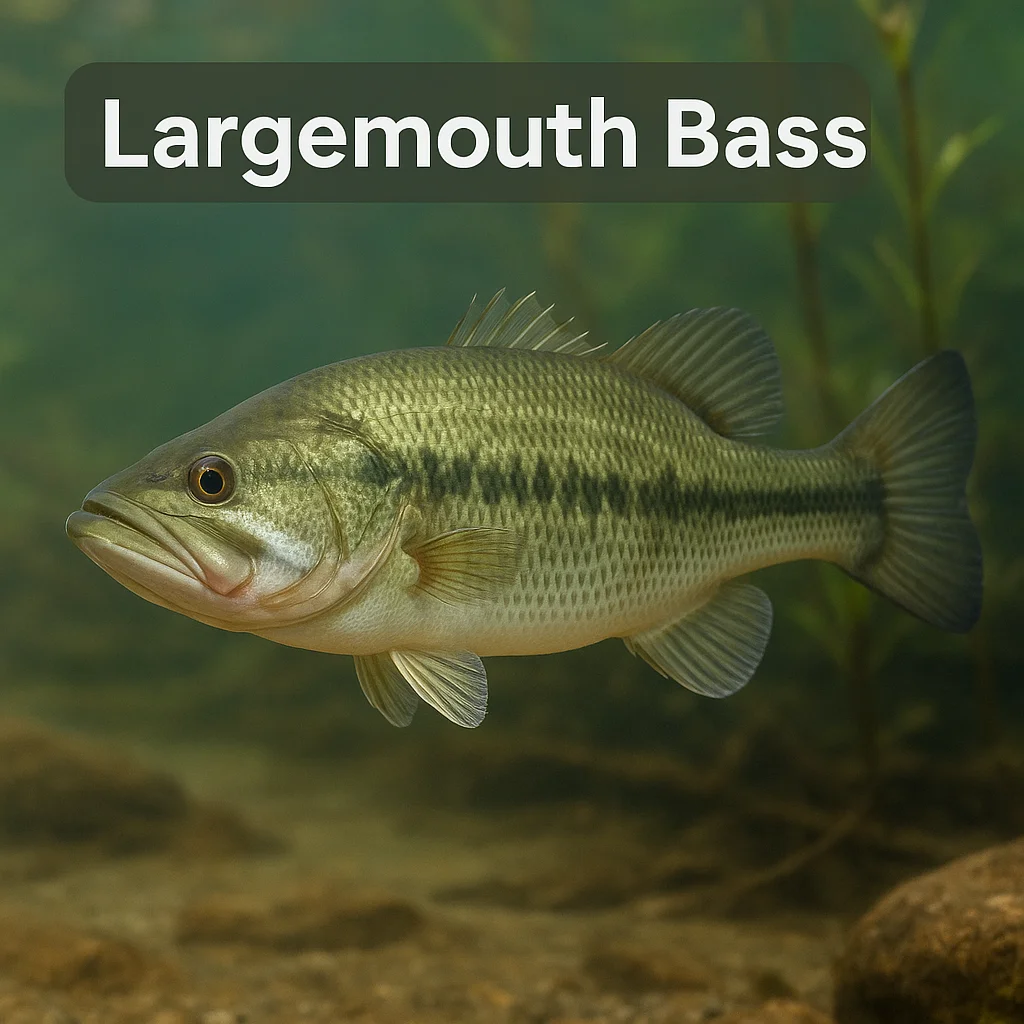
- Common name(s): Largemouth Bass, Black Bass
- Scientific name: Micropterus salmoides
- Animal type: Fish
- Typical adult size: 12-24 inches in length; up to 10 pounds
- Typical lifespan: 10-16 years in the wild
- Diet type: Carnivore; feeds on insects, crayfish, worms, other fish, and small aquatic animals
- Activity pattern: Primarily diurnal
- Social structure: Typically solitary
- Speed / movement highlights: Capable of quick bursts for capturing prey
- Intelligence/learning: Shows learning capacity in catching prey; considered intelligent for a fish
- Primary habitats: Freshwater lakes, rivers, ponds
- Geographic range: North America, particularly in the Eastern and Central United States
- Predators/threats: Larger fish, birds of prey, humans
- Conservation status: Not currently threatened, but habitat alteration poses risks
🔍 Identification & Appearance
The Largemouth Bass can be identified by its elongated, robust body and its hallmark large mouth, which extends beyond the eye when closed. It has a coloring that varies from light green to olive, with a horizontal dark stripe running along each side.
- Body shape and silhouette: Oval-shaped body with a broad dorsal fin
- Key colors/patterns: Dark green to olive; white underbelly; black lateral stripe
- Distinctive features: Large mouth extending beyond the eye, forked tail
- Tracks, scat, or other field signs: N/A
- Common look-alikes: Smallmouth bass; distinguishable by its larger mouth and distinct body patterns
- Top ID Tips
- Large mouth extending past the eye
- Broad flattened dorsal fin
- Olive green coloration with horizontal stripe
- Robust, stocky body
- White underbelly
- Distinct separation between the dorsal fin lobes
🧱 Body Structure & Physical Adaptations
The Largemouth Bass has a stocky, muscular build, optimized for short, swift bursts of speed, aiding in its ambush hunting style. Its mouth is large and strong, ideal for catching and holding onto prey. It has sharp, backward-pointing teeth for gripping slippery prey.
- Build and proportions: Stocky with a broad, powerful midsection
- Teeth/jaw adaptations: Strong jaws with sharp teeth for gripping and holding prey
- Fins: Well-developed pectoral and caudal fins for maneuverability
- Sensory strengths: Acute vision and lateral line sense for detecting movements in the water
- Key Adaptations
- Large, articulated jaw for substantial prey intake
- Sharp teeth to capture and hold prey
- Forward-facing fins for enhanced maneuverability
- Highly sensitive lateral line for detecting water vibrations
- Thick, strong scales for protection
🌍 Range & Distribution
Largemouth Bass are widely distributed across freshwater bodies in North America. They are most commonly found in lakes, ponds, and rivers from Canada to Mexico. Elevation and climate tend to vary, but they are generally found in warmer freshwater regions, and they do not typically migrate.
- Where You Might Find It
- Eastern United States: Lakes and ponds
- Central United States: Slow-moving rivers
- Southern Canada: Freshwater habitats
- Northern Mexico: Tropical areas
- Warm, shallow lakes and reservoirs
🏞️ Habitat & Shelter
The Largemouth Bass prefers calm, warm, and vegetative freshwater environments. This includes lakes, ponds, rivers, and reservoirs where it can find adequate shelter and feeding ground. Vegetation provides cover for hunting, but it may change its behavior with seasonal shifts in temperature.
🧭 Behavior & Ecology
Largemouth Bass are known for their ambush tactics during hunting, relying on stealth and surprise. They are territorial and can display aggressive behavior, especially during breeding season. They play a critical role as apex predators in their aquatic ecosystems, helping to control prey populations.
- Behavior Highlights
- Ambush predator
- Primarily solitary outside of breeding
- Highly territorial around breeding areas
- Sensitive to changes in water temperature
- Essential in controlling fish populations
👥 Social Life & Group Dynamics
Generally solitary, the Largemouth Bass will only occasionally form loose groups, particularly during winter when resources are scarce. The fish are usually highly territorial, especially around spawning sites, where males may set up small territories to guard.
- Social Structure Notes
- Solitary with territorial tendencies
- Males establish and guard territories during breeding
- Loose group formations in winter
- Aggression peaks during spawning season
🍽️ Diet, Prey & Predators
The Largemouth Bass is a carnivorous species, feeding on a wide range of prey, including insects, amphibians, and smaller fish. During its juvenile stages, its diet consists mostly of small invertebrates. Its primary predators include large birds and humans.
- Feeding Notes
- Highly opportunistic feeder
- Diet includes small fish, crustaceans, and insects
- Able to consume prey up to half its body size
- Relies on stealth and speed to capture prey
🦌 Hunting, Foraging & Movement
As an ambush predator, the Largemouth Bass relies on stealth and sudden bursts of speed to capture its prey. It uses its lateral line to detect movements and vibrations in the water. It is most active during the day but can also hunt at dawn and dusk when light levels are low.
- Movement & Strategy
- Ambush-style predation
- Capable of rapid bursts of speed
- Primarily diurnal with crepuscular activity
- Relies on lateral line for prey detection
🧠 Intelligence & Senses
The Largemouth Bass is noted for its intelligence among fish species, demonstrating learning capabilities in its predatory behavior. Its senses are highly adapted for its environment, with vision and lateral line systems tuned for detecting ambient changes.
- Notable Abilities
- Highly sensitive lateral line
- Strong visual acuity for targeting prey
- Natural learning intelligence in predation
- Evolved agility and speed for successful hunting
🪺 Reproduction, Pregnancy & Parenting
Breeding for the Largemouth Bass typically occurs in spring when water temperatures rise. Males create nests in shallow waters where females lay eggs. After spawning, males guard the nest and fry until they are independent, reflecting an active parenting role.
- Reproduction Snapshot
- Spring breeding season
- Nest building by males in shallow waters
- Male guards nest and fry
- Highly protective parental behavior
♀️♂️ Male vs Female Differences
Size is a primary difference between male and female Largemouth Bass, with females typically larger, particularly during spawning. Both genders are similar in coloration, although females may appear larger when carrying eggs.
- Sex Differences at a Glance
- Females larger, especially during spawning
- Similar coloration between sexes
- Male nesting and guarding behavior
🧬 Subspecies & Variation
There are two recognized subspecies of the Largemouth Bass: the Northern and Florida bass. They vary by size and habitat preference, with the Florida bass generally larger and more adapted to warm, subtropical environments.
- Variation Notes
- Northern and Florida subspecies distinction
- Florida bass typically larger
- Subspecies differ by regional adaptation
⚠️ Threats, Conservation & Human Interaction
While not currently threatened, Largemouth Bass face pressures from habitat loss and pollution. Conservation efforts often focus on habitat preservation, and recreational fishing is regulated to ensure population health. Maintaining clean, diverse aquatic environments is crucial for their survival.
- Responsible Notes
- Conservation focuses on habitat preservation
- Sensitive to pollution
- Popular sport fish; fishing regulations in place
- Ecological balance is crucial for habitat maintenance
✨ Fun Facts & Unique Traits
- Largemouth Bass can consume prey up to half their size.
- Males play a pivotal role in parental care, guarding the nest vigilantly.
- Their lateral line system is so sensitive it can detect changes from water droplets.
- Largemouth Bass are among the most popular game fish in North America.
- They can experience a rapid growth rate under optimal conditions.
- They have mild resistance to low oxygen levels compared to other fish.
📌 Summary
- Identification: Noted for a large mouth, olive green color, and broad dorsals.
- Habitat: Prefers warm, calm freshwater bodies with ample vegetation.
- Distribution: Widely found across North American freshwater habitats.
- Diet: Carnivorous, eating fish, insects, and other aquatic prey.
- Predators: Threatened by larger fish, birds, and humans.
- Social life: Solitary with territorial tendencies, especially during breeding.
- Reproduction: Spring breeding; males guard nests and offspring.
- Key adaptations: Sharp teeth, large mouth, developed lateral line.
- Distinctive traits: Apex predator role in ecosystems and popularity as sport fish.