🦁 Discus
🧾 Quick Facts
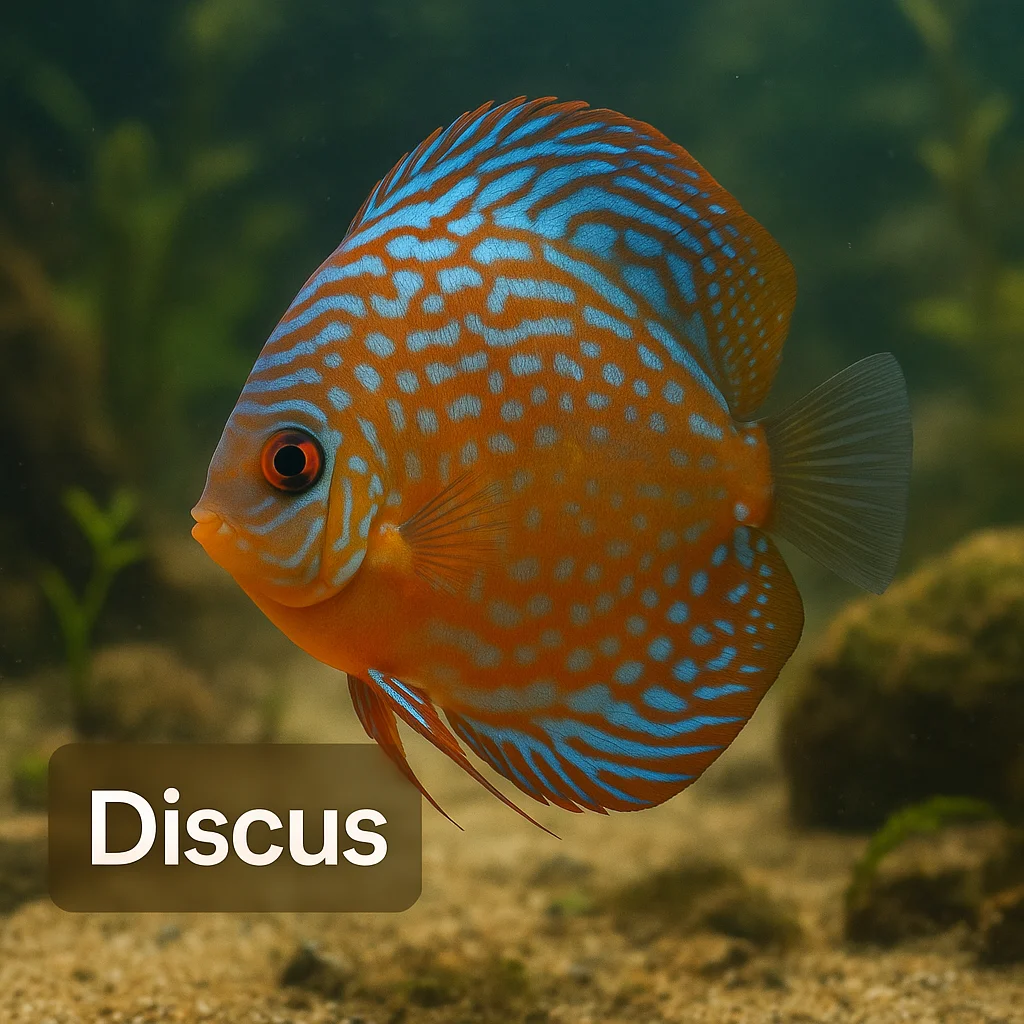
The Discus fish is a popular and vibrant freshwater species known for its striking circular body and vivid color patterns. Belonging to the cichlid family, these fish are native to the Amazon River basin and are a favorite among aquarium enthusiasts for their unique beauty and intriguing behaviors.
- Common name(s): Discus, Discus fish
- Scientific name: Symphysodon spp.
- Animal type: Fish
- Typical adult size: 10-15 cm (4-6 inches) in diameter
- Typical lifespan: 10-15 years in captivity
- Diet type: Omnivore; includes insects, worms, and plant matter
- Activity pattern: Diurnal
- Social structure: Often found in small groups
- Speed / movement highlights: Slow, graceful swimming
- Intelligence/learning: Moderate learning ability, can recognize environment
- Primary habitats: Freshwater rivers and floodplains
- Geographic range: Amazon River Basin in South America
- Predators/threats: Larger fish, habitat degradation
- Conservation status: Varies by region; habitat loss is a concern
🔍 Identification & Appearance
Discus fish are recognizable by their distinctive flat and circular body shape. They display a wide range of dazzling colors and patterns, including shades of blue, red, green, and brown. The colors and patterns can vary significantly based on genetic and environmental factors.
- Their body is laterally compressed and disc-shaped.
- They often have intricate patterns, stripes, or spots.
- Overall coloration can shift with mood, health, and age.
- Fins are rounded and flow with the body shape, aiding in delicate movement.
- Eyes are large and prominent, often matching body color.
- Top ID Tips:
- Look for a circular, flat body.
- Notice vivid coloration with iridescent accents.
- Spot the characteristic broad forehead and mouth.
- Check for a smooth, even mix of colors.
- Distinct from angelfish by rounder shape.
- Observe slow, hovering swimming style.
- The disc shape optimizes maneuverability and camouflage.
- Possesses sharp teeth suited for diverse diet components.
- Fins are broad and flexible, aiding in precise movements.
- Eyes positioned for clear visibility in murky waters.
- Adapted to maintain buoyancy with a specialized swim bladder.
-
Key Adaptations:
- Laterally compressed body for agility.
- Strong, sharp teeth for varied diet.
- Broad fins optimized for control and balance.
- Swim bladder aids in buoyancy and stability.
- Vibrant coloration aids in mating and camouflage.
- They inhabit South America, mainly in Brazil, Colombia, and Peru.
- Prefer warm and soft waters, typical of the Amazon climate.
- Found at low elevations, primarily in the Amazon floodplains.
- Do not undergo significant migrations; considered resident species.
-
Where You Might Find It:
- Amazon River tributaries.
- Floodplain lakes and creeks.
- Areas with dense aquatic plant life.
- Lowland temperate regions of the Amazon Basin.
- Shallow, slow-moving waters.
- Behavior Highlights:
- Engage in peaceful schooling behavior.
- Forage by grazing on plant matter and small invertebrates.
- Communicate using body movements and color changes.
- Establish territories within areas of dense vegetation.
- Participate in cleaning symbiosis by hosting cleaner fish.
-
Social Structure Notes:
- Form small, cohesive groups in robust environments.
- Territory establishment in dense plant areas.
- Display limited aggression in a stable social hierarchy.
- Pair bonds form temporarily during breeding.
- Participate in mutualistic interactions with cleaner fish.
-
Feeding Notes:
- Omnivores with a preference for varied diet.
- Forage alone or in small groups for efficiency.
- Diet changes seasonally with available food types.
- Rely on camouflage for predator avoidance.
- Known to consume algae and other plant material.
-
Movement & Strategy:
- Swim slowly and deliberately for precise movement.
- Forage actively in mornings and late afternoon.
- Navigate using visual landmarks and plant structures.
- Utilize tight turns to evade predators in dense cover.
- Tend to refine food search based on visual cues.
-
Notable Abilities:
- Recognize environment and possible threats.
- Sensitivity to changes in water currents.
- Visual acuity vital for color and pattern recognition.
- Respond to tactile stimuli actively.
- Limited capacity for learned behaviors such as feeding responses.
-
Reproduction Snapshot:
- Breeding tied to seasonal rainfall.
- Monogamous, forming pair bonds during breeding.
- Eggs laid on submerged platforms.
- Both parents engage in egg and fry protection.
- Young receive considerable parental attention.
-
Sex Differences at a Glance:
- Males may be more vibrantly colored.
- Females appear rounder when carrying eggs.
- Color differences more apparent during breeding.
- External morphology is largely similar otherwise.
- Behavior differences minimal outside breeding periods.
-
Variation Notes:
- Different species exhibit variant color patterns.
- Heckel Discus displays prominent band pattern.
- Color intensity varies with habitat clarity.
- Twin-colors often reflect environmental adaptations.
- Genetic diversity sustains florid color variations.
-
Responsible Notes:
- Habitat conservation critical for long-term survival.
- Support ethical aquarium trade practices.
- Avoid catching wild specimens without permits.
- Promote sustainable and responsible fish keeping.
- Protect essential breeding grounds from deforestation.
- Discus fish are known to change color depending on their mood or environmental changes.
- Their intricate colors and patterns have made them a favorite in aquascaping and competitive fish shows.
- Discus fish are one of the few species where both parents equally participate in raising their young.
- They are sometimes called "pigeons of the water" due to their color diversity.
- Despite their peaceful nature, discus are capable of defending their territory when needed.
- Wild populations are often found near submerged logs or dense floating plants.
- The Discus fish's vibrant, circular body makes it easy to identify.
- They thrive in warm, slow-moving freshwater habitats filled with dense vegetation.
- Native to the Amazon Basin; they do not migrate but remain in stable territories.
- Typically form small social groups and exhibit peaceful schooling behavior.
- Omnivorous diet focuses on detritus and small aquatic prey.
- Share parenting duties among pairs, a rare trait among aquarium fish.
- Conservation efforts focus on sustainable trade and habitat protection.
- Known for intelligent behavior in recognizing partners and habitats.
- Predation threats come from larger fish species in their native waters.
- Exhibit stunning color variations due to genetic diversity and environmental influences.
🧱 Body Structure & Physical Adaptations
The unique body structure of the Discus fish allows it to thrive in its natural habitat. Its laterally compressed body provides agility in the densely vegetated waters of the Amazon. Robust fins aid in slow, controlled movements.
🌍 Range & Distribution
Discus fish are native to the lowland waters of the Amazon Basin. They are predominantly found within the slow-moving rivers and floodplains where dense underwater vegetation provides both food and shelter.
🏞️ Habitat & Shelter
Discus fish thrive in warm, slow-moving waters rich with submerged vegetation. These environments provide ample food sources and protection from predators. Aquatic plants play a critical role in their habitat, offering both shelter and breeding sites.
Environmental changes, such as seasonal flooding, can affect habitat dynamics and food availability, influencing behavior and distribution.
Understanding their habitat is crucial for understanding their behavior, as their reliance on dense vegetation influences their social structures and feeding habits.
🧭 Behavior & Ecology
Discus fish are social creatures, usually found in small groups. They tend to establish territories among the plants and roots of their habitat. Their daily routine involves foraging for food among the detritus and plant matter on the river floor. They communicate through visual signals and subtle body movements.
Discus fish play a vital role in their ecosystem as both prey and low-level omnivores, helping to control insect populations and cycling nutrients through the aquatic food web.
👥 Social Life & Group Dynamics
Discus fish are known for their social nature and are often observed in small, harmonious groups. These groups provide safety through numbers and enhance foraging efficiency. Although generally peaceful, individuals may establish a pecking order when confined.
In the wild, discus fish form loose aggregations and enjoy the company of conspecifics, but they also crave personal space within established territories.
🍽️ Diet, Prey & Predators
As omnivores, discus fish feed primarily on detritus, small crustaceans, insects, and plant matter. Their diet changes with seasonal availability of food sources. While they have broad dietary preferences, they rely heavily on submerged vegetation for nutritional sustenance.
Predatory risks include larger fish species. Their vibrant coloration can camouflage them among aquatic plant life, helping them evade detection.
🦌 Hunting, Foraging & Movement
Discus fish are primarily foragers, swimming gracefully among aquatic plants and searching for small prey and plant matter. Their slow swimming style is optimized for navigating crowded habitats. They show a preference for morning and afternoon activity, aligning with their diurnal nature.
They do not partake in migration but may shift habitats slightly to follow food abundance throughout seasons.
🧠 Intelligence & Senses
Discus fish exhibit a moderate degree of intelligence, often learning and recognizing their environment in stable conditions. Their primary senses focus on vision and touch, complemented by keen sensors on their lateral lines that detect water vibrations. This sensory suite helps them in foraging and predator evasion.
🪺 Reproduction, Pregnancy & Parenting
Breeding typically aligns with the rainy season, as nutrient-rich waters foster eggs and fry. Discus display pair bonding during breeding, with both parents guarding their eggs attentively. They are known for laying eggs on submerged plant leaves or flat surfaces.
Parental care is vital, with parents fan their eggs to ensure adequate oxygen supply and protection from potential threats.
♀️♂️ Male vs Female Differences
Discus fish manifest subtle differences between males and females, primarily discernible during breeding. Males tend to exhibit slightly brighter coloration, thereby attracting potential mates, while females may exhibit a rounder body shape when gravid with eggs.
Nonetheless, these differences can be hard to detect outside of a breeding context.
🧬 Subspecies & Variation
The Discus group includes several species and subspecies, such as the Blue Discus (Symphysodon aequifasciatus) and the Heckel Discus (Symphysodon discus). These species show variations in color, pattern, and geographic range.
Local adaptations, including differences in coloration and size, are often the result of environmental factors such as water quality and diet.
⚠️ Threats, Conservation & Human Interaction
Discus populations face threats from habitat loss due to deforestation and commercial overfishing. Environmental degradation disrupts breeding and food availability. In the aquarium trade, ethical sourcing is vital to ensure sustainable practices, as poorly managed collections can pressure wild populations.
Despite challenges, awareness and conservation efforts can mitigate habitat impact and promote coexistence with humans.