🦁 Channel Catfish
🧾 Quick Facts
The Channel Catfish, a widespread freshwater species, is known for its adaptability and distinctive whisker-like barbels. Here’s a look at some key facts:
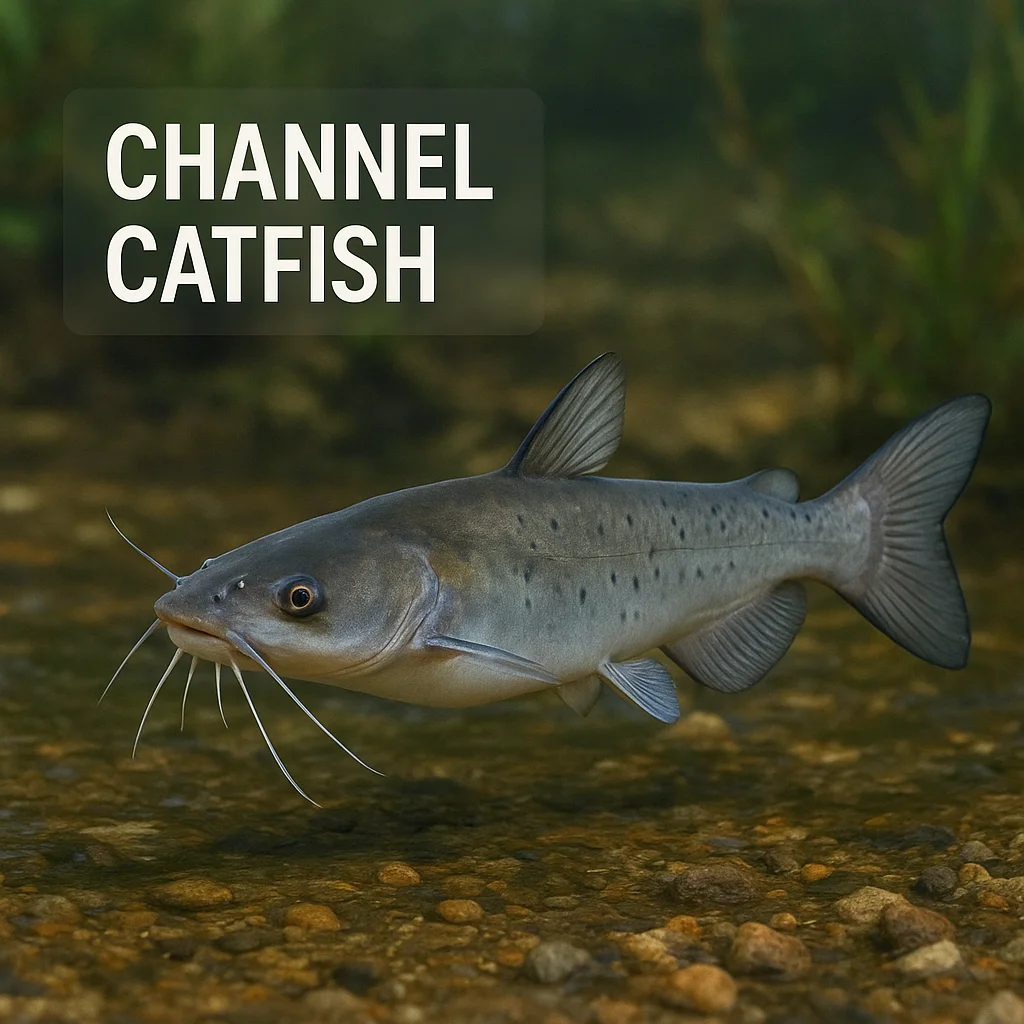
- Common name(s): Channel Catfish
- Scientific name: Ictalurus punctatus
- Animal type: Fish
- Typical adult size: 12-24 inches in length, weighing 5-10 pounds; record individuals may exceed 50 pounds
- Typical lifespan: 10-15 years in the wild; up to 20 years in captivity
- Diet type: Omnivore, commonly consuming algae, plant material, and small aquatic animals
- Activity pattern: Primarily nocturnal
- Social structure: Generally solitary but may form loose groups during spawning
- Speed / movement highlights: Moderate swimmer
- Intelligence/learning: Known for adapting to a wide range of environments; basic problem-solving skills
- Primary habitats: Rivers, lakes, and ponds
- Geographic range: Native to North America; found from southern Canada to northern Mexico
- Predators/threats: Predators include larger fish and birds; human-induced threats include habitat degradation and pollution
- Conservation status: Not currently threatened; status varies by region
🔍 Identification & Appearance
Channel Catfish have an easily recognizable appearance with notable features that aid in their identification:
- Body shape and silhouette: Slender, elongated body with a slightly flattened head and forked tail
- Key colors/patterns: Typically gray to olive in color with scattered small dark spots, although coloration can vary
- Distinctive features: Whisker-like barbels around the mouth serve as sensory organs
- Field signs: Look for smooth, scaleless skin and the characteristic forked tail fin
- Common look-alikes: Blue Catfish and Flathead Catfish; distinguishable by tail shape and color patterns
- Top ID Tips
- Look for whisker-like barbels
- Elongated, streamlined body
- Forked tail fin
- Small, scattered dark spots on body
- Smooth, scaleless skin
- Head slightly flattened
🧱 Body Structure & Physical Adaptations
Channel Catfish possess several physical adaptations that help them thrive in various freshwater environments:
- Build and proportions: Streamlined for efficient swimming
- Jaw adaptations: Wide mouth with small, fine teeth for grasping prey
- Fins: Pectoral and dorsal fins equipped with sharp spines for defense
- Sensory strengths: Excellent sense of taste and smell; barbels act as additional sensory organs
- Key Adaptations
- Barbels for enhanced sensory perception
- Sharp fin spines for defense
- Streamlined body for swimming efficiency
- Wide mouth for versatile feeding
- Scaleless skin reducing drag
🌍 Range & Distribution
Channel Catfish are widespread throughout North American freshwater systems:
- Common in rivers, lakes, and reservoirs
- Found across southern Canada, the contiguous United States, and into northern Mexico
- Primarily resides in warm, shallow waters
- Can adapt to a range of freshwater environments
- Mostly resident, with limited seasonal migration for spawning
- Where You Might Find It
- Big rivers with muddy bottoms
- Lakes with ample underwater structures
- Ponds near river systems
- Reservoirs and backwaters
- Slow-moving streams
🏞️ Habitat & Shelter
Channel Catfish prefer various freshwater habitats where they can find food and shelter:
- Preferred habitats: Rivers, large creeks, and lakes with abundant cover
- Shelter: Utilize submerged structures like logs, rocks, and vegetation for protection
- Seasonal behavior changes: Become more active and move to shallow waters in warm seasons
Understanding their habitat needs is crucial for conservation and maintaining healthy populations, as it impacts their feeding, breeding, and safety.
🧭 Behavior & Ecology
Channel Catfish display a variety of behaviors that reflect their ecological role:
- Daily routine: Nocturnal, with peak feeding at dusk and dawn
- Communication: Limited vocalizations; utilize body language and chemical signals
- Ecological role: Predators of small aquatic animals; help control populations of invertebrates
- Behavior Highlights
- Nocturnal foraging activities
- Occasional scavenging behavior
- Utilize chemical cues for navigation
- Play a role in nutrient cycling in aquatic systems
👥 Social Life & Group Dynamics
Though mainly solitary, Channel Catfish show specific sociability in the following ways:
- Generally solitary but congregate during spawning
- Form loose, temporary groups in favorable feeding areas
- Limited social interaction outside mating and feeding
- Migration to spawning areas in groups
- Social Structure Notes
- Temporary group formation during spawning
- Loose aggregations for feeding efficiency
- Solitary territory maintenance
🍽️ Diet, Prey & Predators
Channel Catfish have a diverse diet that aids their survival:
- Consume algae, plant material, insects, crustaceans, small fish, and mollusks
- Young catfish focus more on smaller prey like insects
- Predators include larger fish and birds, such as herons
- Use barbels to locate food in murky waters
- Feeding Notes
- Omnivorous diet adapts to availability
- Utilize bottom-feeding strategies
- Efficient nocturnal foragers
- Adaptable diet allows survival across diverse habitats
🦌 Hunting, Foraging & Movement
The Channel Catfish's movement and foraging behaviors are influenced by their aquatic environment:
- Locomotion style: Primarily bottom-dwelling swimmers
- Speed and endurance: Moderate; can sustain steady movement when searching for food
- Foraging behavior: Mostly nocturnal; rely on olfactory senses to locate prey
- Movement & Strategy
- Primarily nocturnal foragers
- Efficient sensory navigation
- Hold territories during feeding
- Seasonal movement to spawning sites
🧠 Intelligence & Senses
Channel Catfish exhibit adaptive behaviors and sensory abilities:
- Senses: Highly developed taste and olfactory senses
- Learning: Exhibit basic learning capabilities through trial and error
- Sensory use: Barbels enhance their ability to detect food and navigate
- Notable Abilities
- Excellent olfaction
- Capable of learning through experience
- Adaptable foraging strategies
- Effective use of sensory barbels
🪺 Reproduction, Pregnancy & Parenting
The reproductive cycle of the Channel Catfish includes distinct seasonal patterns:
- Breeding seasonality: Spring to early summer
- Mating system: Monogamous pairs during spawning season
- Egg-laying: Females lay several thousand eggs, often in protected habitats
- Parental care: Males guard the eggs until they hatch
- Reproduction Snapshot
- Spawning occurs in shallow waters
- Pair bonding during breeding season
- Males responsible for nest building and guarding
- High reproductive potential
♀️♂️ Male vs Female Differences
Visible differences between males and females are minor:
- Size: Males slightly larger than females
- Behavioral roles: Males play active roles in egg guarding
- Sex Differences at a Glance
- Subtle size differences
- Male nesting and guarding behavior
🧬 Subspecies & Variation
While there is little subspecies divergence, slight variations may occur:
- Slight regional differences in size and coloration reported
- No recognized subspecies currently
- Variation Notes
- Slight color variations across range
- Adaptive traits to local environments
- Size varies by food availability and habitat
⚠️ Threats, Conservation & Human Interaction
The Channel Catfish faces natural and anthropogenic challenges:
- Habitat degradation due to water pollution and dam construction
- Overfishing pressures in certain areas
- Considered important in recreational fishing
- Responsible Notes
- Promote habitat conservation efforts
- Sustainable fishing practices important
- Avoid water pollution to protect habitats
✨ Fun Facts & Unique Traits
- Channel Catfish are more active at night, particularly during feeding.
- Their barbels, resembling cat whiskers, are sensitive food detectors.
- They can thrive in varied freshwater habitats, showcasing adaptability.
- Channel Catfish are the most abundant catfish species in North America.
- They possess a voracious appetite, contributing to their wide distribution.
📌 Summary
- Recognizable by elongated body and whisker-like barbels.
- Natively distributed across North American river and lake systems.
- Omnivorous diet includes algae, invertebrates, and small fish.
- Main predators include larger fish and birds like herons.
- Generally solitary, but form loose groups during spawning.
- Reproduction occurs in spring, with males guarding eggs.
- Barbels aid in sensing food in murky environments.