🦁 European Robin
🧾 Quick Facts
The European Robin, a beloved little bird often associated with the warmth of the holiday season, is much more than its charming appearance. Known for its melodious song and startling boldness around humans, the European Robin is a familiar backyard visitor across Europe and beyond. Here's what you need to know about this spirited bird.
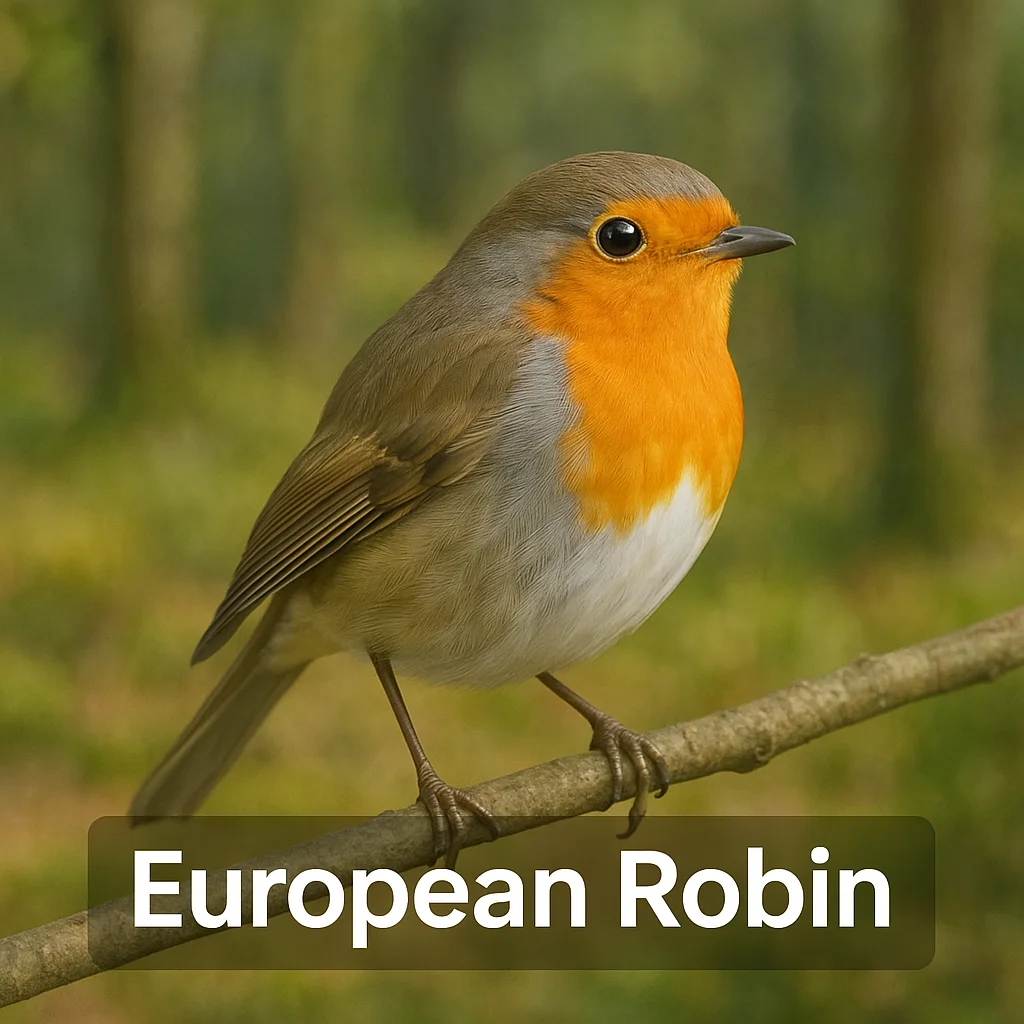
- Common name(s): European Robin, Robin Redbreast
- Scientific name: Erithacus rubecula
- Animal type: Bird
- Typical adult size: 12.5–14.0 cm (5.0–5.5 in) in length, weighing 16–22 g (0.56–0.78 oz)
- Typical lifespan: 1–3 years in the wild, though some live longer
- Diet type: Omnivore; mainly insects, worms, and berries
- Activity pattern: Diurnal, active by day and known for early morning singing
- Social structure: Primarily solitary outside of breeding season
- Speed / movement highlights: Agile flier, quick short flights, can hover briefly
- Intelligence/learning: Known for boldness and learning to approach humans for food
- Primary habitats: Woodlands, gardens, hedgerows
- Geographic range: Across Europe, parts of western Asia, and North Africa
- Predators/threats: Cats, birds of prey, loss of habitat due to human activities
- Conservation status: Least Concern, but pressures vary by region
🔍 Identification & Appearance
The European Robin is easily recognized by its round body and iconic reddish-orange breast, which sets it apart from most other small birds in its range. While males and females look nearly identical, juvenile robins differ in appearance, displaying speckled brown plumage until maturity.
- Body shape and silhouette: Plump, rounded body with a short tail and slender legs
- Key colors/patterns: Bright reddish-orange face and breast, with grey and brown upperparts
- Distinctive features: White belly, small pointed beak
- Tracks/scat: Occasionally seen hopping on lawns and forest floors, leaving small scratches
- Common look-alikes: European Robins are unique, but can be confused with other small, brownish songbirds when their breast is not visible
- Top ID Tips: Watch for their reddish breast
- Look for small, round body with a prominent presence
- Listen for their varied and cheerful song
- Note their boldness when humans are around
- Observe hopping behavior on the ground
- Identify young by their lack of red breast
🧱 Body Structure & Physical Adaptations
The European Robin's build and adaptations are finely tuned for its active lifestyle. With a small, compact body and specialized feet for perching, this bird is well-suited for its varied habitats. Its beak and keen eyesight play crucial roles in feeding and survival.
- Build and proportions: Compact with a robust body, short tail
- Beak adaptations: Thin, pointed beak ideal for catching insects
- Claws: Specialized for perching and gripping branches
- Sensory strengths: Excellent vision, including good detection of movement
- Key Adaptations: Efficient flight with rounded wings
- Acute vision for spotting prey
- Rounded body aiding in agility
- Thin beak designed for insectivorous diet
- Strong legs for hopping and quick takeoffs
- Adapted to varied climates and environments
🌍 Range & Distribution
The European Robin has a wide distribution across Europe, extending into parts of Asia and North Africa. While some populations are migratory, many are largely sedentary, especially where winters are mild.
- Typical regions: Europe, western Asia, North Africa
- Elevation range: From sea level to mountainous regions
- Seasonal movements: Partial migratory behavior in northern populations
- Climate preference: Temperate regions, adaptable to various environments
- Where You Might Find It: Across the woodlands of Europe
- In gardens and parks throughout its range
- Commonly found in temperate forests
- Urban areas with sufficient green spaces
- Around hedgerows and scrub areas
🏞️ Habitat & Shelter
Preferring diverse habitats, the European Robin is most at home in woodlands, gardens, and hedgerows. This adaptability allows the robin to thrive near human settlements as well. Nesting typically occurs in sheltered areas, such as tree cavities or dense undergrowth.
- Preferred habitats: Woodlands, gardens, parks, hedgerows
- Microhabitats and shelter: Nests in tree cavities, under dense bushes
- Weather impacts: Territorial during breeding; seeks shelter in harsh weather
🧭 Behavior & Ecology
Known for its territorial nature, the European Robin defends its space vigorously, even engaging in aggressive displays with other robins. Despite this, it is known to approach humans, especially when food is on offer. Their song is a hallmark of woodland soundscapes.
- Daily routine: Active during daylight; resting and preening behaviors observed
- Communication: Rich song used for territory marking
- Interactions: Territorial towards other robins; approaches humans
- Ecological role: Insect control, prey for predators, seed dispersal
- Behavior Highlights: Territorial song and display
- Frequent visits to gardens for food
- Adaptive to human presence
- Aggressive territorial defense
- Role as pest controllers by feeding on insects
👥 Social Life & Group Dynamics
Primarily solitary outside the breeding season, European Robins maintain and defend individual territories aggressively. During the breeding season, they form strong pair bonds. Their bold nature allows adaptation to living near human settlements.
- Solitary vs social tendencies: Solitary and territorial
- Group types: Form pairs during the breeding season
- Cooperation: Seen in pair bonding activities
- Social Structure Notes: Solitary outside the breeding season
- Strong pair bonds during breeding
- Shows indifference or aggression to nearby conspecifics
- Occasional close proximity allows interaction with humans
🍽️ Diet, Prey & Predators
The European Robin's diet is quite versatile, including a mix of invertebrates and plant matter. It plays a significant role in controlling insect populations. Predators include domestic cats and birds of prey, among others.
- Diet variety: Insects, worms, snails, fruit, seeds
- Seasonal variations: Diet shifts towards berries in winter
- Natural predators: Birds of prey, cats, foxes
- Feeding Notes: Opportunistic feeder
- Favors earthworms and insects
- Seasonal diet shifts towards available fruits
- Known for feeding on mealworms provided by humans
🦌 Hunting, Foraging & Movement
The European Robin typically forages by hopping along the ground, searching for insects and other small invertebrates. Its movements are characterized by quick bursts and keen observation for prey detection.
- Locomotion style: Agile flier and ground forager
- Speed and endurance: Capable of quick flights and sustained activity
- Foraging tactics: Quick pouncing and pecking on the ground
- Movement & Strategy: Quick bursts of flight
- Efficient ground forager
- Utilizes perches for lookout
- Adapts flight to capture insects mid-air
🧠 Intelligence & Senses
European Robins exhibit a boldness that indicates intelligence, notably when interacting with humans or exploring novel food opportunities. They possess excellent sight for detecting movement and sounds, aiding in their survival.
- Problem-solving: Shows curiosity and boldness
- Sensory abilities: Keen vision, good hearing
- Learning: Known for recognizing humans as potential food sources
- Notable Abilities: Bold approach to humans
- Quick learning of feeding opportunities
- Adept at recognizing predators
- Complex song patterns for communication
🪺 Reproduction, Pregnancy & Parenting
The European Robin is known for its dedicated parenting, where both sexes often partake in caring for the young. They are typically monogamous, forming pairs that last through the breeding season, producing two broods a year in some regions.
- Breeding seasonality: Mostly March to July
- Mating system: Monogamous during breeding season
- Incubation period: 13–14 days
- Clutch size: 4–6 eggs per brood
- Parenting roles: Both parents feed the chicks
- Reproduction Snapshot: Two broods possible per year
- Fast chick development
- Nest building primarily by female
- Biparental feeding of chicks
♀️♂️ Male vs Female Differences
In the European Robin, males and females exhibit very subtle differences. Both sexes are similarly colored, with only slight size differences, if any. Behavioral roles during breeding may vary, with the female taking on more nesting responsibilities.
- Size differences: Minimal between sexes
- Coloration: Both sexes have similar plumage
- Behavioral roles: Females may focus more on nesting
- Sex Differences at a Glance: Coloration nearly identical
- Marginal size difference
- Female often more involved in nesting
- Shared parenting responsibilities during feeding
🧬 Subspecies & Variation
The European Robin may vary slightly across its range, though these variations are not usually distinguished as subspecies. Differences can include slight variances in coloration or song. Local populations adapt to their specific environments, showcasing adaptability.
- Size and coloration: Slight regional coloration differences
- Song variations: Regional differences exist but subtle
- Variation Notes: Subtle coloration changes regionally
- Possible song variation across regions
- Environmental adaptation across range
⚠️ Threats, Conservation & Human Interaction
While the European Robin faces several pressures, including habitat loss and predation by domestic cats, it remains widely common. Encouraging backyard habitats can support local populations.
- Natural challenges: Habitat loss, predation, severe weather
- Human-related pressures: Urban development, pollution
- Coexistence tips: Provide bird-friendly gardens for shelter and food
- Responsible Notes: Encourage natural garden areas
- Be mindful of domestic pets' impact
- Avoid habitat destruction in nesting areas
✨ Fun Facts & Unique Traits
- European Robins are fiercely territorial and will defend their patch against intruders.
- Their song can vary greatly and individual robins have unique vocal signatures.
- Robins were named 'Robin Redbreast' in the UK due to their association with Christmas since the Victorian era.
- They are part of the Christmas symbolism due to the UK's postmen, who wore red, being called 'robins'.
- Robins can sometimes be seen puffing up their feathers to keep warm throughout the winter months.
📌 Summary
- Distinctive by its orange-red breast and beautiful song
- Thrives in gardens, woodlands, and parks across Europe and nearby regions
- Opportunistic omnivore with a diet of insects, worms, and fruits
- Faces threats from habitat loss and predators like cats
- Known for territoriality and boldness towards humans
- Breeding involves monogamous pair bonding with shared parenting
- Adaptable to human presence; common in urban areas with green spaces
- Engaging bird that's a staple of European biodiversity