🦁 African Wild Dog
🧾 Quick Facts
The African Wild Dog, often referred to as the painted wolf, is one of the most captivating carnivores in Africa. Known for their strong social bonds and high hunting success rates, these canids play an essential role in their ecosystems.
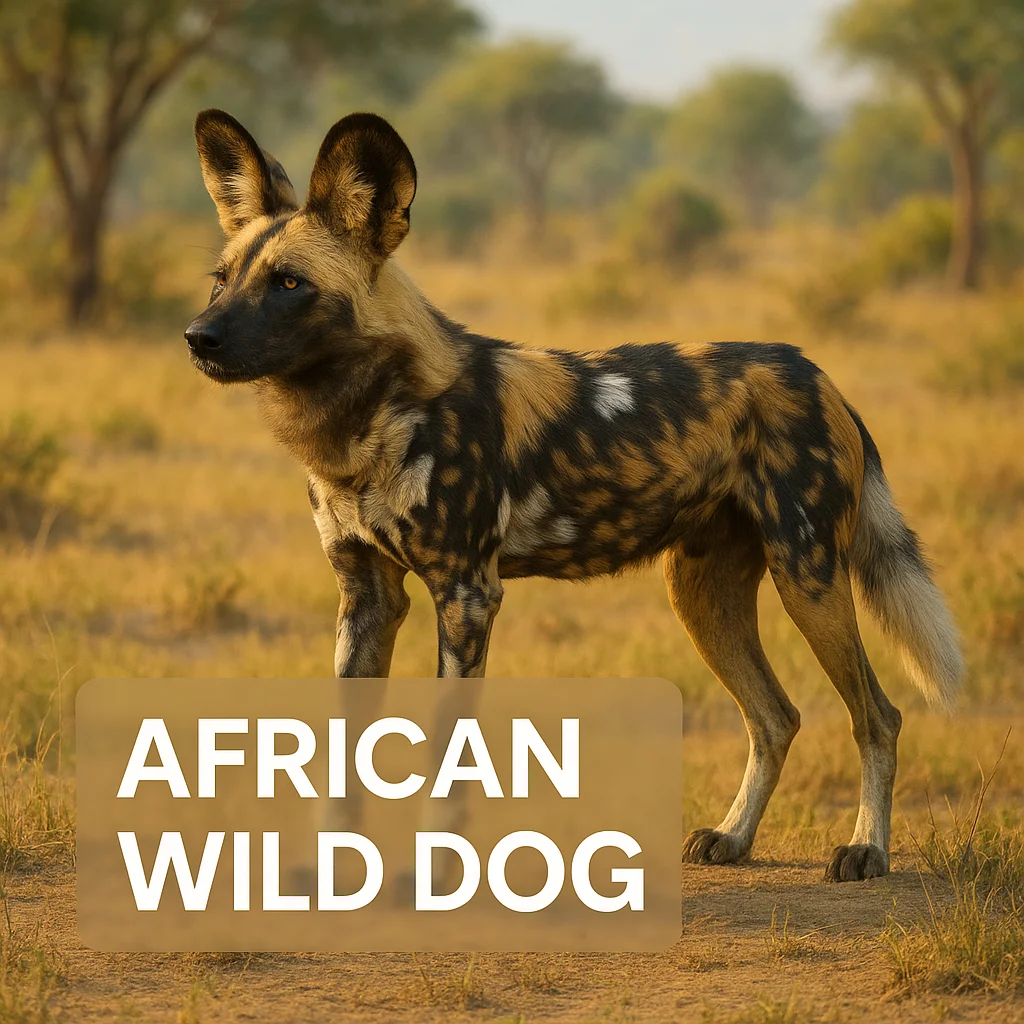
- Common name(s): African Wild Dog, Painted Wolf
- Scientific name: Lycaon pictus
- Animal type: Mammal
- Typical adult size: 75-110 cm (29.5-43.3 in) in length; 18-36 kg (40-79 lbs) in weight
- Typical lifespan: 10-12 years in the wild; up to 15 years in captivity
- Diet type: Carnivore; primarily hunts large ungulates
- Activity pattern: Diurnal, with peak activity during early morning and late afternoon
- Social structure: Packs of typically 10-15 individuals; can range up to 30
- Speed/movement highlights: Can sprint up to 60 km/h (37 mph)
- Intelligence/learning: Highly social with complex communication skills
- Primary habitats: Savanna, open plains, occasionally woodlands
- Geographic range: Sub-Saharan Africa
- Predators/threats: Lions, hyenas; human activities such as habitat destruction and conflict
- Conservation status: Endangered, with population estimates of around 6,000
🔍 Identification & Appearance
African Wild Dogs are distinguished by their unique coat pattern, long legs, and large, rounded ears. They display a mottled coat of black, brown, white, and yellow, with every individual having a distinct pattern, much like human fingerprints.
- Body shape and silhouette: Slender and athletic build with a low-reaching body
- Key colors/patterns: Mottled fur of black, brown, white, and yellow
- Distinctive features: Large, rounded ears and bushy, white-tipped tails
- Tracks: Four toes with rounded pads; visible in soft ground
- Common look-alikes: Often mistaken with hyenas, but much slimmer with differently shaped ears
- Top ID Tips:
- Look for uniquely painted fur patterns
- Notice their distinctively large ears
- Observe their bushy, white-tipped tails
- Listen for their characteristic high-pitched calls
- Identify by their synchronized pack movements
- Spot in groups, as they are rarely solitary
🧱 Body Structure & Physical Adaptations
The African Wild Dog boasts a highly adapted physique for endurance running and effective hunting. This includes long limbs for running, specialized dental structure for meat consumption, and acute senses adapted for the hunt.
- Build and proportions: Lean and long-legged for efficient long-distance running
- Teeth adaptation: Strong jaws with sharp carnassial teeth for ripping flesh
- Claws: Non-retractable, aiding traction during pursuits
- Sensory strengths: Excellent hearing supported by large ears, good vision
- Key Adaptations:
- Built for stamina and speed
- Large ears aid in thermoregulation and detection of prey
- Efficient pack hunting strategies
- High vocal communication ability
- Social intelligence fosters coordinated group hunting
🌍 Range & Distribution
African Wild Dogs are primarily found across Sub-Saharan Africa. Their range is fragmented due to habitat loss, but they thrive in protected savannas and woodlands.
- Continents/regions: Primarily in Sub-Saharan Africa
- Typical countries: Botswana, Zimbabwe, parts of Tanzania and Kenya
- Elevation range: Found from sea level up to 1,500 meters (4,900 feet)
- Seasonal movements: Generally resident, although pack territories can be large
- Where You Might Find It:
- National parks and reserves in Africa
- Open savannas and grasslands
- Sparse woodlands and semi-deserts
- High concentrations in protected areas
- Usually away from highly populated human areas
🏞️ Habitat & Shelter
African Wild Dogs prefer a variety of openings and grasslands where they can effectively hunt. They use natural features as dens, including abandoned burrows, rocky outcrops, or dense brush areas.
- Preferred habitats: Open plains and savannas
- Microhabitats and shelter: Utilize abandoned termite mounds and burrows for dens
- Behavioral changes: During wet seasons, they may shift closer to higher grounds
- Importance of habitat: Crucial for hunting success and pack stability
🧭 Behavior & Ecology
Highly social, African Wild Dogs rely on cooperative strategies for hunting and rearing young. Communication is key within the pack, and they have a diverse range of vocalizations and behaviors that help maintain unity and efficiency.
- Daily routine: Hunt in cool mornings and evenings; rest during midday heat
- Communication: Frequent use of vocalizations and body language to coordinate
- Interactions: Occasionally compete with lions and hyenas for territory and food
- Role: Top predator that helps control ungulate populations
- Behavior Highlights:
- Synchronize movements during hunts
- Complex vocal communications within packs
- Scent-marking to establish territory
- Grooming to reinforce social bonds
- Regular pack bonding activities
👥 Social Life & Group Dynamics
African Wild Dogs live in highly structured packs dominated by an alpha pair. Social hierarchy is evident, with designated roles during hunts and pups being collectively cared for by the pack.
- Packs: Usually led by a monogamous alpha pair
- Cooperation: High level of cooperation in hunts and child-rearing
- Dominance: Alpha pair are the primary breeders
- Conflict resolution: Rare, as packs operate with hierarchy and roles
- Social Structure Notes:
- Priority access to food for pups and alphas
- Cohesive pack coordination
- Strong family bonds
- Pack members rarely separate
- All pack adults care for the young
🍽️ Diet, Prey & Predators
Primarily carnivorous, African Wild Dogs target medium-sized ungulates. Their persistence and stamina during hunts make them highly effective predators.
- Diet: Mainly antelopes like impalas and gazelles
- Hunting strategy: Rely on endurance and speed, often hunting in relays
- Predators: Lions and spotted hyenas; humans pose significant threats
- Scavenging: Rarely scavenge, as they prefer fresh kills
- Feeding Notes:
- Efficient hunters with high success rates
- Cooperative hunting tactics
- Prey selection varies by region and availability
- Occasionally hunt small birds and rodents
- Diet shifts minimally with seasons
🦌 Hunting, Foraging & Movement
Renowned for their endurance, African Wild Dogs employ strategic hunting methods, exhausting prey with persistence before making a coordinated attack.
- Locomotion: Endurance runners capable of long-distance pursuits
- Typical speeds: 60 km/h (37 mph) during sprints
- Hunting times: Most active in the early morning and late afternoon
- Territorial: Packs maintain expansive territories with clear boundaries
- Movement & Strategy:
- Patrols by alpha pair and beta supports
- Frontal attacks redesigned by pack members
- Persistence in tiring out prey
- Occupy large tracts of land for hunting
- Synchronized hunting sessions
🧠 Intelligence & Senses
African Wild Dogs rely on keen senses and social intelligence. They demonstrate problem-solving skills and memory vital for sustaining pack order and hunting.
- Problem-solving: Evidence of strategic planning during hunts
- Senses: Acute auditory senses; good vision adapted to detect movement
- Social intelligence: High, crucial for pack dynamics
- Notable Abilities:
- Clever pack coordination
- Efficient communication during hunts
- Use memory in establishing territories
- Strategic prey selection
- Sensitivity training through pack mentors
🪺 Reproduction, Pregnancy & Parenting
Reproduction in African Wild Dogs is primarily within the alpha pair. Both males and females assist in rearing the young, showcasing extensive cooperative behavior.
- Breeding seasonality: Typically in the spring
- Mating system: Dominated by the alpha pair within each pack
- Gestation period: 70 days
- Litter size: Typically 2-10 pups
- Newborns: Altricial, heavily dependent on pack for survival
- Parenting roles: Collective care by all pack members
- Reproduction Snapshot:
- Pups born in dens
- All pack members share feeding duties
- Alpha female often leads birthing process
- Pups remain sheltered for first few weeks
- Youth stay with pack for up to 3 years
♀️♂️ Male vs Female Differences
Though similar in appearance, male and female African Wild Dogs have subtle differences, primarily associated with behavior and reproductive roles within the pack.
- Size differences: Males are generally slightly larger than females
- Behavioral roles: Males often help in boundary patrol and hunting
- Reproductive roles: Females lead pup rearing; only the alpha female typically breeds
- Sex Differences at a Glance:
- Males slightly bulkier
- Alpha pair predominant in leading
- Pup rearing led by females
- Males participate more in territorial marking
- Pack protection duties shared
🧬 Subspecies & Variation
While subspecies classifications of African Wild Dogs are often debated, regional differences exist primarily in size and coat pattern due to environmental adaptations.
- Known subspecies: Debate exists; often categorized by range and coat variation
- Size: May vary slightly geographically; adaptations to prey availability
- Coat patterns: Region-specific differences due to habitat influences
- Variation Notes:
- Environmental adaptations cater to hunting efficiency
- Color variances influenced by habitat camouflaging needs
- Pack sizes reflect regional prey abundance
⚠️ Threats, Conservation & Human Interaction
African Wild Dogs face several threats due to human encroachment, habitat fragmentation, and disease. Conservation efforts focus on habitat protection and minimizing human-wildlife conflict.
- Natural challenges: Competition with larger predators like lions
- Human-related pressures: Habitat destruction and persecution
- Coexistence tips: Maintaining large protected areas and corridors
- Conservation efforts: Programs to reduce conflicts and promote awareness
- Responsible Notes:
- Engagement in community conservation
- Promoting eco-tourism benefits for surrounding communities
- Respect for natural habitats and wildlife areas
- Efforts towards land-use planning to support preservation
✨ Fun Facts & Unique Traits
- African Wild Dogs have the highest success rate among hunters in Africa, often succeeding in more than 60% of their pursuits.
- Each dog's coat pattern is unique, providing a distinctive identity similar to fingerprints in humans.
- Wild dogs communicate extensive information through a range of vocalizations including chirps, barks, growls, and hoots.
- These animals have a fascinating social system, with pack members sharing parental responsibilities irrespective of blood relations.
- They are considered one of the most efficient and disciplined pack predators in comparison to other social carnivores.
- Wild dogs can run long distances, maintaining speeds of 40 to 60 km/h (25 to 37 mph) during hunts.
- Packs deliberately target sick and weak animals, contributing to the health of prey populations.
- They boast elaborate greeting ceremonies which include rallying and vocal displays that serve to reintegrate and strengthen pack unity.
📌 Summary
- African Wild Dogs are known for their unique mottled coats and large rounded ears.
- Thriving in Africa's open savannas, they play an important ecological role as apex predators.
- They operate in tightly-knit social packs, with complex hierarchical structures.
- Endurance and cooperation make them formidable hunters, mainly preying on medium-sized ungulates.
- Subtle sexual dimorphism is present, predominantly in size and pack roles.
- Regional adaptations lead to variations in size and coat pattern.
- Conservation efforts target protection from habitat loss and human conflict.
- Despite threats, their efficient pack cooperation ensures a high hunting success rate.
- African Wild Dogs exhibit exceptional social intelligence and communication to coordinate efforts.
- Conservation efforts are vital for their sustainability due to their endangered status.