🦁 Poison Dart Frog
🧾 Quick Facts
The poison dart frog is a fascinating group of small, vividly colored amphibians known for their toxicity and remarkable adaptations. Often seen as nature's warning beacons, these frogs are a great example of the interplay between appearance and survival.
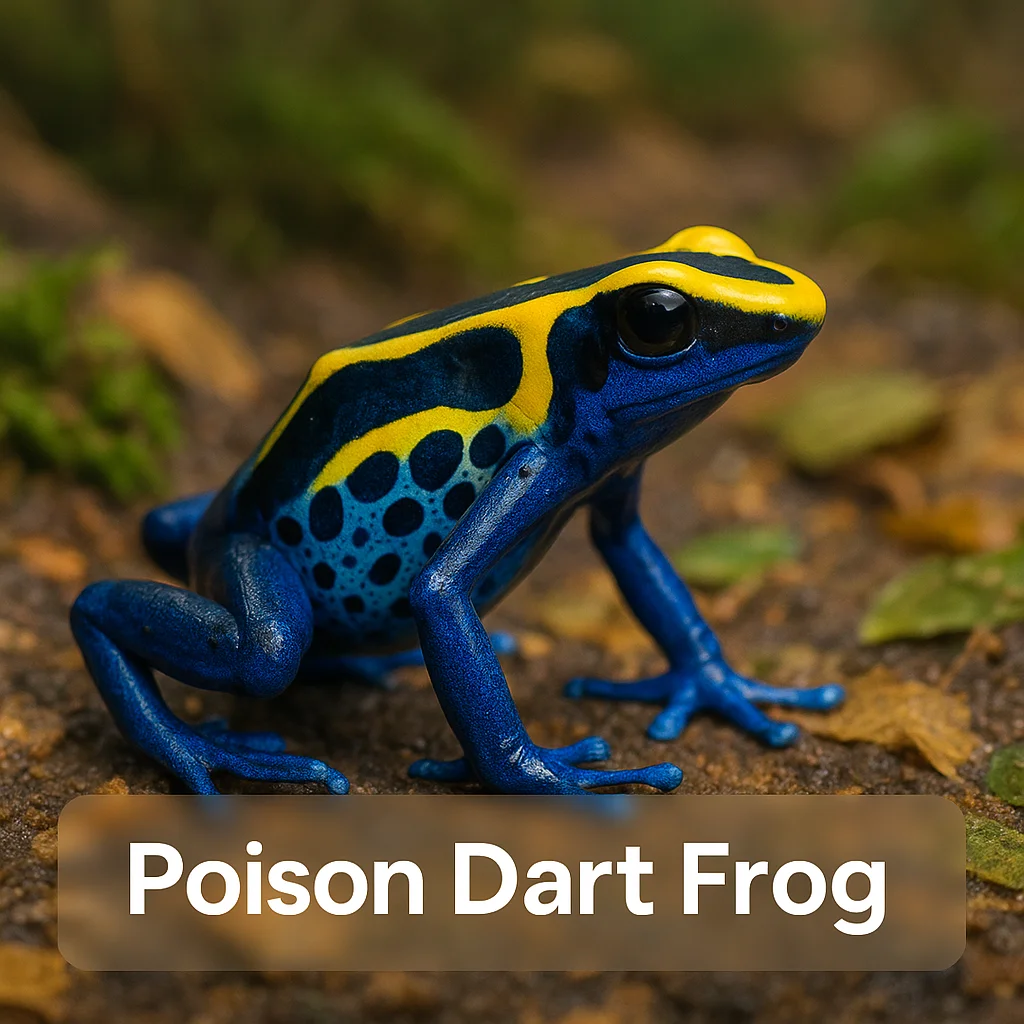
- Common name(s): Poison Dart Frog, Poison Frog
- Scientific name: Varies by species, such as Dendrobates, Phyllobates
- Animal type: Amphibian
- Typical adult size: 1-2 inches (2.5-5 cm) in length
- Typical lifespan: 3-15 years (varies by species and captive conditions)
- Diet type: Carnivore; primarily insects
- Activity pattern: Diurnal
- Social structure: Solitary or small group structures
- Speed/movement highlights: Leaping and hopping
- Intelligence/learning: Capable of basic learning and memory
- Primary habitats: Tropical rainforests
- Geographic range: Central and South America
- Predators/threats: Snakes, birds, habitat loss
- Conservation status: Varies by species; some are endangered
🔍 Identification & Appearance
Poison dart frogs are easily recognizable due to their vibrant coloration and small size. Different species exhibit an array of colors like bright blues, vivid greens, and striking yellows. These colors often serve as a warning to potential predators about their toxic nature.
- Small, compact body structure ideal for jumping
- Bright, conspicuous colors and bold patterns
- Smooth skin surface that is often moist
- No visible distinction between male and female (sexually monomorphic in many species)
- Cannot be easily confused with other non-toxic frogs due to coloration
- Distinctive high-pitched calls, varying by species
- Top ID Tips:
- Brightly colored skin
- Small size, rarely exceeding 2 inches
- Smooth and shiny skin texture
- Loud, distinct calls
- Diurnal activity makes them visible during the day
- Often seen in family groups or pairs
🧱 Body Structure & Physical Adaptations
The poison dart frog's body is well adapted for survival in the dense forest understory. Their lightweight and compact build allow for efficient movement through dense foliage.
- Compact, muscular build for jumping
- Tongue adapted for capturing insects quickly
- Skin secretes toxins as a defense mechanism
- Excellent vision adapted for spotting small prey
- Strong, sticky pads on toes aid in climbing
- Powerful hind legs for leaping
- Key Adaptations:
- Toxic skin secretions as a defense
- Vivid coloration to ward off predators
- Ability to rapidly flick tongue to catch prey
- Efficient climbers due to sticky toe pads
- Strong vision for low-light environments
🌍 Range & Distribution
Poison dart frogs are native to the tropical rainforests of Central and South America. They are most commonly found in countries such as Costa Rica, Brazil, Colombia, and Ecuador, where the environment provides the humidity they need for skin moisture.
- Where You Might Find It:
- Central America: Costa Rica, Panama
- South America: Northern Brazil, Colombia, Ecuador
- Dense, humid rainforest understory
- Areas with high annual rainfall
- Regions ranging from sea level to over 6,500 feet (2,000 meters)
🏞️ Habitat & Shelter
These frogs thrive in the damp, densely vegetated environments of tropical rainforests. They are often found in the leaf litter on the forest floor but can also be seen climbing through low vegetation. Their needs for moisture make rainforest microhabitats essential for their survival.
Seasonal changes can affect their activity slightly, but most poison dart frogs remain active throughout the year, taking shelter under leaves or in crevices during periods of lesser activity.
🧭 Behavior & Ecology
Poison dart frogs display intriguing behaviors as part of their ecological roles. They are generally solitary but may be seen in small groups, especially during breeding seasons. Their vivid colors communicate their toxicity to predators, while their vocalizations play significant roles in communication and territorial displays.
- Behavior Highlights:
- Primarily solitary but occasionally form breeding pairs
- Vocal communications are species-specific
- Territorial displays among males
- Mutualistic relationships with certain plant species
- Integral part of the food web as both predators and prey
👥 Social Life & Group Dynamics
Generally solitary, poison dart frogs may form loose aggregations, particularly during mating seasons. Males often exhibit territorial behavior, using vocalizations to defend territories.
- Social Structure Notes:
- Solitary or paired during breeding
- Possible group gatherings near common resources
- Males engage in territory defense
- No formal dominance hierarchies
🍽️ Diet, Prey & Predators
The diet of poison dart frogs primarily consists of small insects such as ants, termites, and beetles. Their skin toxicity is derived from chemical compounds found in their prey, showcasing a fascinating ecological connection. Predators of these frogs include certain snake species that have evolved a tolerance to their toxins.
- Feeding Notes:
- Feeds on small insects like ants and termites
- Toxin derived from dietary intake
- Displays little to no scavenging behavior
- Main predators include toxin-tolerant snakes
🦌 Hunting, Foraging & Movement
Primarily foragers, poison dart frogs hunt using a combination of hopping and rapid tongue movement to catch unsuspecting prey. They are active during daylight, foraging through leaf litter and climbing vegetation. These frogs exhibit impressive agility, which aids in both hunting and evading predators.
- Movement & Strategy:
- Daylight foragers and hunters
- Leaping and hopping for quick movement
- Able climbers, using vegetation for support
- Uses vision and stealth to capture prey
🧠 Intelligence & Senses
Poison dart frogs have well-developed visual acuity, suited for detecting movement amid the dark undergrowth of rainforests. Their learning capabilities include recognizing mates and rivals by their calls, although research on their cognitive abilities remains limited.
- Notable Abilities:
- Sharp vision for detecting small prey
- Able to recognize calls of different individuals
- Responsive to environmental changes
🪺 Reproduction, Pregnancy & Parenting
Breeding occurs mainly in wet seasons when males call to attract females. Some species of poison dart frogs are known for exhibiting unique parenting behaviors, wherein both male and female contribute to caring for offspring by transporting tadpoles to water bodies.
- Reproduction Snapshot:
- Breeding often aligned with wet season
- Monogamous or polygamous systems vary by species
- Mating involves complex vocal calls and displays
- Parental roles may include transportation of tadpoles
♀️♂️ Male vs Female Differences
In many poison dart frog species, visual differences between males and females are minimal; however, males often exhibit territorial and vocal behaviors more frequently.
- Sex Differences at a Glance:
- Similar coloration between sexes
- Males typically more vocal and territorial
- Subtle size differences in some species
🧬 Subspecies & Variation
With over 170 species across various genera, poison dart frogs exhibit great diversity in their appearance and behavior. Subspecies adaptations often result from environmental factors like altitude and habitat type. Taxonomy may vary due to ongoing research and discoveries.
- Variation Notes:
- Diverse species in the Dendrobates family
- Local adaptations to specific rainforest climates
- Size and coloration vary greatly among species
- New species descriptions occur occasionally
⚠️ Threats, Conservation & Human Interaction
Poison dart frogs face threats from habitat loss, pollution, and climate change, each affecting their delicate rainforest ecosystems. Conservation efforts are in place for many species, focusing on habitat protection. These frogs are also popular in the pet trade; however, keeping them as pets raises ethical concerns regarding their care and environmental sources.
- Responsible Notes:
- Maintain rainforests to protect habitats
- Address pollution as a critical threat
- Be aware of ethical considerations in the pet trade
- Climate changes impact their habitat distribution
✨ Fun Facts & Unique Traits
- Each species has unique toxin profiles that vary widely
- Some indigenous tribes historically used frog toxins for hunting
- Despite their toxicity, many species pose no threat to humans unless handled
- Their striking colors are an example of "aposematic coloration."
- Availability of toxins in captivity depends on diet
- Some species exhibit a parental care that is rare among amphibians
- Their skin can contain up to 40 different toxic alkaloids
📌 Summary
- Recognized by their vibrant coloration and toxins
- Found in rainforests of Central and South America
- Carnivorous diet, predominantly insects
- Face threats primarily from habitat loss
- Exhibit solitary or paired social structures
- Parental involvement in offspring care
- Described as having unique skin adaptations for toxin secretion
- Highly adapted for their specific tropical environments
- Aposematic coloration as a significant defensive trait