🦁 Newt
🧾 Quick Facts
Newts are fascinating amphibians known for their unique life cycles and diverse habitats. Belonging to the Salamandridae family, newts are particularly interesting due to their ability to regenerate lost body parts, including limbs and even parts of their hearts.
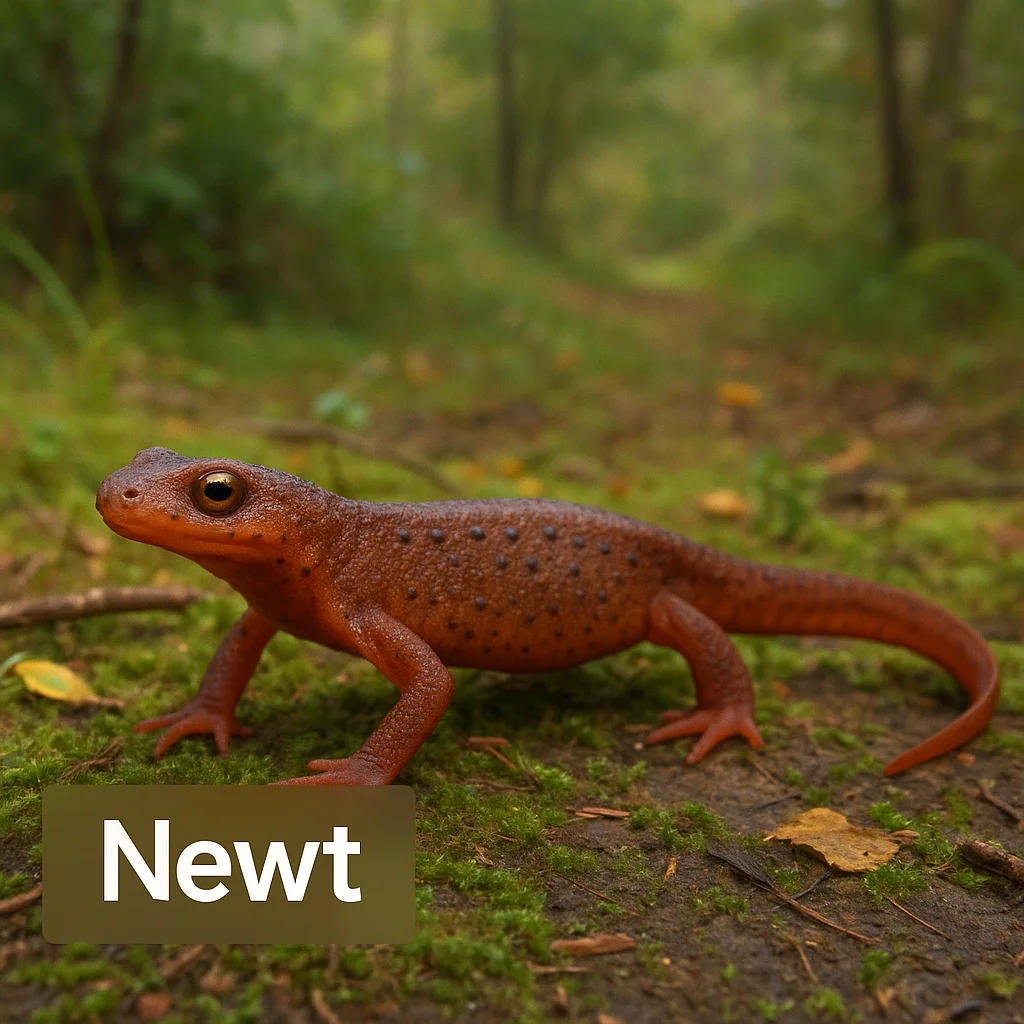
- Common name(s): Newt
- Scientific name: Often falls under various genera like Triturus, Notophthalmus, and Cynops
- Animal type: Amphibian
- Typical adult size: Approximately 10-20 cm (4-8 inches) in length
- Typical lifespan: 10-20 years in the wild, varies in captivity
- Diet type: Carnivore; primarily feeds on insects, worms, and small aquatic creatures
- Activity pattern: Mostly nocturnal, some crepuscular species
- Social structure: Mostly solitary, with some species showing limited social interaction during breeding
- Speed/movement highlights: Slow-moving on land, more agile in water
- Intelligence/learning: Capable of simple problem-solving; evidence of learning and memory
- Primary habitats: Freshwater environments like ponds, lakes, and marshes; also forested areas
- Geographic range: North America, Europe, parts of Asia, including Japan and China
- Predators/threats: Birds, fish, and mammals; habitat loss and pollution from human activities
- Conservation status: Varies by region; many species are vulnerable or near threatened
🔍 Identification & Appearance
Newts are small to medium-sized amphibians with a distinct body structure suitable for both aquatic and terrestrial environments. They possess moist, smooth or slightly bumpy skin.
- Body shape and silhouette: Slender, with a long tail and short legs
- Key colors/patterns: Vary widely from dull greens and browns to bright oranges and reds, often with contrasting spots
- Distinctive features: Regenerating limbs, smooth skin, and vibrant breeding colors in males
- Tracks, scat, or other field signs: Soft, curved tail drag marks, small hand-like footprints in wet soil
- Common look-alikes: Salamanders; newts typically have more defined textures and colors
- Top ID Tips:
- Look for vibrant breeding colors in spring
- Smooth to slightly bumpy skin texture
- Long, tapering tail
- Short, stout limbs
- Tail can show signs of recent regeneration
- Identify the different colored undersides in some species
- Check for the skin-feel—newts are moister than many salamanders
- Often found near or in water bodies
🧱 Body Structure & Physical Adaptations
Newts show a range of physical adaptations that suit their dual life both in water and on land. Their overall structural design supports their unique lifestyle and survival strategies.
- Build and proportions: Slender and elongated, allowing for efficient swimming
- Teeth/jaw adaptations: Small, pointed teeth for gripping prey
- Limbs and fin adaptations: Webbed digits for swimming, strong hind limbs for terrestrial movement
- Sensory strengths: Excellent sense of smell; moderate vision adapted for low light
- Key Adaptations:
- Glandular skin with toxins as defense
- Ability to regenerate lost parts
- Double life cycle—aquatic larval stage, terrestrial adult
- Camouflaging skin patterns
- Flexible ribs aid in expanding the body during feeding
- Ability to absorb oxygen through skin
- Seasonal habitat shifts
🌍 Range & Distribution
Newts inhabit a variety of regions throughout the Northern Hemisphere, favoring temperate climates with access to freshwater environments.
- Found in North America, Europe, and Asia
- Inhabit temperate forests, grasslands, and wetlands
- Usually at low to moderate elevations
- Stable populations in Europe, variable in North America
- Prefers aquatic environments for breeding
- Limited distribution in arid regions due to water dependence
- Non-migratory but shows seasonal habitat preferences
- Where You Might Find It:
- Marshy regions and ponds
- Temperate woodland edges
- Alongside slow-moving streams
- Under logs and leaf litter in damp forests
- Mountain streams (in specific regions)
- Garden ponds and urban waterways (occasionally)
🏞️ Habitat & Shelter
Newts thrive in diverse habitats, particularly those with access to water for breeding and larvae development. Their unique adaptations allow them to navigate these varied environments efficiently.
- Favor forested wetlands, ponds, and slow streams
- Use logs, leaf litter, and aquatic vegetation for shelter
- Seasonal breeders move to ponds and underwater structures in spring
- Seek damp retreats under rocks and fallen logs during dry seasons
- Adapt behaviorally to rainfall changes, becoming active following rains
- Knowledge of habitat aids in predicting movement and breeding patterns
🧭 Behavior & Ecology
Newts display intriguing behaviors that involve water-oriented lifestyles and display unique ecological roles in their environments.
- Spend significant time in both aquatic and terrestrial habitats
- Develop breeding colors and compete vocally and physically for mates
- Utilize scent trails and tactile cues for communication
- Part of food chains as both predators of small invertebrates and prey for larger animals
- Contribute to ecosystem dynamics as prey and consumers of insects
- Behavior Highlights:
- Engage in complex courtship rituals
- Winter dormancy in cold climates
- Use underwater dances in mate attraction
- Territorial during breeding seasons
- Females often secrete special chemicals during egg laying
- Seasonal lifecycle shifts between aquatic and terrestrial habits
👥 Social Life & Group Dynamics
Though newts are primarily solitary creatures, they exhibit social interactions during the breeding season, when behaviors become particularly fascinating to observe.
- Generally solitary except during breeding seasons
- Temporary congregations during mating periods
- Minimal cooperation beyond reproductive behaviors
- Lack organized social structures beyond pair bonding
- Rare instances of aggressive competitions for territories
- Primitive forms of communication and interaction
- Social Structure Notes:
- Mating pairs during breeding season
- Occasional small groups in favorable habitats
- Conflicts usually resolved through displays
- Hierarchical structures largely absent
- Transient groups forming in rich feeding grounds
- Temporary proximity in dense aquatic breeding areas
🍽️ Diet, Prey & Predators
As carnivorous amphibians, newts play delicate roles within their ecosystems, primarily targeting small prey while avoiding predators.
- Primarily feed on aquatic invertebrates and small insects
- Accept a variety of prey; opportunistic feeding habits
- Act as key prey for birds, fish, and small mammals
- Defense using toxic skin secretions against predators
- Occasional cannibalism and feeding on amphibian eggs in some species
- Feeding Notes:
- Consume mosquito larvae, aquatic insects, and snails
- Utilize ambush tactics while hunting
- Some species exhibit scavenging behaviors
- Seasonal dietary shifts observing availability
- Major role in controlling mosquito populations
🦌 Hunting, Foraging & Movement
Newts possess a distinctive style of movement optimized for both terrestrial and aquatic environments, supported by a range of adaptive strategies in hunting and foraging.
- Terrestrial locomotion involves slow, methodical crawling
- Efficient swimmers using undulating body motions
- Depend on stealth and ambush tactics to capture prey
- Regularly forage at dusk and nighttime
- Seasonal movements to suitable breeding habitats
- Movement & Strategy:
- Use tail propulsion for agile swimming
- Navigate through complex underwater habitats
- Utilize sense of smell in locating prey
- Depend on visual cues in hunting
- Regularly shift between land and water habitats
🧠 Intelligence & Senses
Newts symbolize moderate cognitive capabilities among amphibians, integrating their senses into effective survival strategies.
- Demonstrate spatial awareness and problem-solving
- Sense-driven behaviors utilizing smell and vision
- Primitive but effective communication during mating
- Limited evidence supporting tool use
- Capacity to learn from environmental changes
- Notable Abilities:
- Memory in navigating territories
- Acute olfactory senses for identifying mates
- Visual adaptability to dim environments
- Efficacy in mimicking surroundings
- Capability to learn from environmental shifts
🪺 Reproduction, Pregnancy & Parenting
Newts display captivating reproductive strategies and breeding behaviors, showcasing impressive adaptations for ensuring the continuation of their species.
- Seasonal breeders, usually during spring
- Complex courtship displays with visual and chemical cues
- Mating system largely variable; can show signs of promiscuity
- Eggs laid in water typically hatch within a few weeks
- Parental involvement rare post-egg laying
- Reproduction Snapshot:
- Clutch size ranges from 200-400 eggs, species-specific
- Larvae have a mostly aquatic lifestyle
- Young undergo metamorphosis into terrestrial juveniles
- Breeding largely determined by environmental cues
- Observes intricate game of mate selection
♀️♂️ Male vs Female Differences
The differences between male and female newts are subtle yet important for species identification and understanding of their reproductive behaviors.
- Breeding males exhibit vibrant colors and physical changes like crest developments
- Females tend to be slightly larger in some species
- Males often display more elaborate courtship behaviors
- Females are more selective during mate choice
- Sex Differences at a Glance:
- Male coloration more intense during breeding
- Crest presence on males in breeding season
- Slight size differentiation favoring females
- Males exhibit greater display vigor
- Varies by species and individual encounters
🧬 Subspecies & Variation
Newts exhibit noticeable variability in their physical characteristics and behaviors across different subspecies. This variation enhances adaptability and survival in diverse environments.
- Several recognized subspecies with distinct physical traits
- Regional adaptations to climate and habitat types
- Island species often show evolutionary adaptations
- Speciation across wide geographic ranges
- Variation Notes:
- Some species showcase unique color phases
- High variability in size within genera
- Specific environmental adaptations in island newts
- Subspecies can display distinct breeding calls
- Uncertain taxonomies in some populations
⚠️ Threats, Conservation & Human Interaction
Newts face a variety of natural and human-induced challenges, making conservation efforts and responsible human behavior crucial for their survival.
- Habitat destruction due to agricultural expansion
- Pollution of aquatic environments
- Climate change affecting breeding cycles
- Occasionally affected by the pet trade, often with negative outcomes
- Responsible Notes:
- Avoid releasing captive newts into wild ecosystems
- Support wetland conservation efforts
- Practice responsible wildlife tourism
- Minimize chemical runoff into freshwater systems
- Encourage habitat restoration and protection laws
✨ Fun Facts & Unique Traits
- Newts can regenerate not just limbs but parts of their organs
- Their skin secretes toxins that deter many predators
- Metamorphosis from larva to adult involves significant anatomical changes
- Some species, such as the Eastern Newt, have multiple larval stages
- Unique ability to switch from aquatic to terrestrial life stages, and vice versa
- Certain species glow under ultraviolet light due to fluorescent proteins
- Newts have more vertebrae than most other amphibians
📌 Summary
- Identified by their slender, moist bodies and bright breeding colors
- Inhabit freshwater environments and adjacent terrestrial areas
- Widespread across the Northern Hemisphere, variable subspecies
- Primarily feed on small aquatic invertebrates; some species show dietary variation
- Preyed upon by birds, mammals, and fish, evade predators using toxins
- Breeding involves intricate courtship and vivid colors in males
- Behavior shifts between solitary and social during mating seasons
- Remarkable regenerative abilities and complex life cycles from aquatic larvae to adults
- Affected by habitat loss and pollution; conservation crucial
- Adaptations include regenerative limbs and seasonal habitat shifts