🦁 Hynobius Salamander
🧾 Quick Facts
The Hynobius salamander, often referred to as the "Asian salamanders" in a broader context, represents a group of amphibians found primarily in East Asia. Known for their elusive behaviors, these amphibians exhibit various ecological and morphological adaptations depending on their habitat and specific locality.
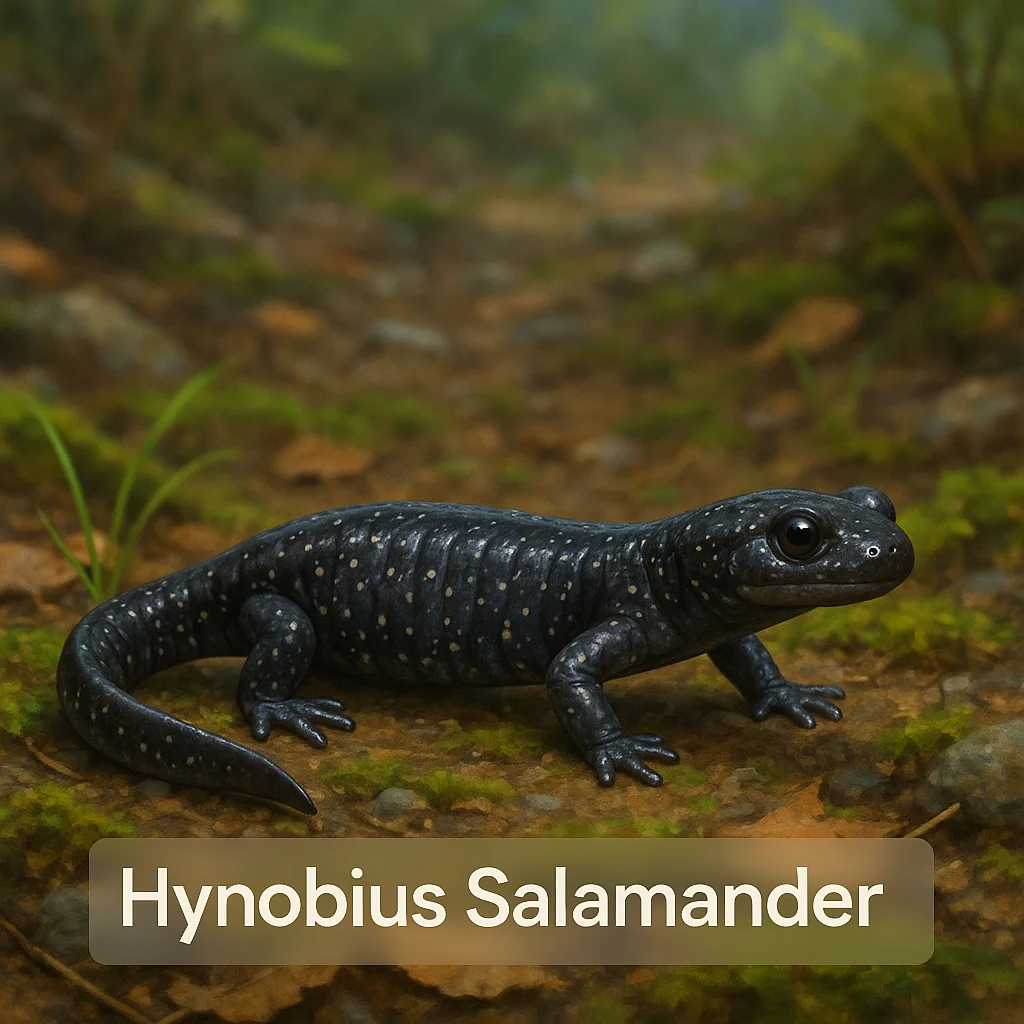
- Common name(s): Hynobius salamander, Asian salamander
- Scientific name: Hynobius spp.
- Animal type: Amphibian
- Typical adult size: 6 to 15 cm in length
- Typical lifespan: 5 to 15 years in the wild; varies in captivity
- Diet type: Carnivore; primarily insects and small invertebrates
- Activity pattern: Nocturnal
- Social structure: Generally solitary except during breeding
- Speed / movement highlights: Slow-moving, relies on stealth
- Intelligence/learning: Basic; exhibits simple environmental learning
- Primary habitats: Temperate forests, wetland areas
- Geographic range: East Asia, primarily Japan, Korea, and China
- Predators/threats: Birds, snakes, climate changes, habitat destruction
- Conservation status: Varies by region
🔍 Identification & Appearance
Recognizing the Hynobius salamander involves noting their generally robust body and smooth skin, usually moist to the touch due to their amphibian nature. They differ significantly in coloration, often showcasing mottled patterns of browns, black, or slate gray. Seasonal and age-related color changes are not prominent in this group.
Distinctive features include their relatively short limbs and toes which adhere to muddy substrates in their habitats. Juveniles might resemble other small salamander species but often lack the distinctive patterns seen in adults.
- Look for stout, robust bodies
- Typical coloration: browns and grays
- Smooth, moist skin texture
- Short limbs adapted for crawling
- Lacks the pronounced spots of some related species
- Jawline often elegant and streamlined
- No distinctive visible ear openings
- Tail used for balance rather than agility
- Egg masses there during breeding seasons indicate local populations
🧱 Body Structure & Physical Adaptations
The Hynobius salamander is characterized by a robust and moderately stout build, perfect for their slow-moving, ground-dwelling life. Their jaws are structured to snap shut on small invertebrates, their primary diet.
While they lack advanced sensory adaptations, they rely heavily on their keen perception of vibration and light, important in their nocturnal foraging activities. Their short, stocky limbs are excellent at moving through dense underbrush and moist areas.
- Sturdy, compact body structure
- Teeth adapted for gripping rather than shearing
- Short, apt limbs for slow, steady movement
- Highly sensitive to environmental vibrations
- Relies considerably on non-visual cues
- Skin secretes mucous as a protective layer
- Moisture-dependent respiratory abilities
- Effective camouflage in leaf litter and dark environments
- Utilizes tail for balance and slow displacement
🌍 Range & Distribution
The geographic distribution of Hynobius salamanders is predominantly focused in East Asia encompassing diverse temperate regions. They are relatively adaptable to various altitudes, with some species found in lowland forests while others inhabit mountainous terrains.
- Primarily found in Japan, Korea, and surrounding regions
- Inhabit areas ranging from dense forests to alpine zones
- Most species typically found between 200 and 2000 meters above sea level
- Predominant in regions with high humidity and several stagnant water bodies
- Recorded presence in secluded wetland territories
- Generally non-migratory, residential lifestyles
- Uncommon outside of specific Asian domains
- Pocket populations exist across East Asia due to fragmentation
🏞️ Habitat & Shelter
Hynobius salamanders show a preference for moist, secluded forest environments rarely frequented by larger predators. They seek shelter in leaf litter, under rocks, and in natural crevices which provide both concealment and a moist microhabitat essential for their skin respiration.
Shelter selection is heavily influenced by weather patterns, with the salamanders becoming more ground-seeking and inactive during drier periods to conserve moisture. Habitat considerations are critical for their survival, connecting directly to their reproductive success and food availability.
🧭 Behavior & Ecology
The nocturnal lifestyle of the Hynobius salamander shields it from the eyes of many potential predators. They spend frantic hours each night foraging and responding to subtle environmental stimuli. Social interactions are limited to the breeding season, where temporary pair bonds form.
Communication occurs minimally through olfactory nodes and tactile interactions during courtship. As integral components of their ecosystem, they play roles in controlling insect populations and serving as prey for larger animals. Their behavior reflects an evolutionary balance meeting both predation and ecological role requirements.
- Nocturnal foraging during damp, dark conditions
- Predator avoidance by hiding under dense natural cover
- Minimal vocalization, primarily visual or chemical cues
- Symbiotic interactions with local flora providing shelter
- Foraging involves slow deliberate movements
- Serves as a prey species for several bird and snake species
- Grooming often involves surface scrubbing against stiff substrates
- Overlapping territories often avoided during peak season
- Contribution to soil aeration through movement and burrows
👥 Social Life & Group Dynamics
Typically solitary, these salamanders come together briefly during breeding periods. Outside breeding seasons, interaction is often indirect with territory marking suggested through pheromone deposits or skin exchanges during territorial overlaps.
While not known for complex social structures, pairing can occur during reproductive windows, with simple hierarchies during these aggregations focusing around access to mates. Conflicts are rare but resolved typically through avoidance behaviors.
- Primarily solitary existence outside breeding
- Temporary pair formations during mating season
- Territorial but often tolerant of others' presence when food is abundant
- Minimal hierarchical displays beyond breeding competitiveness
- Cooperation limited to mate selection
- Conflict resolves predominantly through spatial avoidance
- No evidence of long-term pair bonding
- Inter-male competition is subtle, often non-aggressive
🍽️ Diet, Prey & Predators
Hynobius salamanders primarily feed on small invertebrates, including insects and worms, playing an essential role in controlling these populations. Prey capture involves a stealth approach using slow, deliberate movements to ambush prey.
They, in turn, are predated upon by birds and small mammals. Their main defenses include cryptic coloring and nocturnal activity timing, which reduces exposure. Some variability exists in diet across seasons, aligning with availability patterns in their ecosystems.
- Insectivorous diet – beetles, worms, and flies
- Seasonal diet adjustments based on prey availability
- No known scavenging behavior, focused on fresh catches
- Prey detection largely relies on movement sensing
- Nocturnal foraging reduces head-on predator encounters
- A natural predator for small invertebrates, aiding ecosystem balance
- Defense strategy revolving around camouflage and hiding
- Captures prey with quick jaw snap actions
🦌 Hunting, Foraging & Movement
Adapted for a ground-dwelling lifestyle, the Hynobius salamander moves through deliberate crawling, rarely engaging in rapid bursts. Relying largely on stealth, the salamanders forage and hunt primarily under the cloak of night, seeking out moist substrates where prey is abundant.
While non-migratory, they exhibit defined home ranges structured around available resources crucial for their nightly foraging strategies. These ranges shift slightly, reflecting periodic resource depletion patterns.
- Slow, deliberate crawling motion
- Foraging predominantly occurs during nighttime hours
- No extensive migratory movements
- Home territory centered on reliable moisture and prey abundance
- Utilizes stealth and patience in hunting tactics
- Preferred foraging areas – moist, insect-rich substrates
🧠 Intelligence & Senses
The intelligence of the Hynobius salamander is primarily derived through instinctual behaviors and basic environmental learning abilities. Adaptations focus on interpreting and responding to environmental stimuli critical for survival, such as detecting vibrations or changes in light intensity.
The salamanders show strong responses to immediate physical changes in their environments, suggesting well-tuned senses adapted for their ecological niches. Research into their cognitive abilities is limited, often focused on ecological adaptation rather than social intelligence.
- Responds well to tactile changes in the environment
- Limited problem-solving capabilities
- Simple learning evident in route-tracing to foraging sites
- Vibration sensitive as a predator-prevention mechanism
- Limited sight with a heightened dependency on environmental cues
🪺 Reproduction, Pregnancy & Parenting
Breeding in Hynobius salamanders is typically seasonal, taking advantage of specific environmental conditions favorable for egg-laying and rearing. Recognized for their unique reproductive behaviors, females often deposit eggs in small ponds, which hatch into larval forms dependent on aquatic habitats in early stages.
Parental investment is primarily maternal, with limited direct involvement beyond the egg-laying process. Hatchlings are precocial, emerging ready to fend for themselves shortly after birth.
- Breeding aligns with spring rains in many regions
- Mating observations indicate seasonally structured pair bonds
- Egg clusters laid in well-hidden aquatic locations
- Incubation period typically ranges from several weeks
- Young are independent post-hatching
- Egg-laying tactics optimized for aquatic hatchling development
♀️♂️ Male vs Female Differences
Physical differences between male and female Hynobius salamanders are subtle, often requiring close observation. During the breeding season, males may exhibit slight morphological changes or coloration differences aimed at attracting females and showcasing fertility.
Behaviorally, males are more active during mating displays, although both genders take part in similar ecological roles when outside the reproductive periods.
- Size variations typically minimal, if any
- Slight color hue differences during breeding season
- Males may display more during mating periods
- Non-breeding times show negligible between-gender differences
- Females align with reproductive role post-egg laying
🧬 Subspecies & Variation
The Hynobius genus encompasses multiple species, each adapting uniquely to its local environments. Disparities often arise in coloration, size, and breeding tactics based on region-specific ecological pressures. While subspecies classification remains disputed, unique traits are often linked to geographic isolation and local microenvironments.
- Variations often focus on coloration and pattern
- Habitat-specific adaptations observed within species
- Species differentiation tied to ecological niches
- Island-specific subspecies exhibit unique developmental traits
- Size variations reflect habitat adaptations and resources
⚠️ Threats, Conservation & Human Interaction
The primary conservation challenge facing Hynobius salamanders stems from habitat loss driven by urban expansion and natural landscape alterations. While some populations remain stable due to their inaccessible locations, climate change introduces new survival pressures through altering rainfall patterns and habitat conditions.
Understanding the ecological role of salamanders aids in crafting protective measures and fostering coexistence, emphasizing the necessity to preserve their moist forest habitats unaltered. Public education and careful ecological study remain vital components of conservation planning.
- Habitat fragmentation through agriculture and urban spread
- Pollution from agricultural runoff affecting breeding ponds
- Seasonal and climatic changes reducing habitat suitability
- Public education plays a crucial role in species conservation
- Salamander-friendly agricultural practices encouraged
✨ Fun Facts & Unique Traits
- Fossils indicate ancient lineage stretching over millions of years
- Some species can reabsorb their limbs—a regenerative marvel
- Play a silent role in controlling insect populations in ecosystems
- Known for their phototropism; love for low-light conditions
- Communicate using pheromonal signals during breeding periods
- Hynobius salamanders display unique aquatic egg-laying behavior
- Adaptive immersion in terrestrial and aquatic environments
📌 Summary
- Identified through robust, smooth, moist physiques
- Inhabits East Asia's temperate forests and mountain regions
- Nocturnally active, relying on stealth and camouflage
- Carnivorous diet focusing on small invertebrates
- Primary threats include habitat destruction and pollution
- Solitary except during distinct brief breeding periods
- Reproduction involves seasonal aquatic egg-laying
- Cognitive abilities showcase environmental learning
- Unique traits include their regenerative capabilities