🦁 Glass Frog
🧾 Quick Facts
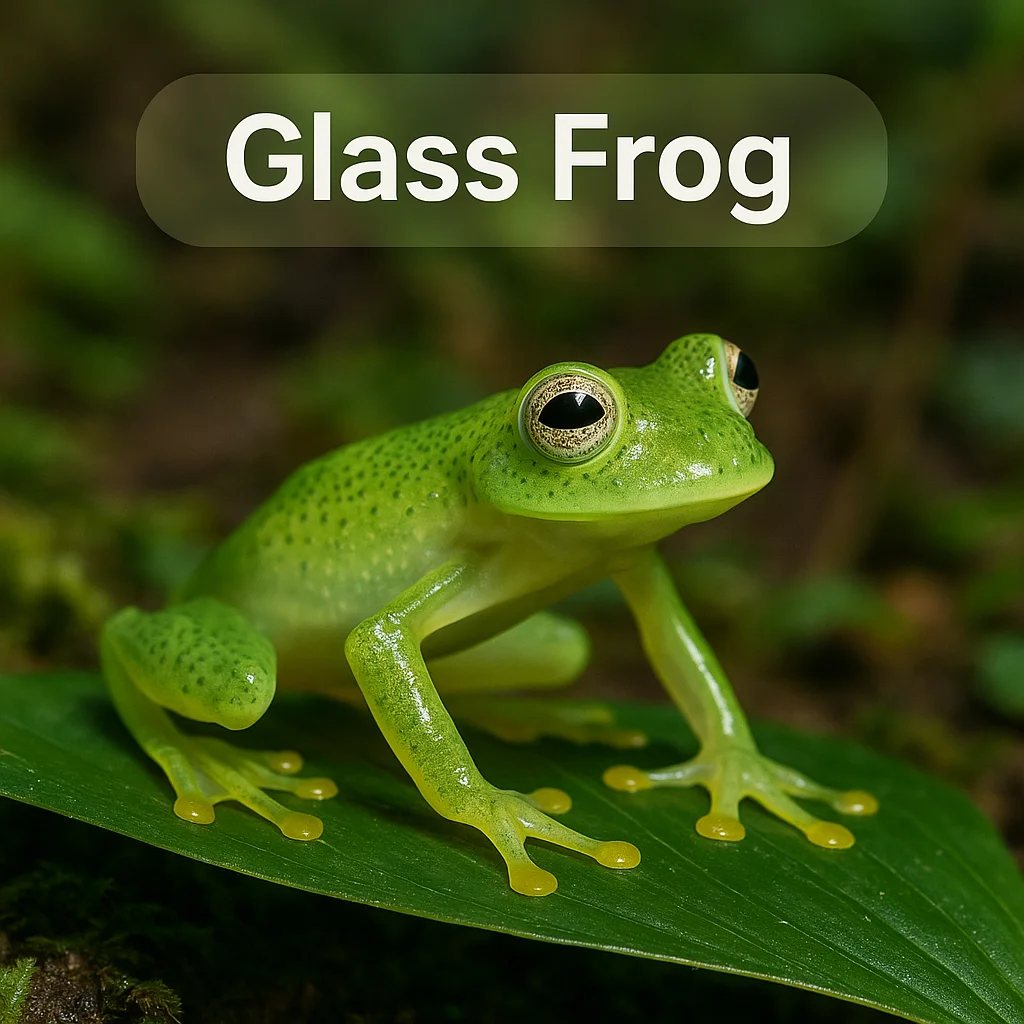
The term "Glass Frog" refers to several species of small, see-through amphibians belonging to the family Centrolenidae. These frogs are renowned for their unique transparent skin, which offers a fascinating glimpse into their internal anatomy.
- Common name(s): Glass Frog
- Scientific name: Varies; family Centrolenidae
- Animal type: Amphibian
- Typical adult size: Approximately 2 to 7.5 cm (0.8 to 3 inches) in length
- Typical lifespan: 5 to 15 years in the wild
- Diet type: Carnivore; primarily small insects and other arthropods
- Activity pattern: Nocturnal
- Social structure: Generally solitary but may gather for breeding
- Speed/movement highlights: Agile jumpers
- Intelligence/learning: Basic amphibian instincts, relies heavily on environmental cues
- Primary habitats: Humid forests near streams
- Geographic range: Central and South America
- Predators/threats: Birds, snakes, and habitat destruction
- Conservation status: Varies by region; some species are threatened
🔍 Identification & Appearance
Glass frogs are easily identified by their unique translucent skin, through which organs such as the heart, liver, and digestive tract are visible. These small frogs have slender, green bodies that sometimes feature speckles or spots.
Distinctive features include their forward-facing eyes, which provide them with binocular vision, and their well-adapted limbs that aid in climbing.
- Slender, almost transparent body reveals internal organs
- Green coloration with occasional white or yellow spots
- Forward-facing eyes set close together
- Long, delicate limbs with expanded fingertips
- Typical size ranges from 2 to 7.5 cm
- Generally found resting on the underside of leaves
- Look-alikes: Can be confused with small tree frogs; however, tree frogs lack translucency
- Glassy appearance helps blend with damp foliage
🧱 Body Structure & Physical Adaptations
Glass frogs possess a delicate build, optimized for life among leaves and branches. Their slender bodies and limbs are adapted for climbing, while their transparency serves as camouflage in leafy environments.
Though they lack specialized teeth, their mouths are well-suited for snapping up small prey. Their senses, especially vision, are finely tuned to detect movement in low-light conditions typical of their nocturnal lifestyle.
- Translucent skin serves as camouflage
- Slender, agile build with long limbs enhances climbing ability
- Sticky toe pads enhance adhesion to leaves
- Forward-facing eyes aid in depth perception
- Small but effective mouth for catching insects
- Highly sensitive vision adapted to nocturnal activity
🌍 Range & Distribution
Glass frogs are native to the humid forests of Central and South America. They are primarily found at elevations ranging from lowland tropical rainforests to mountainous areas near streams and rivers.
- Central and South America
- Most abundant in tropical rainforests
- Common in countries like Costa Rica, Panama, Colombia, and Ecuador
- Generally found near freshwater streams and rivers
- Ranges from sea level to mountainous regions
- Mostly resident with little to no seasonal migration
- Prefers humid areas with dense foliage
🏞️ Habitat & Shelter
Glass frogs favor humid, tropical forests with abundant vegetation. They are commonly found near streams and rivers, where they can take advantage of the moisture and array of food sources. These frogs often seek shelter on the underside of leaves, where they remain undetected by predators.
Seasonal variations influence their activity; in wetter periods, glass frogs are more active and visible. Understanding their habitat is key to recognizing their patterns and conserving their natural environments.
🧭 Behavior & Ecology
Glass frogs are primarily nocturnal, spending their days resting under leaves and becoming active at night. They communicate using a series of high-pitched calls, especially during the breeding season.
These frogs play a role in controlling insect populations and serve as both prey and predator within their ecosystems. Their presence indicates a healthy, balanced habitat.
- Nocturnal; active at night, resting by day
- Rest under leaves, providing camouflage
- High-pitched vocalizations during breeding
- Integral in insect population control
- Prey for a variety of larger animals
- Inhabit areas with rich biodiversity
👥 Social Life & Group Dynamics
Glass frogs tend to be solitary except during mating seasons when they engage in vocal displays to attract mates. There is little evidence of cooperative behavior beyond breeding interactions. Male glass frogs often exhibit territorial behavior to protect breeding sites.
- Primarily solitary outside breeding seasons
- Congregate around breeding sites
- Males often vocalize to attract females
- Limited cooperation outside mating periods
- Males protect territories vigorously
🍽️ Diet, Prey & Predators
Glass frogs primarily feed on small insects and other arthropods. They hunt using a sit-and-wait strategy, where they remain motionless and capture passing prey with quick, precise lunges.
Predators of glass frogs include birds and snakes. These amphibians employ camouflage to avoid detection, a necessity for survival given their visible translucency.
- Carnivorous, feeding on insects and arthropods
- Hunts through ambush, relying on stealth
- High reliance on camouflage for predator avoidance
- Victims of predation by birds, snakes
- Typically swallows prey whole
🦌 Hunting, Foraging & Movement
Glass frogs are agile climbers and jumpers, using their extended limbs and sticky toe pads to traverse foliage. Their movement is subtle and cautious, minimizing detection by predators and prey alike.
They do not require extensive territories, staying near their habitual resting and feeding areas. Their hunting strategy involves sudden, calculated movements to capture unsuspecting insects.
- Proficient climbers in dense forest canopies
- Short bursts of jumps and precise lunges for prey
- Primarily hunts at night under cover of darkness
- Small territories near water sources
- Minimizes movement to remain hidden
🧠 Intelligence & Senses
Glass frogs rely heavily on their keen sense of vision and moderate hearing to interact with their environment. Although they do not exhibit advanced problem-solving abilities, they effectively utilize visual and auditory cues to navigate and hunt.
Research on their cognitive capabilities is limited, with most insights derived from their behavior patterns and environmental interactions.
- Sensitive vision adapted to low light
- Effective auditory sense for detecting calls
- Instinct-driven behavior more than learned
- Limited research on cognitive depth
🪺 Reproduction, Pregnancy & Parenting
Breeding in glass frogs is generally seasonal, occurring during wetter months. Males call to attract females, leading to aquatic mating where females lay eggs on leaves above water. The placement ensures hatched tadpoles fall into the water below.
Parental care varies, with some species showing male guarding of egg clusters until they hatch. Tadpoles develop in aquatic conditions until metamorphosis.
- Breeds during the rainy season
- Female lays eggs on leaves over water
- Males often guard eggs
- Eggs hatch into aquatic tadpoles
- Varies between species in terms of care
♀️♂️ Male vs Female Differences
In glass frogs, males and females are often similar in size, with some variation in body mass and coloration depending on the species. Males are known for their vocal sacs used during mating calls, a feature absent in females.
- Similar size in both sexes
- Males possess vocal sacs
- Minor coloration differences during breeding
- Males may aggressively defend territories
🧬 Subspecies & Variation
Glass frogs exhibit considerable diversity, with numerous species classified under the Centrolenidae family. Differences often involve size, coloration, and specific habitat preferences.
Subspecies classification remains debated, with genetic distinctions and local adaptations ongoing subjects of research.
- Numerous species classified as glass frogs
- Differences in size and skin transparency
- Coloration varies with local habitats
- Ongoing research in genetic variation
⚠️ Threats, Conservation & Human Interaction
Habitat destruction and climate change are significant threats to glass frog populations. Human encroachment and pollution also pose risks, making conservation efforts crucial.
Their presence in the pet trade is not widespread, and interested hobbyists must be mindful of ethical considerations related to conservation status.
- Threatened by habitat loss and pollution
- Climate change alters suitable habitats
- Conservation efforts needed to protect species
- Conscious pet trade practices urged
✨ Fun Facts & Unique Traits
- Many species of glass frogs are named for their almost glass-like skin, a rare trait in amphibians
- Their translucency is a unique adaptation rarely seen in the animal kingdom
- Glass frogs are indicators of environmental health, as their decline often signals ecosystem stress
- Some species use leaf vibrations to communicate
- They exhibit a preference for depositing eggs on leaves overhanging streams
📌 Summary
- Glass frogs are recognized by their extraordinary transparent skin
- They inhabit humid forests throughout Central and South America
- Agile and nocturnal, they feed on small insects
- Threatened primarily by habitat loss and climate shifts
- Highly dependent on water sources for breeding
- Play vital roles in ecosystems as insect predators and prey
- Conservation efforts are requisite for sustaining their populations
- Their translucent bodies and sensitive vision are key adaptations